Laboratory of Food Biotechnology, Institute of Food, Nutrition and Health, ETH Zurich, Schmelzbergstrasse, Zurich, Switzerland.
PLoS One. 2012;7(8):e44595. doi: 10.1371/journal.pone.0044595. Epub 2012 Aug 30.
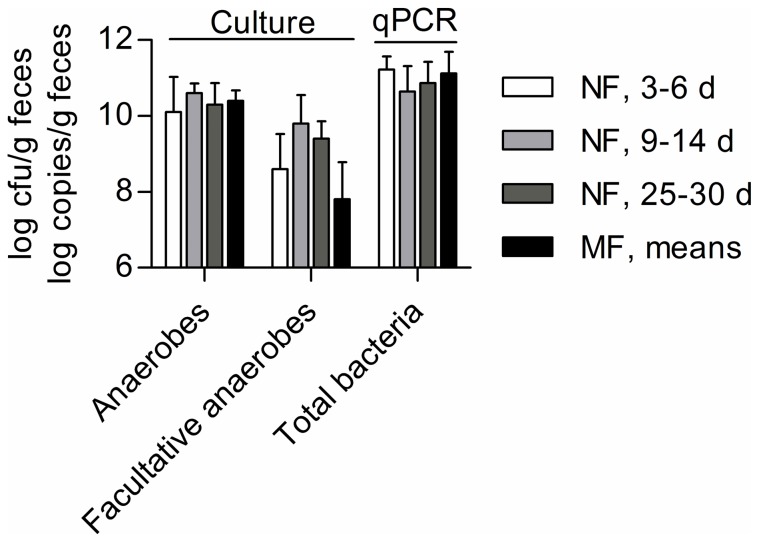
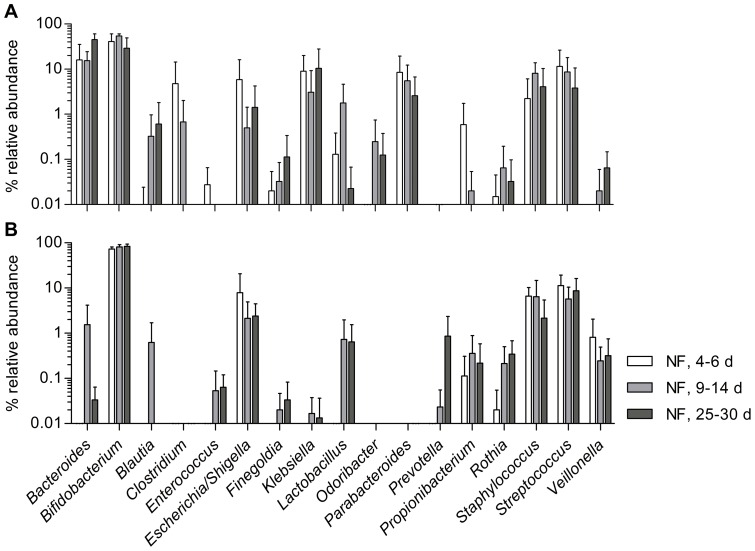
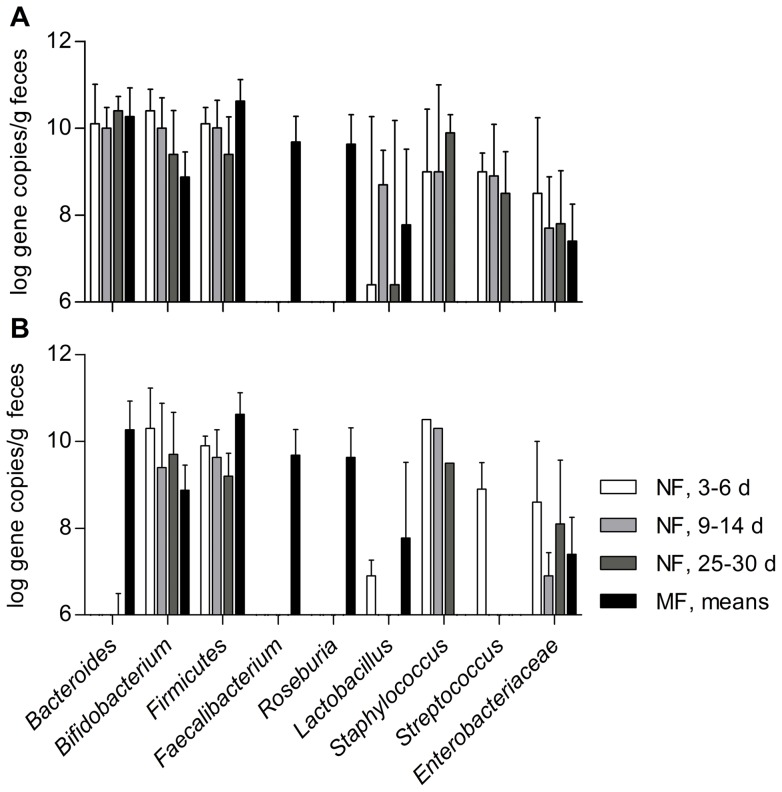
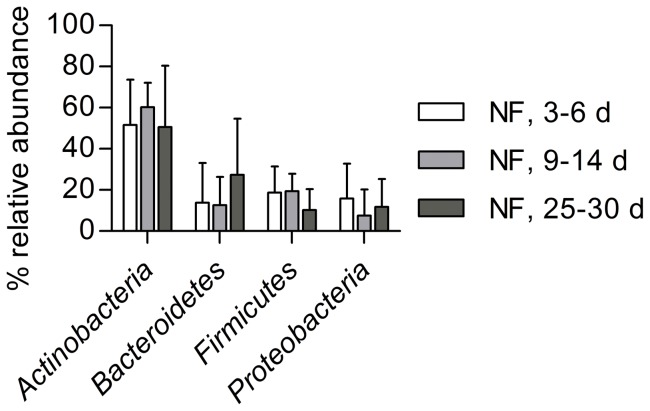
The establishment of a pioneer gut microbiota is increasingly recognized as a crucial stage in neonatal development influencing health throughout life. While current knowledge is mainly based on either culture or molecular analysis of feces, we opted for a comprehensive approach complementing culture with state-of-the-art molecular methods. The bacterial composition in feces from seven healthy vaginally-delivered, breast-fed neonates was analyzed at days 4-6, 9-14 and 25-30 postnatal, using culture, 16S rRNA gene sequencing of isolates, quantitative PCR and pyrosequencing. Anaerobes outnumbered facultative anaerobes in all seven neonates within the first days of life, owing to high levels of Bifidobacterium and unexpectedly also Bacteroides, which were inversely correlated. Four neonates harbored maternal Bacteroides levels, comprising typical adult species, throughout the neonatal period, while in three only subdominant levels were detected. In contrast, the major adult-type butyrate-producing anaerobic populations, Roseburia and Faecalibacterium, remained undetectable during the neonatal period. The presence of Bacteroidetes as pioneer bacteria in the majority of neonates studied demonstrates that adult-type strict anaerobes may reach adult-like population densities within the first week of life. Consequently the switch from facultative to strict anaerobes may occur earlier than previously assumed in breast-fed neonates, and the establishment of the major butyrate-producing populations may be limited by other factors than the absence of anaerobic conditions. The impact of breast milk components on the timing of establishment of anaerobic pioneer bacteria, as well as opportunistic pathogens should be further studied in regard to priming of the gut-associated immune system and consequences on later health.
越来越多的人认识到,建立先驱肠道微生物群是新生儿发育的关键阶段,会影响终生健康。虽然目前的知识主要基于粪便的培养或分子分析,但我们选择了一种综合方法,用最先进的分子方法补充培养。通过培养、分离物 16S rRNA 基因测序、定量 PCR 和焦磷酸测序,分析了 7 名健康经阴道分娩、母乳喂养的新生儿在出生后第 4-6、9-14 和 25-30 天的粪便中的细菌组成。在生命的最初几天,所有 7 名新生儿中的厌氧菌数量都超过了兼性厌氧菌,这归因于双歧杆菌和出人意料的拟杆菌水平较高,两者呈负相关。在整个新生儿期,有 4 名新生儿携带母体拟杆菌水平,包括典型的成人种,而在 3 名新生儿中只检测到亚优势水平。相比之下,主要的成人型丁酸产生厌氧种群罗斯伯里氏菌和粪杆菌在新生儿期仍无法检测到。在大多数研究的新生儿中,拟杆菌作为先驱细菌的存在表明,成人型严格厌氧菌可能在生命的第一周内达到类似成人的种群密度。因此,在母乳喂养的新生儿中,从兼性到严格厌氧菌的转变可能比之前假设的更早发生,而主要的丁酸产生种群的建立可能受到除厌氧条件缺失之外的其他因素的限制。母乳成分对建立厌氧先驱细菌以及机会性病原体的影响,应进一步研究其对肠道相关免疫系统的启动及其对后期健康的影响。