Department of Pharmacology and Center for Translational Targeted Therapeutics and Nanomedicine of the Institute for Translational Medicine and Therapeutics, Perelman School of Medicine, University of Pennsylvania, Philadelphia, Pennsylvania 19104, USA.
ACS Nano. 2012 Oct 23;6(10):8824-36. doi: 10.1021/nn302687n. Epub 2012 Sep 14.
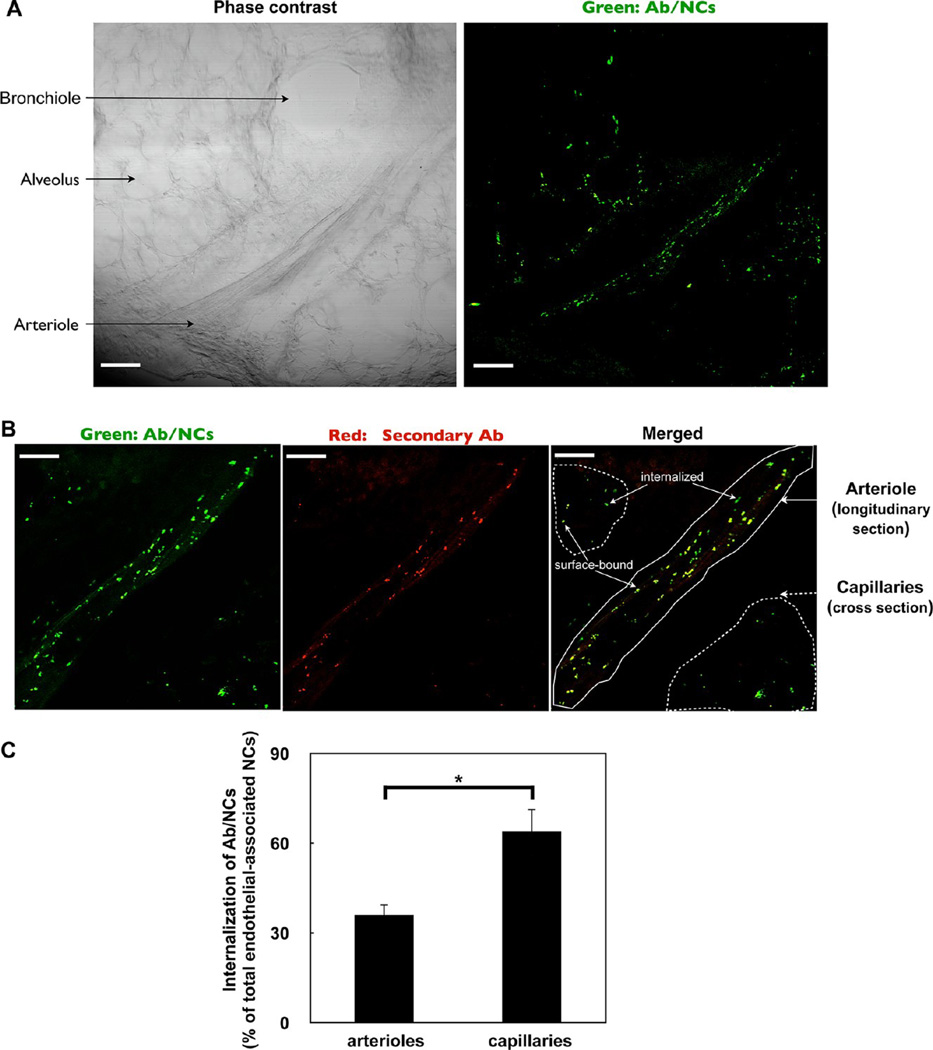
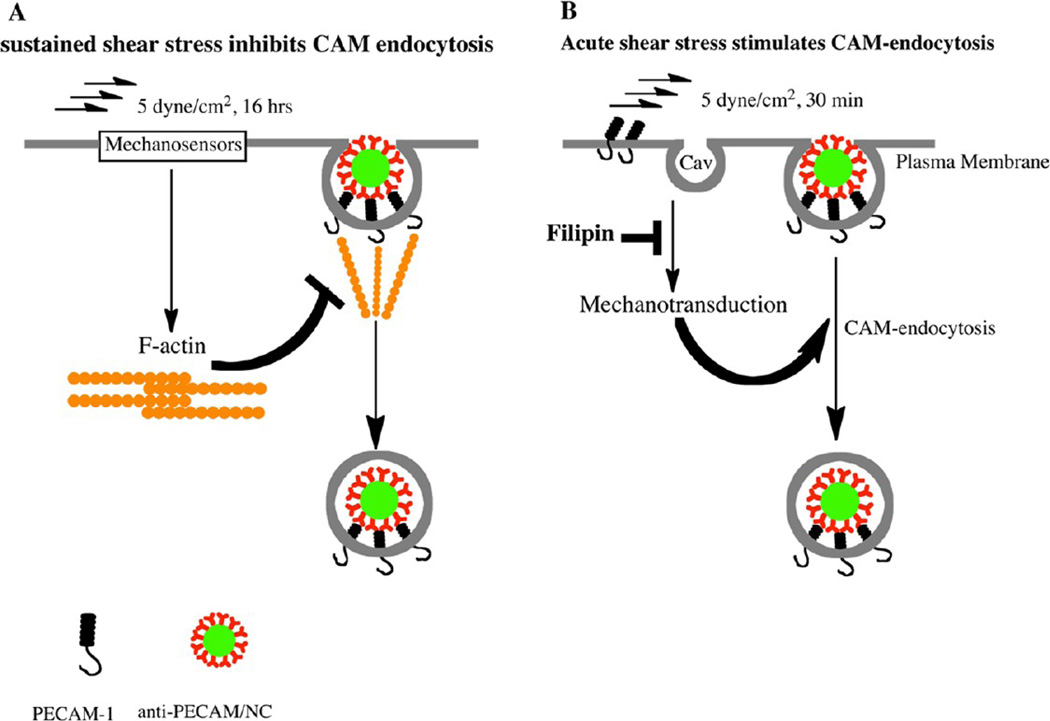
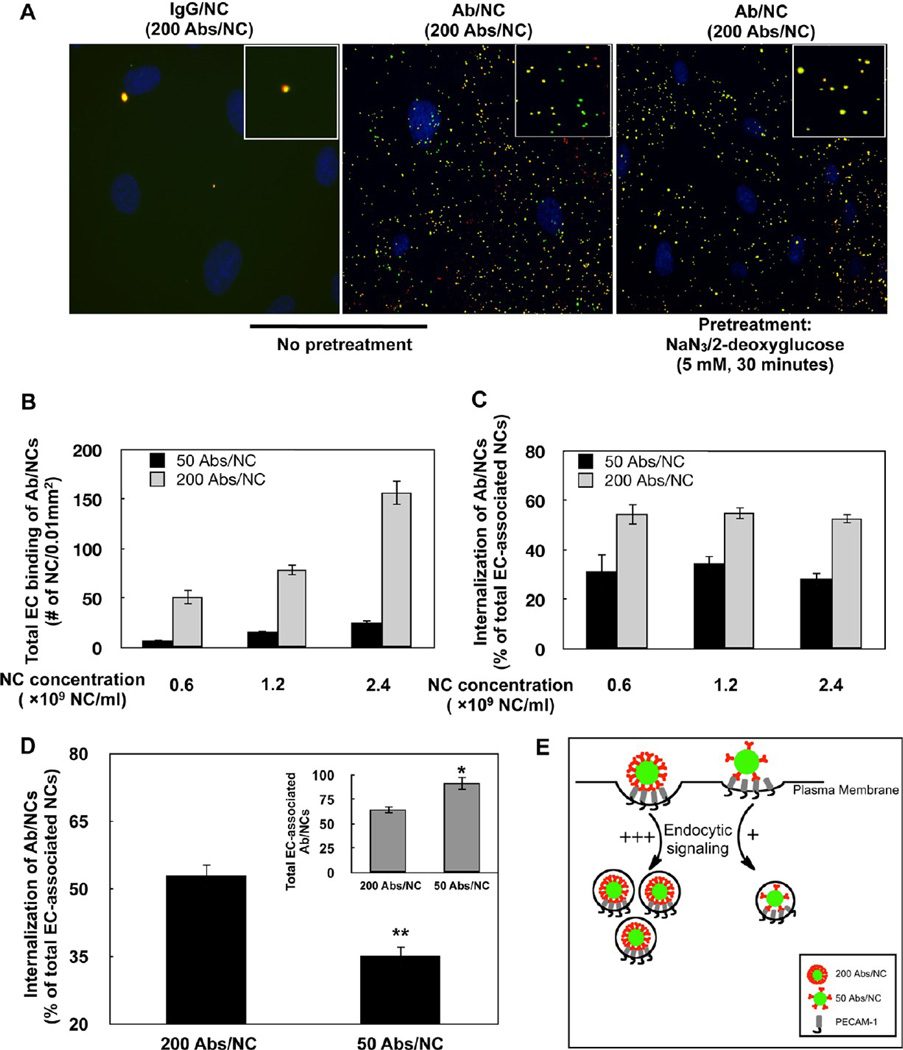
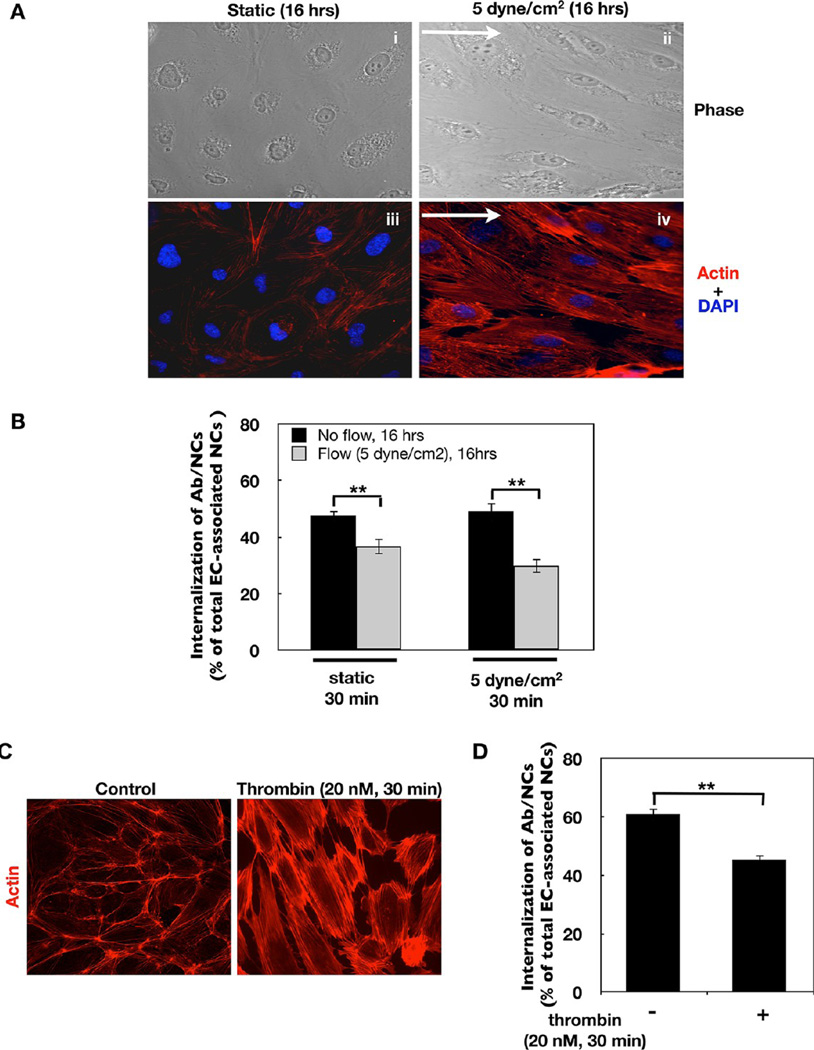
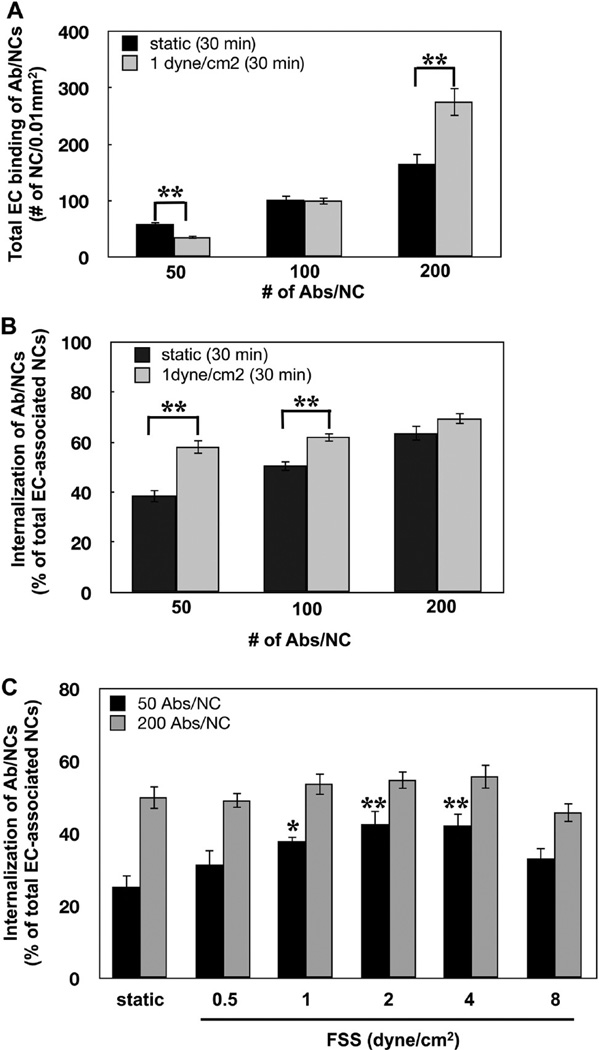
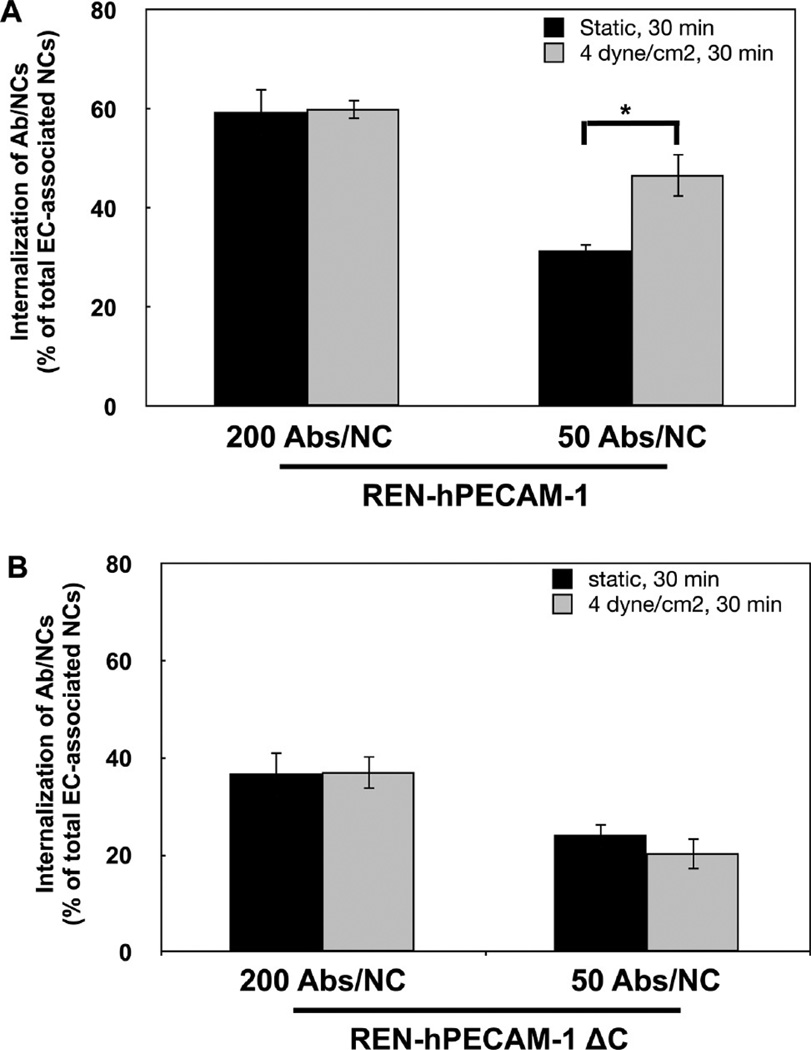
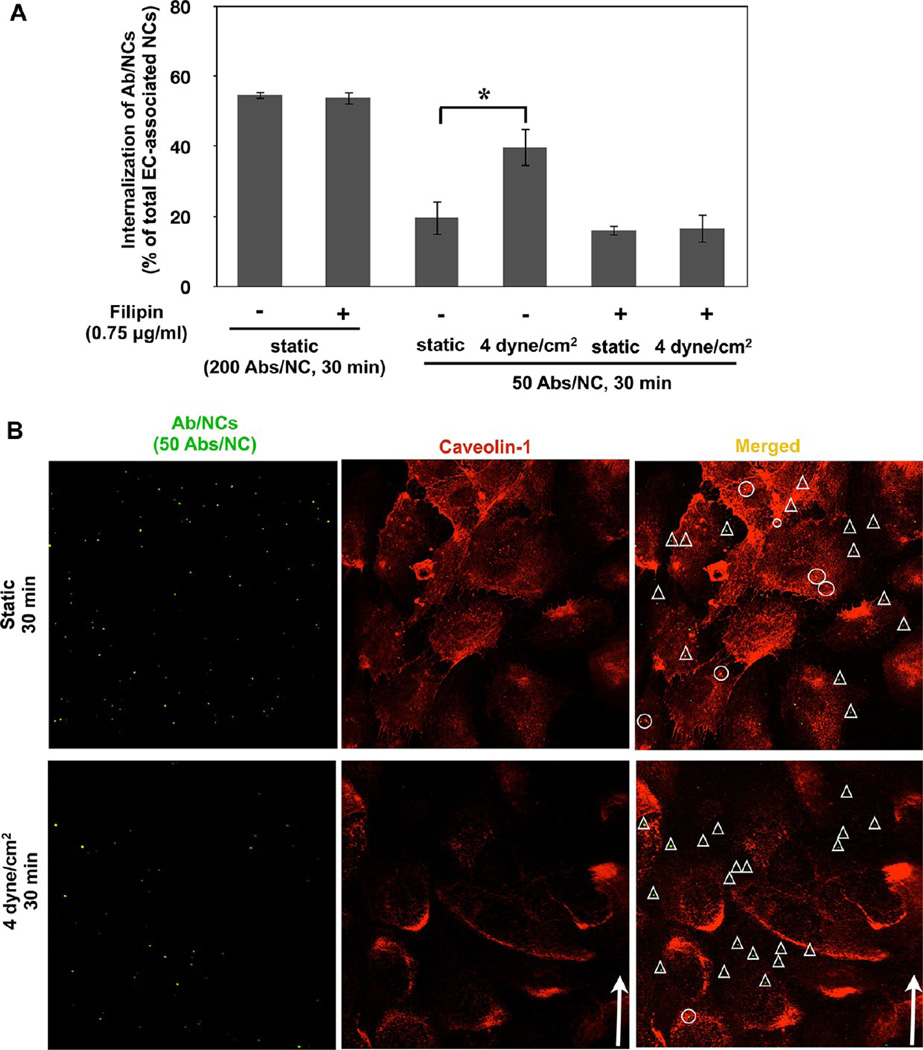
Intracellular delivery of nanocarriers (NC) is controlled by their design and target cell phenotype, microenvironment, and functional status. Endothelial cells (EC) lining the vascular lumen represent an important target for drug delivery. Endothelium in vivo is constantly or intermittently (as, for example, during ischemia-reperfusion) exposed to blood flow, which influences NC-EC interactions by changing NC transport properties, and by direct mechanical effects upon EC mechanisms involved in NC binding and uptake. EC do not internalize antibodies to marker glycoprotein PECAM(CD31), yet internalize multivalent NC coated with PECAM antibodies (anti-PECAM/NC) via a noncanonical endocytic pathway distantly related to macropinocytosis. Here we studied the effects of flow on EC uptake of anti-PECAM/NC spheres (~180 nm diameter). EC adaptation to chronic flow, manifested by cellular alignment with flow direction and formation of actin stress fibers, inhibited anti-PECAM/NC endocytosis consistent with lower rates of anti-PECAM/NC endocytosis in vivo in arterial compared to capillary vessels. Acute induction of actin stress fibers by thrombin also inhibited anti-PECAM/NC endocytosis, demonstrating that formation of actin stress fibers impedes EC endocytic machinery. In contrast, acute flow without stress fiber formation, stimulated anti-PECAM/NC endocytosis. Anti-PECAM/NC endocytosis did not correlate with the number of cell-bound particles under flow or static conditions. PECAM cytosolic tail deletion and disruption of cholesterol-rich plasmalemma domains abrogated anti-PECAM/NC endocytosis stimulation by acute flow, suggesting complex regulation of a flow-sensitive endocytic pathway in EC. The studies demonstrate the importance of the local flow microenvironment for NC uptake by the endothelium and suggest that cell culture models of nanoparticle uptake should reflect the microenvironment and phenotype of the target cells.
纳米载体 (NC) 的细胞内递呈受其设计和靶细胞表型、微环境和功能状态控制。血管腔内皮细胞 (EC) 是药物递呈的重要靶标。体内的内皮细胞经常或间歇地(例如,在缺血再灌注期间)暴露于血流中,通过改变 NC 转运特性以及通过对涉及 NC 结合和摄取的 EC 机制的直接机械影响,影响 NC-EC 相互作用。EC 不会内化标记糖蛋白 PECAM(CD31)的抗体,但通过与巨胞饮作用关系较远的非典型内吞途径内化涂覆有 PECAM 抗体的多价 NC(抗 PECAM/NC)。在这里,我们研究了流动对 EC 摄取抗 PECAM/NC 球体(~180nm 直径)的影响。EC 通过与流动方向对齐和形成肌动蛋白应力纤维来适应慢性流动的适应性,抑制了抗 PECAM/NC 的内吞作用,这与动脉中比毛细血管中体内抗 PECAM/NC 的内吞作用速率较低相一致。凝血酶急性诱导肌动蛋白应力纤维也抑制了抗 PECAM/NC 的内吞作用,表明肌动蛋白应力纤维的形成阻碍了 EC 的内吞作用机制。相比之下,没有形成肌动蛋白应力纤维的急性流动刺激了抗 PECAM/NC 的内吞作用。在流动或静态条件下,抗 PECAM/NC 的内吞作用与细胞结合颗粒的数量无关。PECAM 胞质尾缺失和胆固醇丰富的质膜域破坏消除了急性流动对抗 PECAM/NC 内吞作用的刺激,表明 EC 中存在一种复杂的流动敏感内吞途径的调节。这些研究表明了局部流动微环境对内皮细胞摄取 NC 的重要性,并提示纳米颗粒摄取的细胞培养模型应反映靶细胞的微环境和表型。