Zhang Hongping, Hu Ziqiu, Wang Jinxuan, Xu Jianxiong, Wang Xiangxiu, Zang Guangchao, Qiu Juhui, Wang Guixue
Key Laboratory for Biorheological Science and Technology of Ministry of Education, State and Local Joint Engineering Laboratory for Vascular Implants, Bioengineering College of Chongqing University, Chongqing 400030, China.
Lab Teaching & Management Center, Chongqing Medical University, Chongqing 400016, China.
Regen Biomater. 2023 May 2;10:rbad047. doi: 10.1093/rb/rbad047. eCollection 2023.
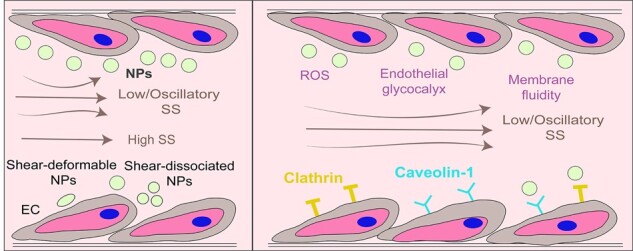
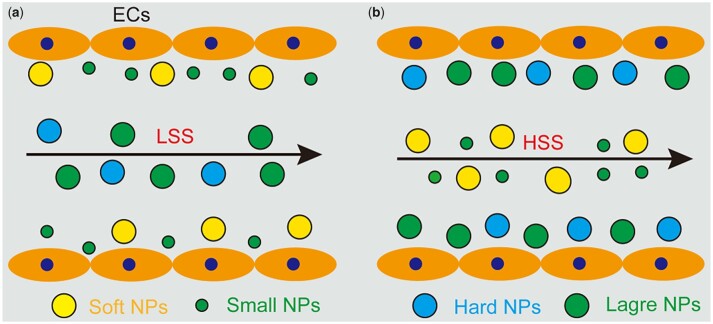
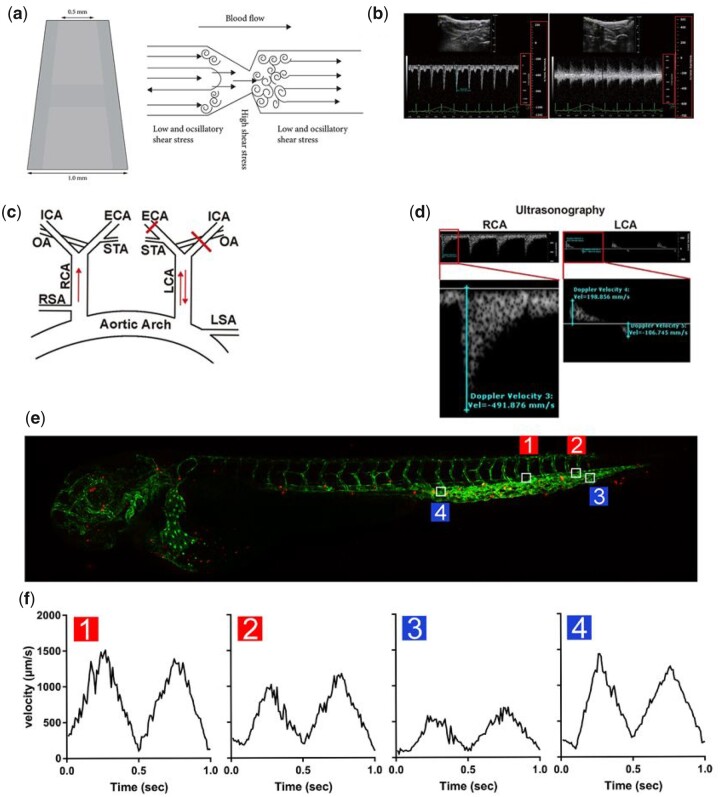
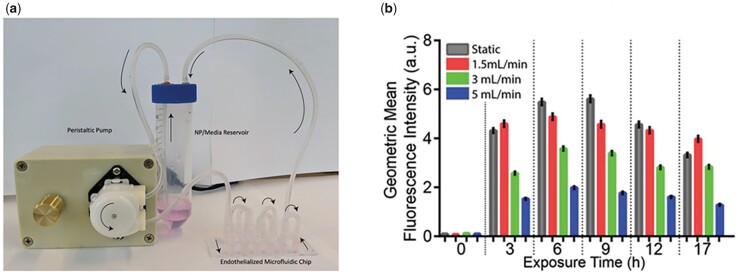
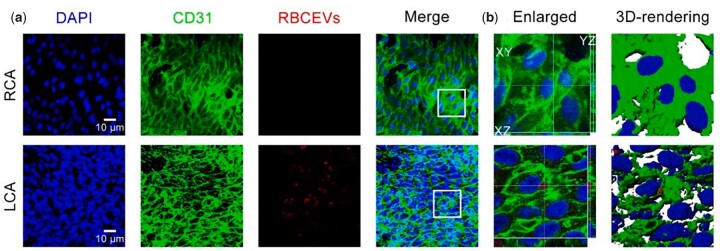
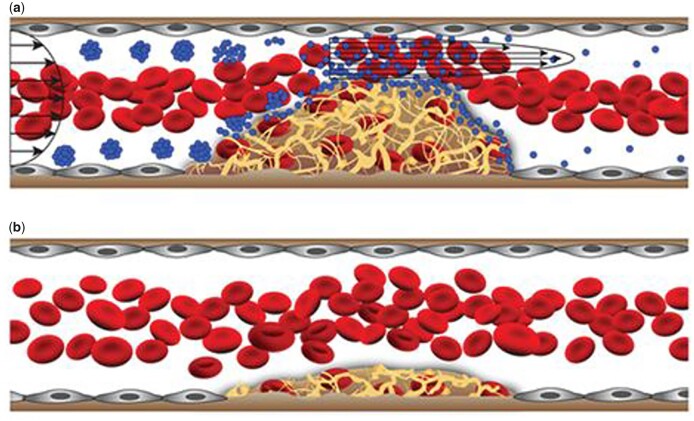
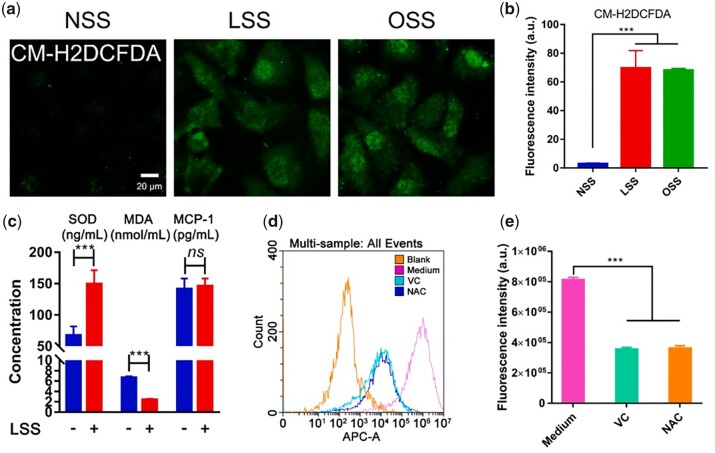
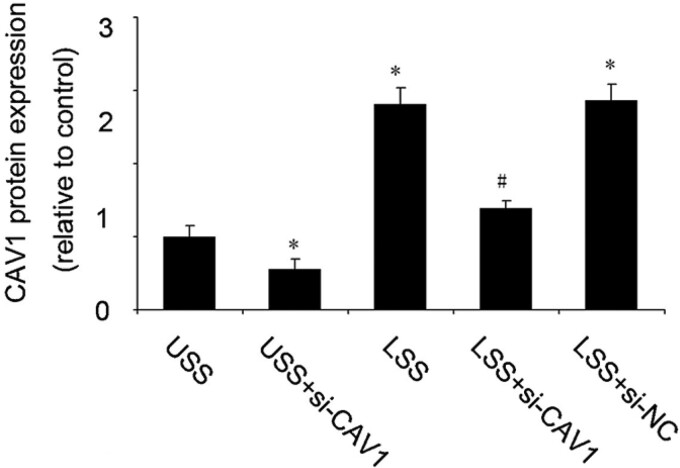
Nanoparticles (NPs) hold tremendous targeting potential in cardiovascular disease and regenerative medicine, and exciting clinical applications are coming into light. Vascular endothelial cells (ECs) exposure to different magnitudes and patterns of shear stress (SS) generated by blood flow could engulf NPs in the blood. However, an unclear understanding of the role of SS on NP uptake is hindering the progress in improving the targeting of NP therapies. Here, the temporal and spatial distribution of SS in vascular ECs and the effect of different SS on NP uptake in ECs are highlighted. The mechanism of SS affecting NP uptake through regulating the cellular ROS level, endothelial glycocalyx and membrane fluidity is summarized, and the molecules containing clathrin and caveolin in the engulfment process are elucidated. SS targeting NPs are expected to overcome the current bottlenecks and change the field of targeting nanomedicine. This assessment on how SS affects the cell uptake of NPs and the marginalization of NPs in blood vessels could guide future research in cell biology and vascular targeting drugs.
纳米颗粒(NPs)在心血管疾病和再生医学中具有巨大的靶向潜力,令人兴奋的临床应用正在显现。血管内皮细胞(ECs)暴露于血流产生的不同大小和模式的剪切应力(SS)下,可能会吞噬血液中的纳米颗粒。然而,对剪切应力在纳米颗粒摄取中的作用尚不清楚,这阻碍了改善纳米颗粒治疗靶向性的进展。在此,强调了血管内皮细胞中剪切应力的时空分布以及不同剪切应力对内皮细胞摄取纳米颗粒的影响。总结了剪切应力通过调节细胞活性氧水平、内皮糖萼和膜流动性影响纳米颗粒摄取的机制,并阐明了吞噬过程中含网格蛋白和小窝蛋白的分子。预计剪切应力靶向纳米颗粒将克服当前的瓶颈,改变靶向纳米医学领域。这种对剪切应力如何影响纳米颗粒的细胞摄取以及纳米颗粒在血管中的边缘化的评估,可为细胞生物学和血管靶向药物的未来研究提供指导。