Department of Neurosurgery, Oslo University Hospital, Rikshospitalet, Oslo, Norway.
Biomed Eng Online. 2012 Sep 7;11:66. doi: 10.1186/1475-925X-11-66.
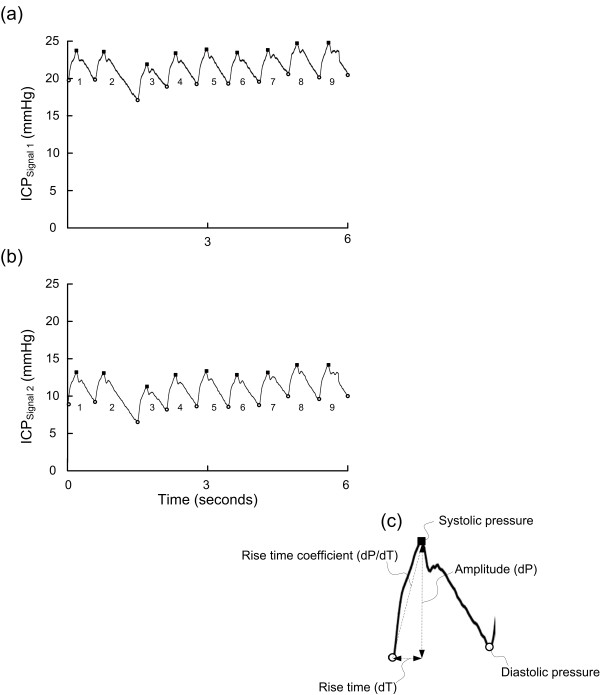
We recently reported that in an experimental setting the zero pressure level of solid intracranial pressure (ICP) sensors can be altered by electrostatics discharges. Changes in the zero pressure level would alter the ICP level (mean ICP); whether spontaneous changes in mean ICP happen in clinical settings is not known. This can be addressed by comparing the ICP parameters level and waveform of simultaneous ICP signals. To this end, we retrieved our recordings in patients with cerebral bleeds wherein the ICP had been recorded simultaneously from two different sensors.
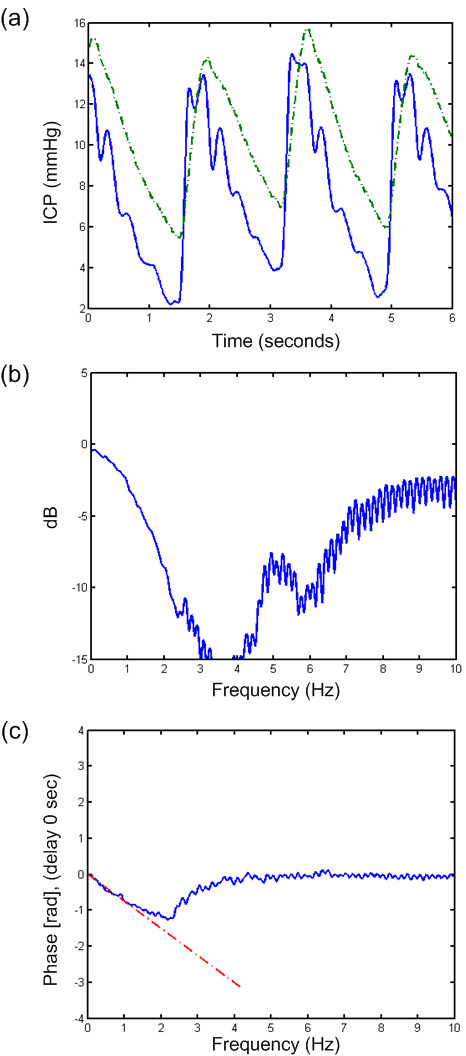
During a time period of 10 years, 17 patients with cerebral bleeds were monitored with two ICP sensors simultaneously; sensor 1 was always a solid sensor while Sensor 2 was a solid -, a fluid - or an air-pouch sensor. The simultaneous signals were analyzed with automatic identification of the cardiac induced ICP waves. The output was determined in consecutive 6-s time windows, both with regard to the static parameter mean ICP and the dynamic parameters (mean wave amplitude, MWA, and mean wave rise time, MWRT). Differences in mean ICP, MWA and MWRT between the two sensors were determined. Transfer functions between the sensors were determined to evaluate how sensors reproduce the ICP waveform.
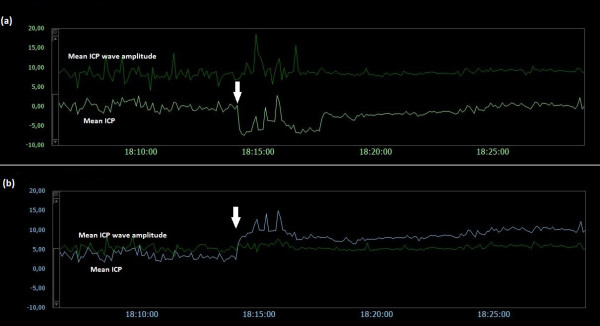
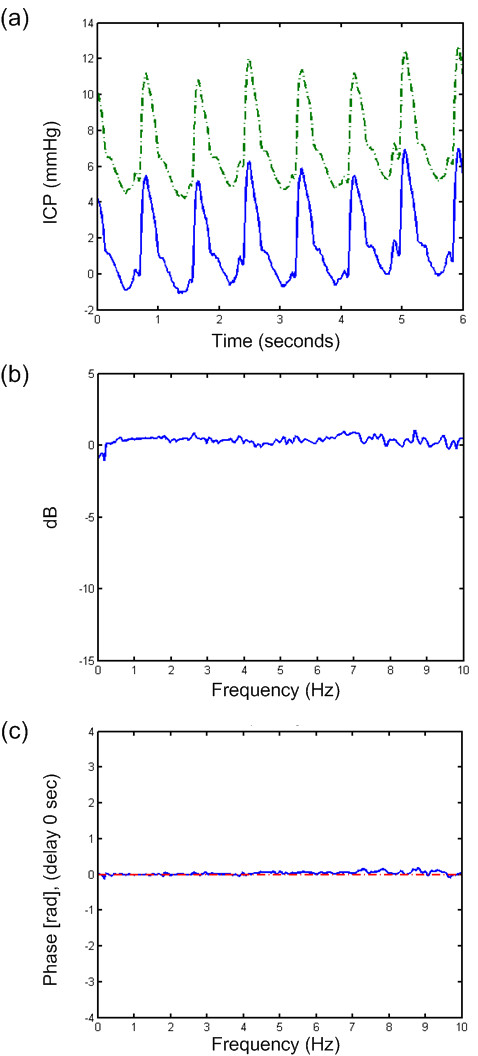
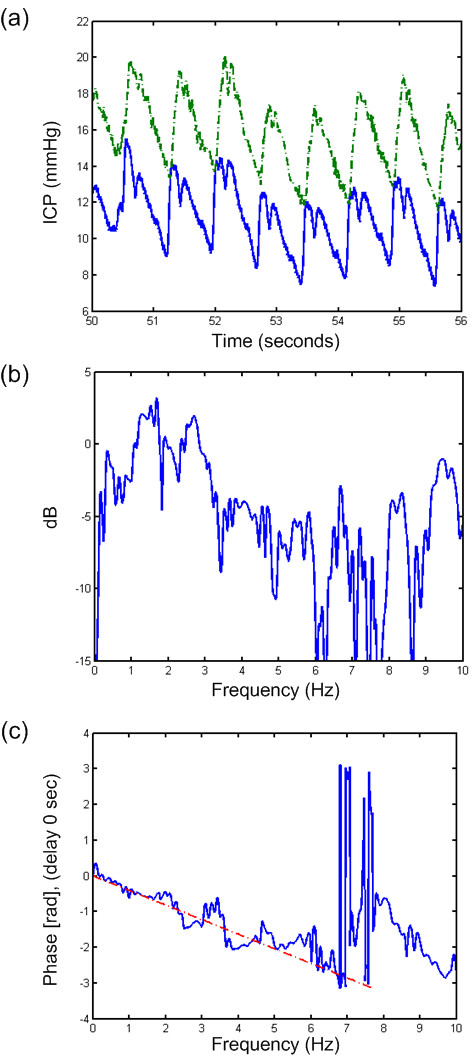
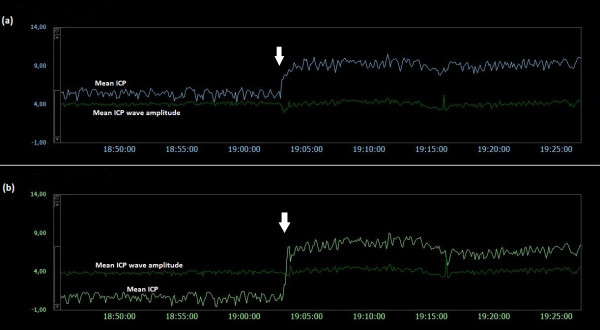
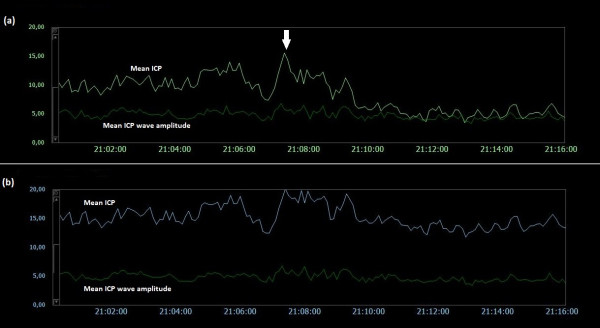
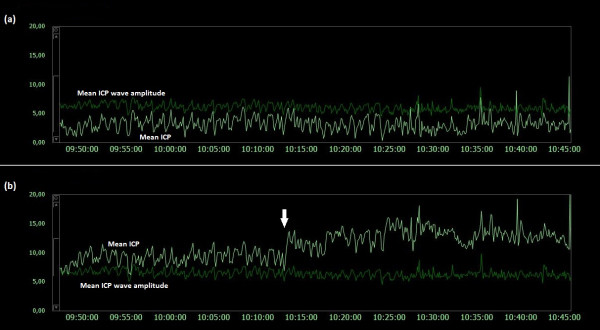
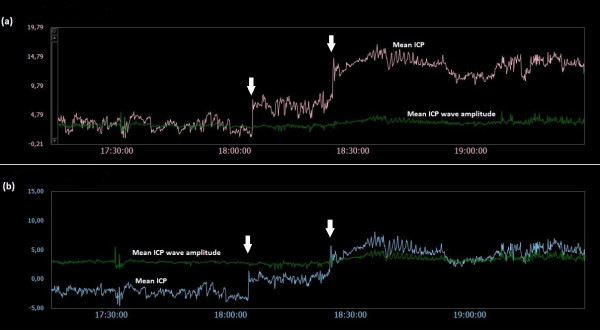
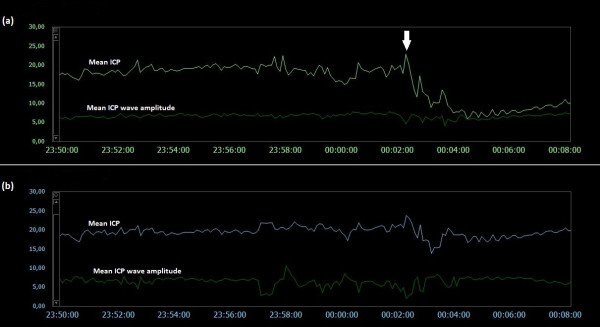
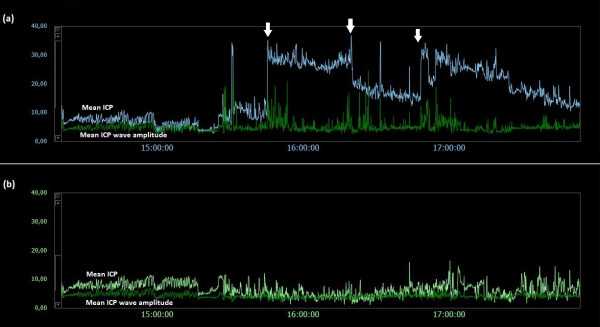
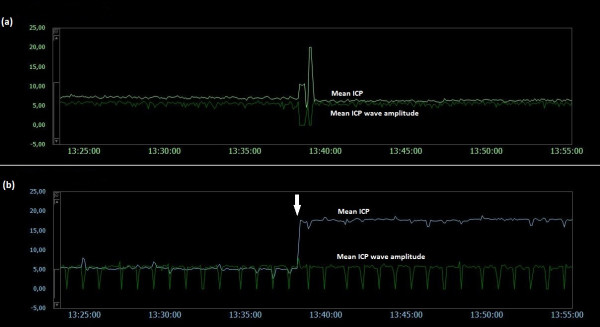
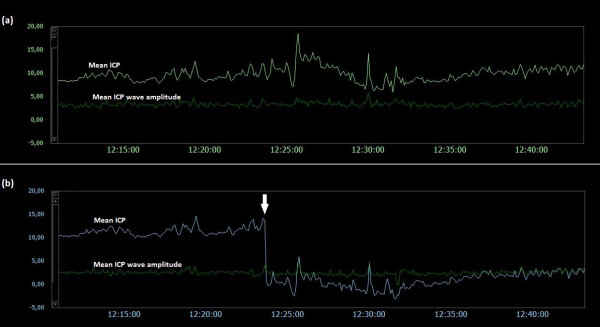
Comparing findings in two solid sensors disclosed major differences in mean ICP in 2 of 5 patients (40%), despite marginal differences in MWA, MWRT, and linear phase magnitude and phase. Qualitative assessment of trend plots of mean ICP and MWA revealed shifts and drifts of mean ICP in the clinical setting. The transfer function analysis comparing the solid sensor with either the fluid or air-pouch sensors revealed more variable transfer function magnitude and greater differences in the ICP waveform derived indices.
Simultaneous monitoring of ICP using two solid sensors may show marked differences in static ICP but close to identity in dynamic ICP waveforms. This indicates that shifts in ICP baseline pressure (sensor zero level) occur clinically; trend plots of the ICP parameters also confirm this. Solid sensors are superior to fluid - and air pouch sensors when evaluating the dynamic ICP parameters.
我们最近报道称,在实验环境中,固体颅内压(ICP)传感器的零压力水平可通过静电放电改变。零压力水平的变化会改变 ICP 水平(平均 ICP);但在临床环境中是否会发生平均 ICP 的自发变化尚不清楚。通过比较同时记录的 ICP 信号的参数水平和波形,可以解决这个问题。为此,我们检索了在脑出血患者中同时记录的两个 ICP 传感器的记录,其中 ICP 是用两个不同的传感器同时记录的。
在 10 年的时间内,17 例脑出血患者同时使用两个 ICP 传感器进行监测;传感器 1 始终为固体传感器,而传感器 2 为固体、液体或气袋传感器。使用自动识别心诱导 ICP 波的方法对同时信号进行分析。输出结果在连续的 6 秒时间窗中确定,既涉及静态参数平均 ICP,也涉及动态参数(平均波幅 MWA 和平均波上升时间 MWRT)。确定了两个传感器之间平均 ICP、MWA 和 MWRT 的差异。确定传感器之间的传递函数以评估传感器如何再现 ICP 波形。
对两个固体传感器的结果进行比较发现,尽管在 MWA、MWRT 和线性相位幅度和相位方面存在微小差异,但在 5 例患者中的 2 例(40%)中,平均 ICP 存在显著差异。平均 ICP 和 MWA 的趋势图的定性评估显示,在临床环境中平均 ICP 发生了偏移和漂移。比较固体传感器与液体或气袋传感器的传递函数分析显示,传递函数幅度变化更大,衍生的 ICP 波形参数差异更大。
使用两个固体传感器同时监测 ICP 可能会显示出静态 ICP 显著差异,但动态 ICP 波形非常相似。这表明临床中 ICP 基线压力(传感器零位)发生了偏移;ICP 参数的趋势图也证实了这一点。在评估动态 ICP 参数时,固体传感器优于液体和空气袋传感器。