University of East Anglia, Norwich, Norfolk.
J Consult Clin Psychol. 2012 Dec;80(6):1021-33. doi: 10.1037/a0029932. Epub 2012 Sep 10.
Computerized cognitive behavioral therapy (cCBT) and cognitive bias modification for interpretation (CBM-I) both have demonstrated efficacy in alleviating social anxiety, but how they compare with each other has not been investigated. The present study tested the prediction that both interventions would reduce anxiety relative to a no-intervention comparison condition, but CBM-I would be particularly effective at modifying threat-related cognitive bias under high mental load.
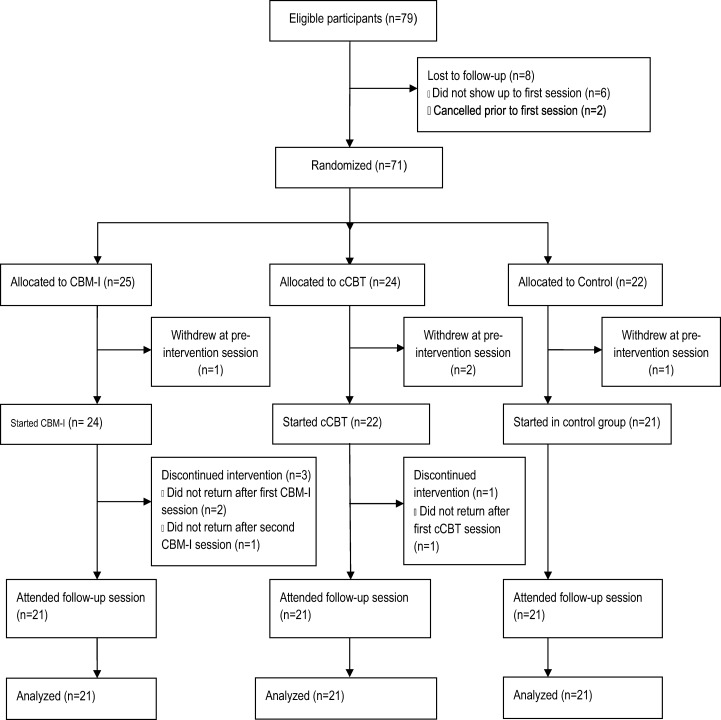
Sixty-three primarily Caucasian adults (mean age = 22.7, SD = 5.87; 68.3% female) with high social anxiety, randomly allocated to 3 groups: CBM-I (n = 21), cCBT (n = 21), and a no-intervention control group (n = 21) provided complete data for analysis. Pre- and postintervention (4 sessions lasting 2 weeks, control participants only attended the pre-post sessions) self-report measures of anxiety, depression, attentional control, and threat-related interpretive bias were completed. In addition, interpretive bias under high versus low cognitive load was measured using the Scrambled Sentences Test.
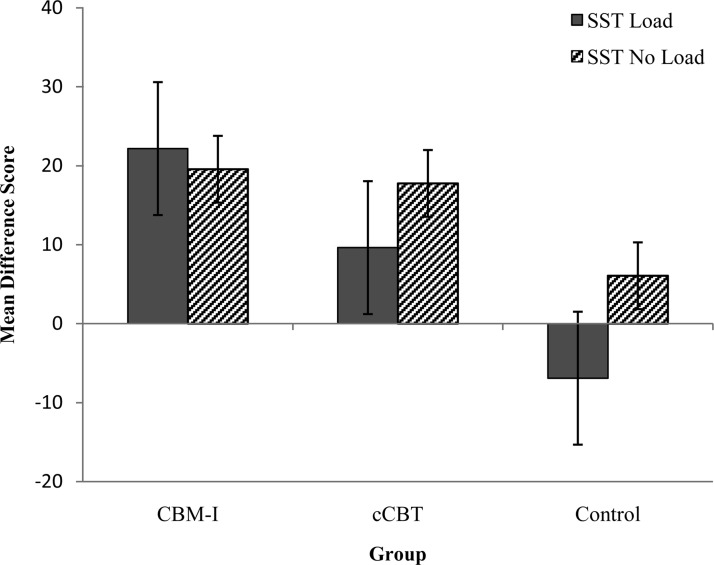
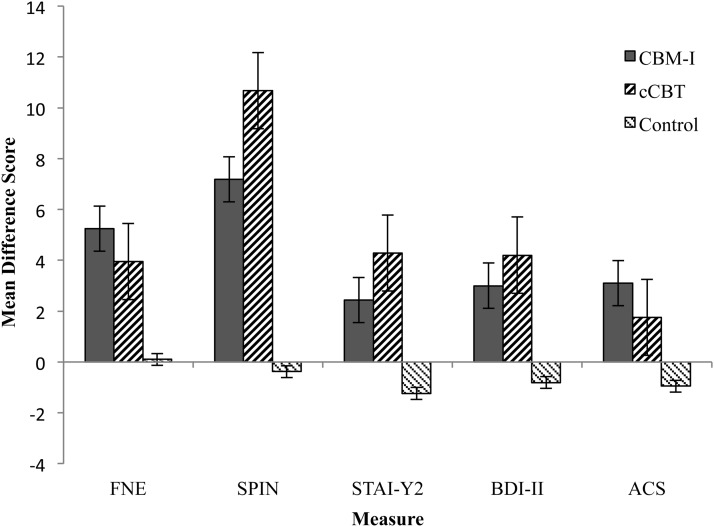
Both CBM-I and cCBT groups reported significantly reduced levels of social anxiety, trait anxiety, and depression and improved attentional control, relative to the control group, with no clear superiority of either active intervention. Although both active conditions reduced negative bias on the Scrambled Sentences Test completed under mental load, CBM-I was significantly more effective at doing so.
The results suggest that although not differing in therapeutic efficacy, CBM-I and cCBT might differ in the resilience of their effects when under mental load.
计算机化认知行为疗法(cCBT)和认知偏差修正解释(CBM-I)均已证明在缓解社交焦虑方面有效,但它们之间的比较尚未得到研究。本研究检验了这样一种预测,即两种干预措施都将相对于无干预比较条件减轻焦虑,但在高心理负荷下,CBM-I 特别有效地修正与威胁相关的认知偏差。
63 名主要为白种人成年人(平均年龄= 22.7,SD = 5.87;68.3%为女性),社交焦虑程度较高,随机分为 3 组:CBM-I(n = 21)、cCBT(n = 21)和无干预对照组(n = 21),为分析提供了完整的数据。在干预前(4 次,持续 2 周)和干预后(仅对照组参加了前后两次会议),完成了焦虑、抑郁、注意力控制和与威胁相关的解释性偏差的自我报告测量。此外,使用 scrambled Sentences Test 测量了高认知负荷与低认知负荷下的解释性偏差。
与对照组相比,CBM-I 和 cCBT 组均报告社交焦虑、特质焦虑和抑郁水平显著降低,注意力控制得到改善,两种积极干预均无明显优势。尽管两种积极条件均降低了在心理负荷下完成的 scrambled Sentences Test 中的负性偏差,但 CBM-I 的效果更为显著。
结果表明,虽然 CBM-I 和 cCBT 在治疗效果上没有差异,但在心理负荷下,它们的效果可能存在不同的恢复力。