Institut für Allgemeine Mikrobiologie, Christian-Albrechts-Universität zu Kiel, Am Botanischen Garten 1-9, 24118 Kiel, Germany.
Nucleic Acids Res. 2012 Nov;40(21):10964-79. doi: 10.1093/nar/gks847. Epub 2012 Sep 10.
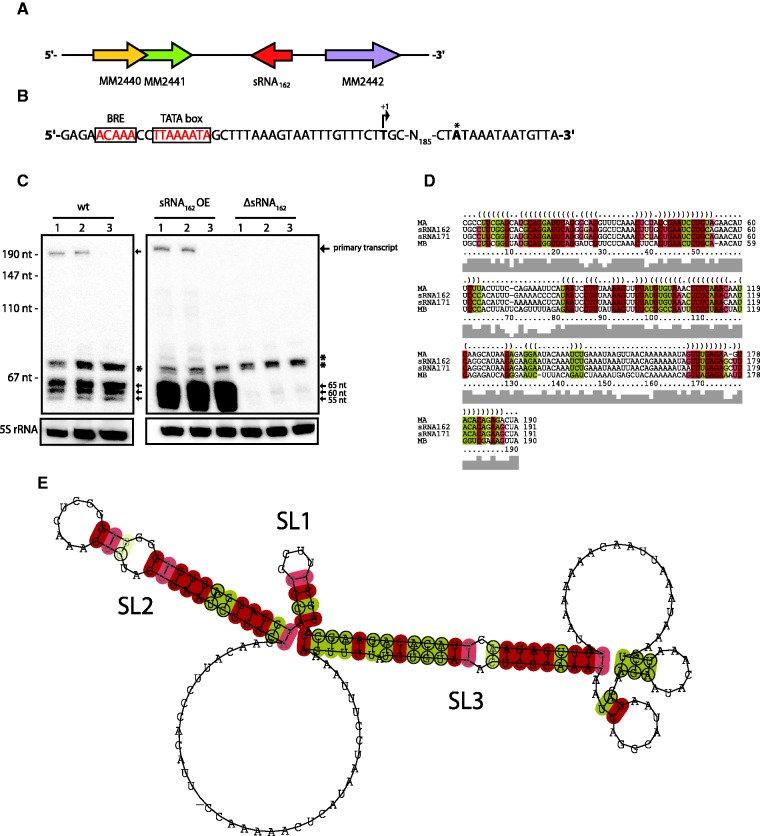
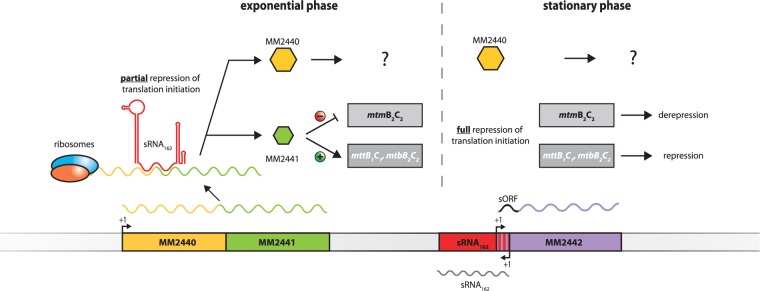
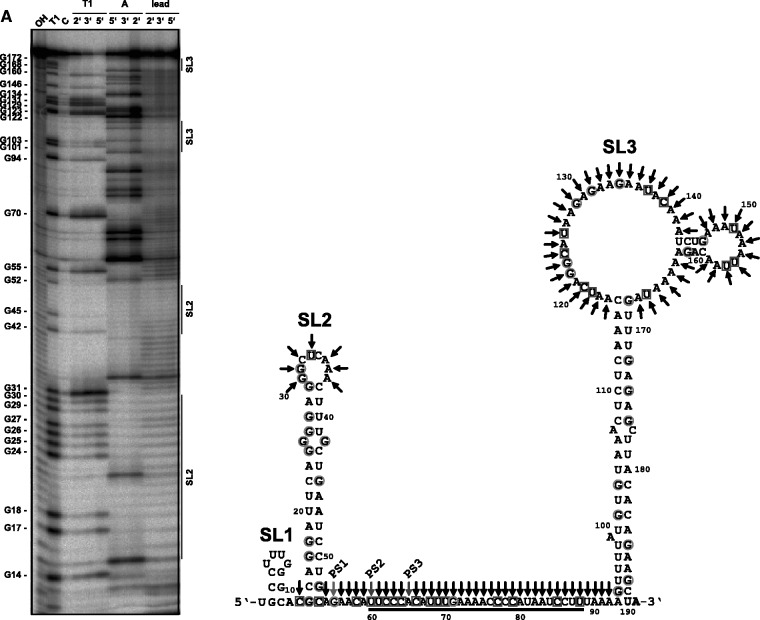
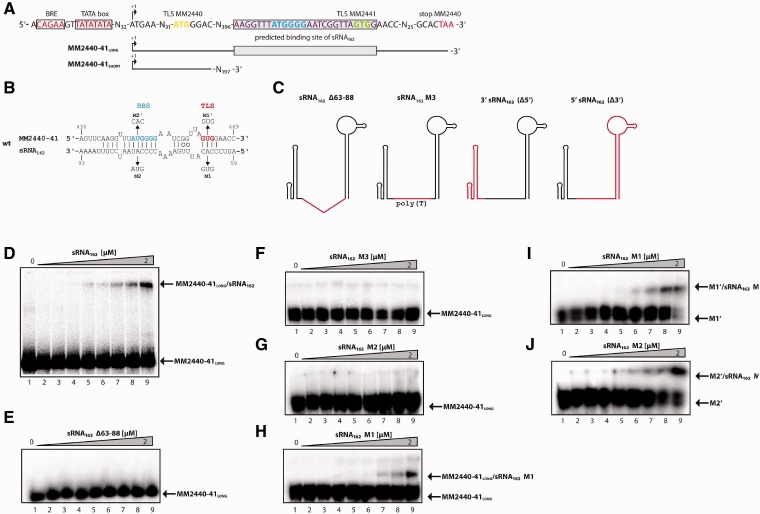
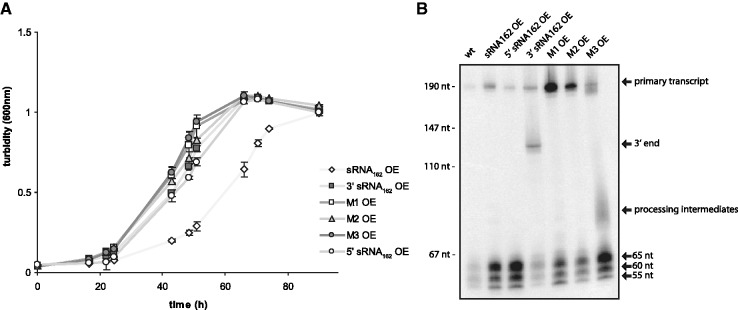
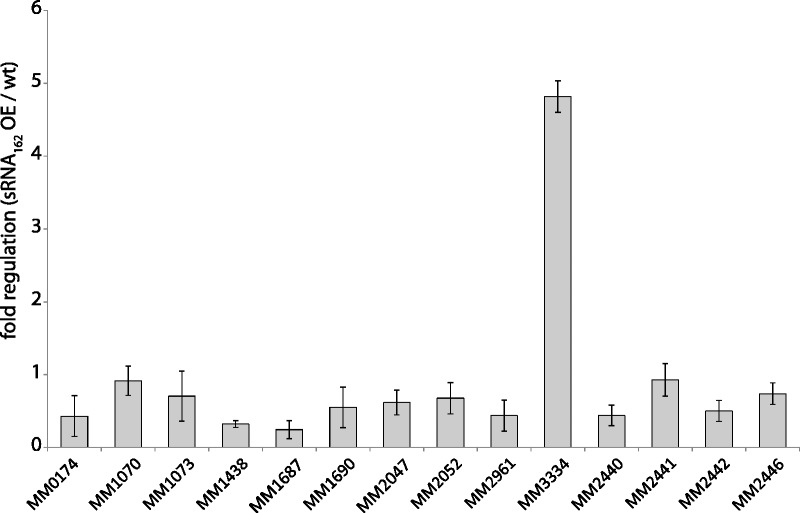
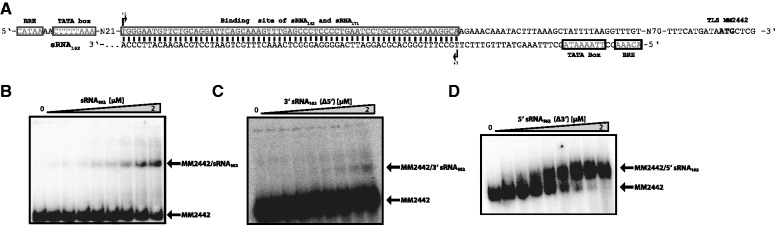
We report on the characterization and target analysis of the small (s)RNA(162) in the methanoarchaeon Methanosarcina mazei. Using a combination of genetic approaches, transcriptome analysis and computational predictions, the bicistronic MM2441-MM2440 mRNA encoding the transcription factor MM2441 and a protein of unknown function was identified as a potential target of this sRNA, which due to processing accumulates as three stabile 5' fragments in late exponential growth. Mobility shift assays using various mutants verified that the non-structured single-stranded linker region of sRNA(162) (SLR) base-pairs with the MM2440-MM2441 mRNA internally, thereby masking the predicted ribosome binding site of MM2441. This most likely leads to translational repression of the second cistron resulting in dis-coordinated operon expression. Analysis of mutant RNAs in vivo confirmed that the SLR of sRNA(162) is crucial for target interactions. Furthermore, our results indicate that sRNA(162)-controlled MM2441 is involved in regulating the metabolic switch between the carbon sources methanol and methylamine. Moreover, biochemical studies demonstrated that the 5' end of sRNA(162) targets the 5'-untranslated region of the cis-encoded MM2442 mRNA. Overall, this first study of archaeal sRNA/mRNA-target interactions unraveled that sRNA(162) acts as an antisense (as)RNA on cis- and trans-encoded mRNAs via two distinct domains, indicating that cis-encoded asRNAs can have larger target regulons than previously anticipated.
我们报告了甲烷古菌 Methanosarcina mazei 中小(s)RNA(162)的特征和靶标分析。使用遗传方法、转录组分析和计算预测的组合,鉴定了编码转录因子 MM2441 和未知功能蛋白的双顺反子 MM2441-MM2440 mRNA 是该 sRNA 的潜在靶标,由于加工,该 sRNA 在指数生长后期积累为三个稳定的 5' 片段。使用各种突变体的迁移率变动分析验证了 sRNA(162)(SLR)的非结构单链连接区与 MM2440-MM2441 mRNA 内部碱基配对,从而掩盖了 MM2441 的预测核糖体结合位点。这很可能导致第二个顺式基因座的翻译抑制,从而导致操纵子表达不协调。体内突变 RNA 分析证实,sRNA(162)的 SLR 对于靶标相互作用至关重要。此外,我们的结果表明,sRNA(162) 控制的 MM2441 参与调节甲醇和甲胺之间碳源的代谢转换。此外,生化研究表明,sRNA(162)的 5' 端靶向顺式编码的 MM2442 mRNA 的 5'-非翻译区。总的来说,这项关于古菌 sRNA/mRNA 靶标相互作用的首次研究表明,sRNA(162) 通过两个不同的结构域作为顺式和反式编码 mRNA 的反义(as)RNA 发挥作用,表明顺式编码 asRNA 可以具有比以前预期更大的靶标调控区。