Faculty of Chemistry, Biotechnology and Food Science, Norwegian University of Life Sciences, Ås, N-1432, Norway.
Luxembourg Centre for Systems Biomedicine, Université du Luxembourg, 4362, Esch-sur-Alzette, Luxembourg.
Nat Commun. 2020 Sep 18;11(1):4708. doi: 10.1038/s41467-020-18543-0.
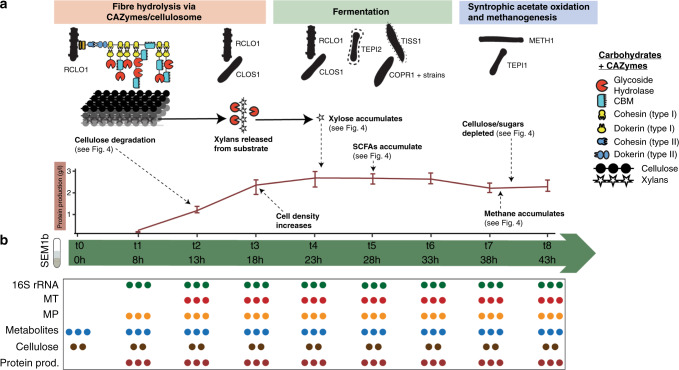
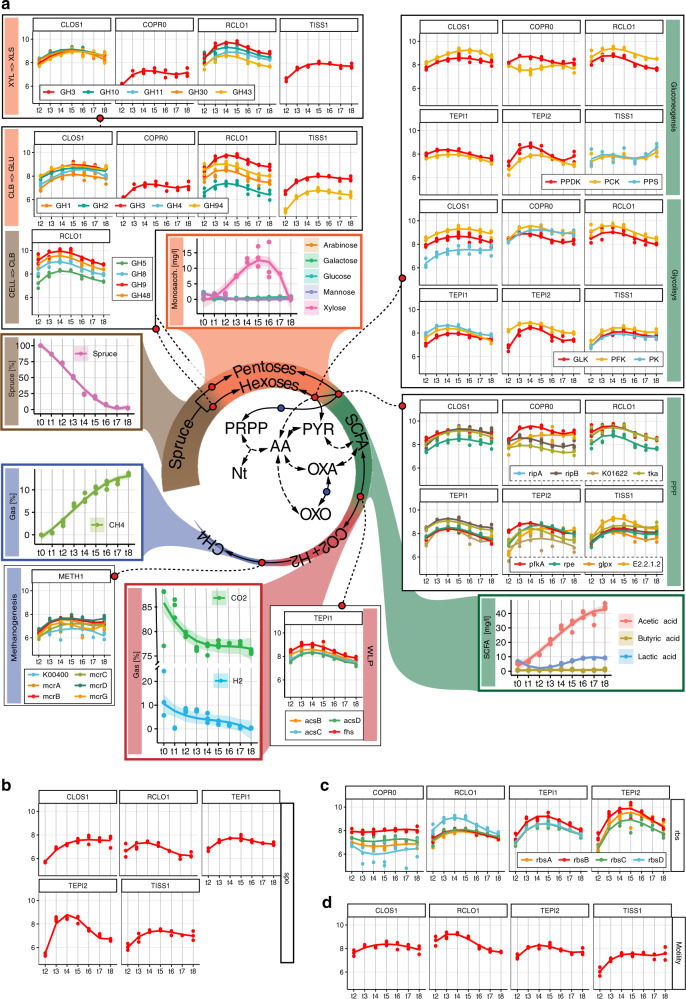
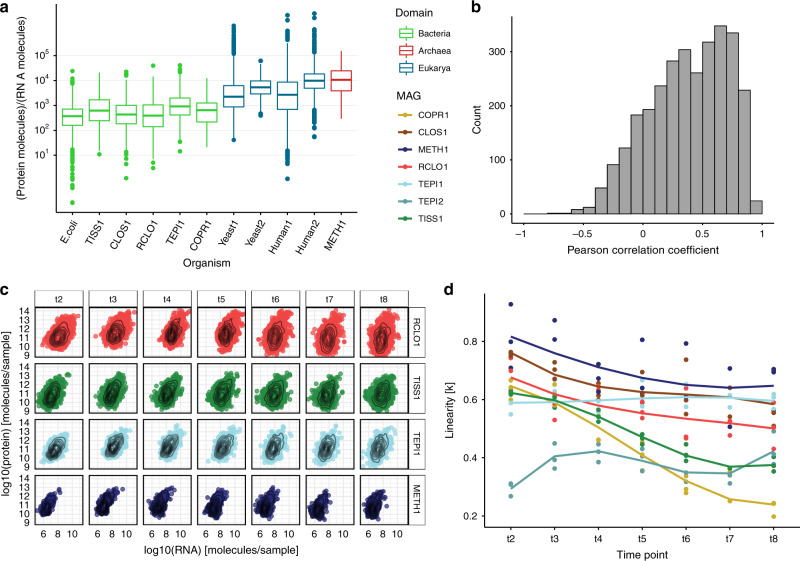
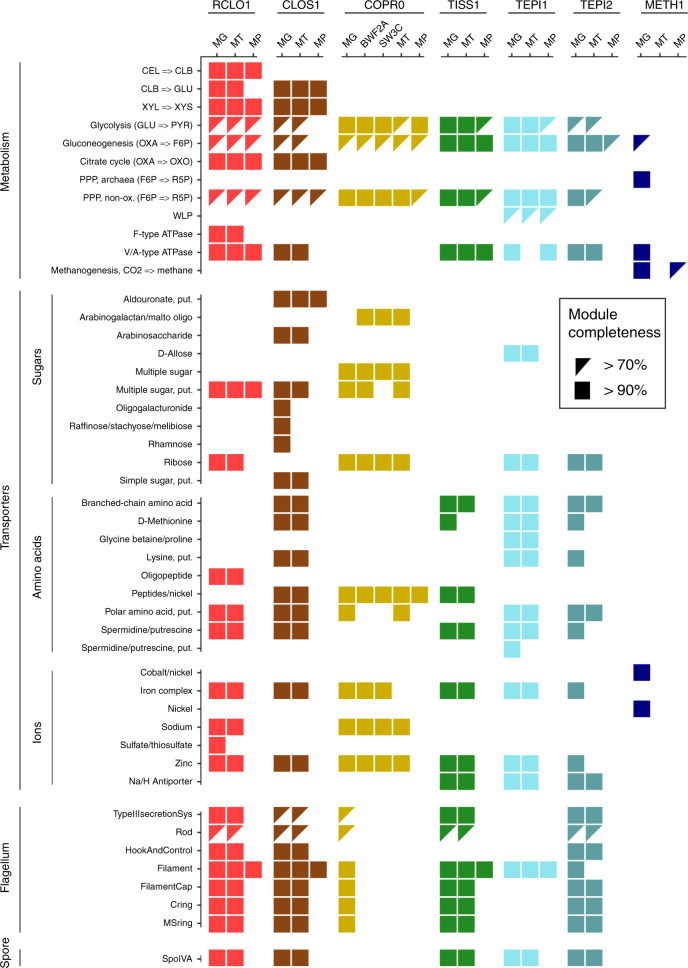
While the field of microbiology has adapted to the study of complex microbiomes via modern meta-omics techniques, we have not updated our basic knowledge regarding the quantitative levels of DNA, RNA and protein molecules within a microbial cell, which ultimately control cellular function. Here we report the temporal measurements of absolute RNA and protein levels per gene within a mixed bacterial-archaeal consortium. Our analysis of this data reveals an absolute protein-to-RNA ratio of 10-10 for bacterial populations and 10-10 for an archaeon, which is more comparable to Eukaryotic representatives' humans and yeast. Furthermore, we use the linearity between the metaproteome and metatranscriptome over time to identify core functional guilds, hence using a fundamental biological feature (i.e., RNA/protein levels) to highlight phenotypical complementarity. Our findings show that upgrading multi-omic toolkits with traditional absolute measurements unlocks the scaling of core biological questions to dynamic and complex microbiomes, creating a deeper insight into inter-organismal relationships that drive the greater community function.
尽管微生物学领域已经通过现代宏基因组学技术适应了对复杂微生物组的研究,但我们尚未更新有关微生物细胞内 DNA、RNA 和蛋白质分子的定量水平的基本知识,而这些分子最终控制着细胞功能。在这里,我们报告了在混合细菌-古菌联合体中每个基因的绝对 RNA 和蛋白质水平的时间测量结果。我们对这些数据的分析表明,细菌群体的绝对蛋白质与 RNA 比值为 10-10,古菌为 10-10,这与真核生物代表人类和酵母更为相似。此外,我们利用随时间推移的宏蛋白质组和宏转录组之间的线性关系来识别核心功能群,从而利用基本的生物学特征(即 RNA/蛋白质水平)来突出表型互补性。我们的研究结果表明,通过传统的绝对测量方法来升级多组学工具包,可以将核心生物学问题扩展到动态和复杂的微生物组,从而更深入地了解驱动更大社区功能的生物体间关系。