Hamid Ka, Yusoff An, Rahman Mza, Mohamad M, Hamid Aia
School of Diagnostic Sciences and Applied Health, Faculty of Health Sciences, Universiti Kebangsaan Malaysia, Kuala Lumpur, Malaysia.
Biomed Imaging Interv J. 2012 Apr;8(2):e13. doi: 10.2349/biij.8.2.e13. Epub 2012 Apr 1.
This fMRI study is about modelling the effective connectivity between Heschl's gyrus (HG) and the superior temporal gyrus (STG) in human primary auditory cortices. MATERIALS #ENTITYSTARTX00026;
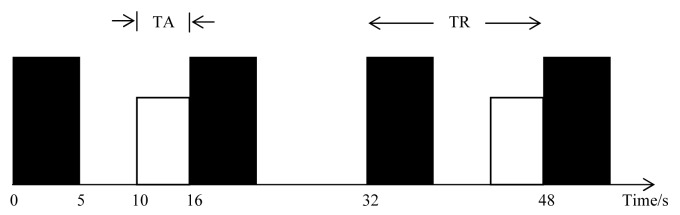
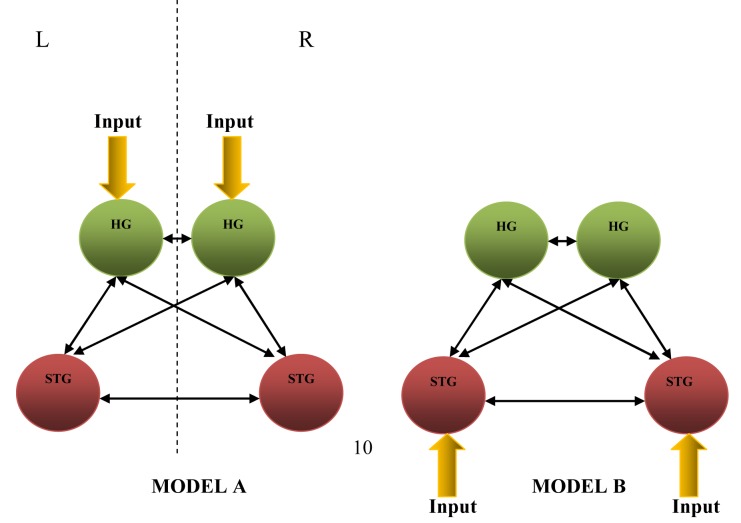
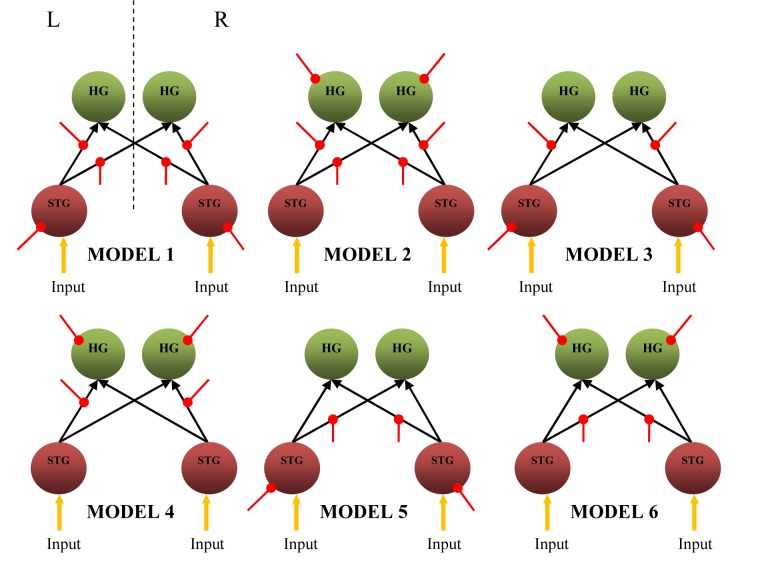
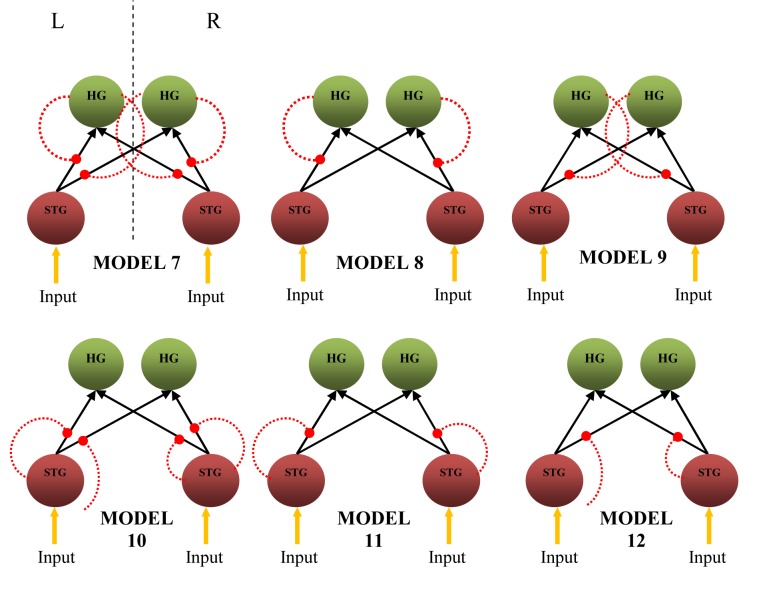
Ten healthy male participants were required to listen to white noise stimuli during functional magnetic resonance imaging (fMRI) scans. Statistical parametric mapping (SPM) was used to generate individual and group brain activation maps. For input region determination, two intrinsic connectivity models comprising bilateral HG and STG were constructed using dynamic causal modelling (DCM). The models were estimated and inferred using DCM while Bayesian Model Selection (BMS) for group studies was used for model comparison and selection. Based on the winning model, six linear and six non-linear causal models were derived and were again estimated, inferred, and compared to obtain a model that best represents the effective connectivity between HG and the STG, balancing accuracy and complexity.
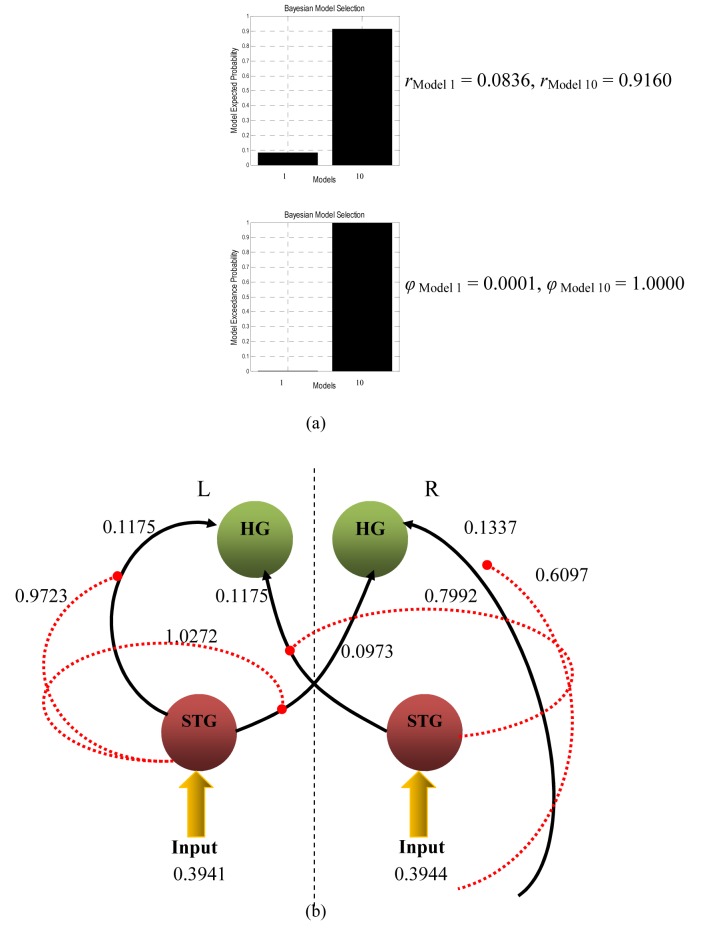
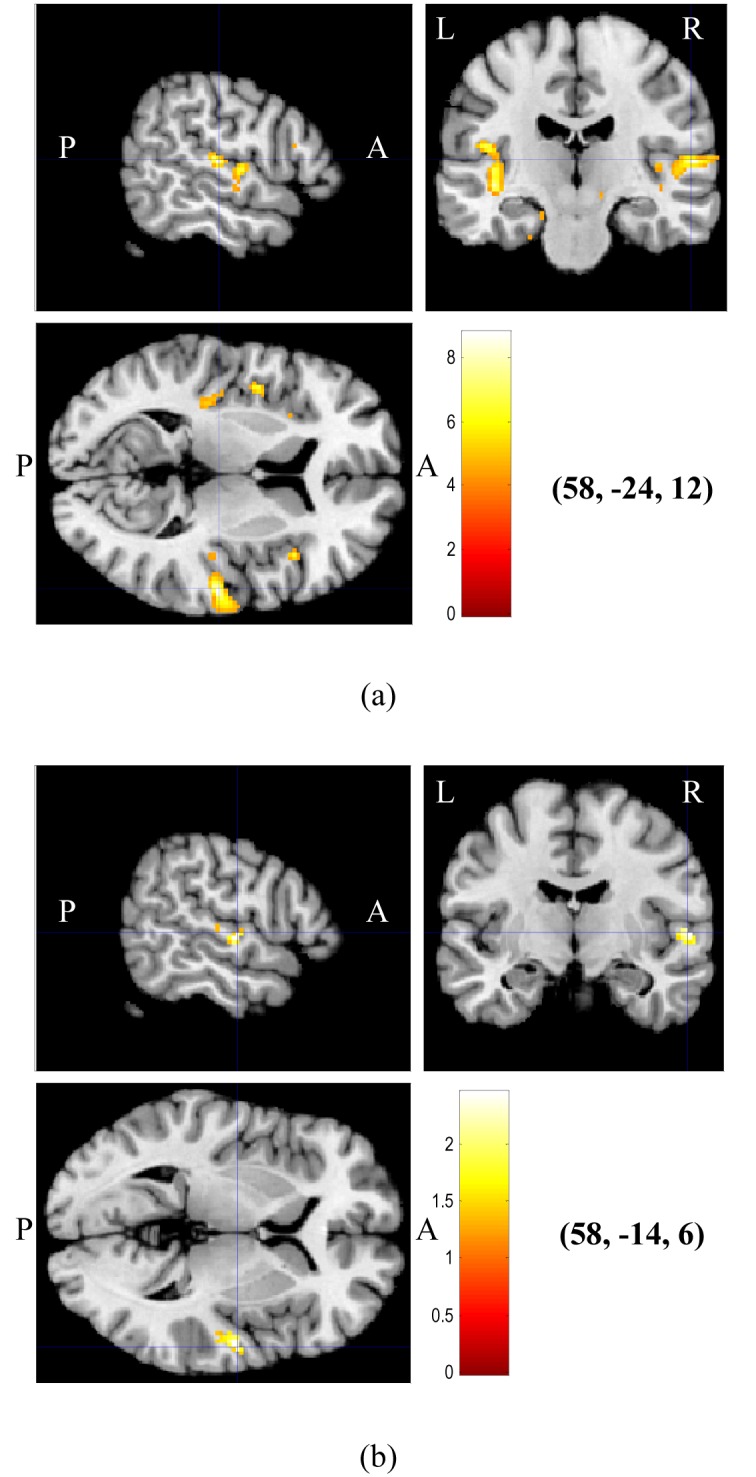
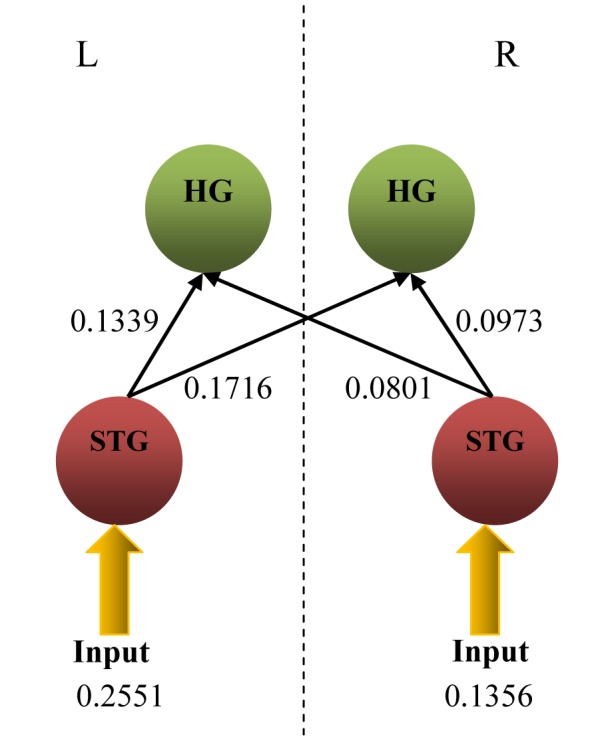
Group results indicated significant asymmetrical activation (p(uncorr) < 0.001) in bilateral HG and STG. Model comparison results showed strong evidence of STG as the input centre. The winning model is preferred by 6 out of 10 participants. The results were supported by BMS results for group studies with the expected posterior probability, r = 0.7830 and exceedance probability, ϕ = 0.9823. One-sample t-tests performed on connection values obtained from the winning model indicated that the valid connections for the winning model are the unidirectional parallel connections from STG to bilateral HG (p < 0.05). Subsequent model comparison between linear and non-linear models using BMS prefers non-linear connection (r = 0.9160, ϕ = 1.000) from which the connectivity between STG and the ipsi- and contralateral HG is gated by the activity in STG itself.
We are able to demonstrate that the effective connectivity between HG and STG while listening to white noise for the respective participants can be explained by a non-linear dynamic causal model with the activity in STG influencing the STG-HG connectivity non-linearly.
本功能磁共振成像(fMRI)研究旨在建立人类初级听觉皮层中颞横回(HG)与颞上回(STG)之间的有效连接模型。材料与方法:10名健康男性参与者在功能磁共振成像扫描期间被要求聆听白噪声刺激。使用统计参数映射(SPM)生成个体和组脑激活图。为了确定输入区域,使用动态因果模型(DCM)构建了两个包含双侧HG和STG的内在连接模型。使用DCM对模型进行估计和推断,而在组研究中使用贝叶斯模型选择(BMS)进行模型比较和选择。基于获胜模型,推导了六个线性和六个非线性因果模型,并再次进行估计、推断和比较,以获得一个在准确性和复杂性之间取得平衡、最能代表HG与STG之间有效连接的模型。结果:组结果表明双侧HG和STG存在显著的不对称激活(p(未校正)<0.001)。模型比较结果显示有强有力的证据表明STG是输入中心。10名参与者中有6名更喜欢获胜模型。组研究的BMS结果以预期的后验概率r = 0.7830和超越概率ϕ = 0.9823支持了这些结果。对从获胜模型获得的连接值进行的单样本t检验表明,获胜模型的有效连接是从STG到双侧HG的单向平行连接(p < 0.05)。随后使用BMS对线性和非线性模型进行的模型比较更喜欢非线性连接(r = 0.9160,ϕ = 1.000),其中STG与同侧和对侧HG之间的连接由STG自身的活动控制。结论:我们能够证明,对于各自的参与者,在聆听白噪声时HG与STG之间的有效连接可以由一个非线性动态因果模型来解释,其中STG中的活动非线性地影响STG - HG连接。