Department of Human Genetics, The University of Chicago, Chicago, Illinois, United States of America.
PLoS One. 2012;7(9):e42367. doi: 10.1371/journal.pone.0042367. Epub 2012 Sep 6.
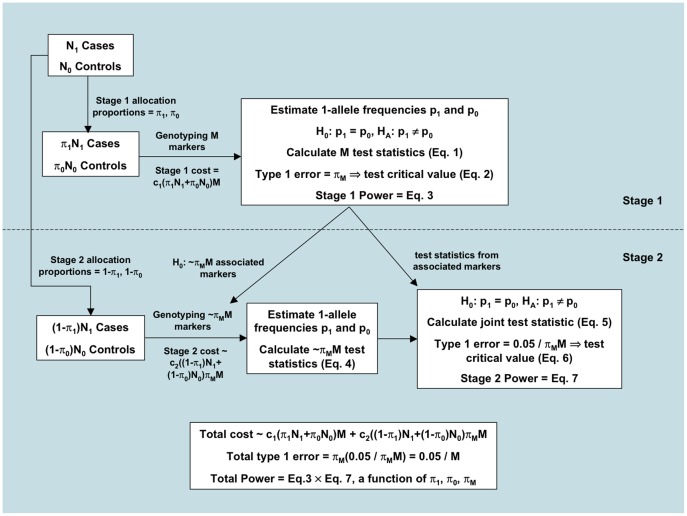
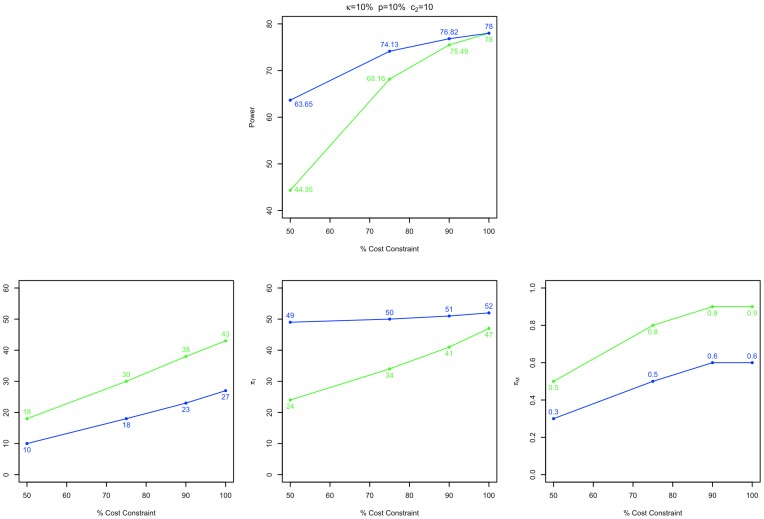
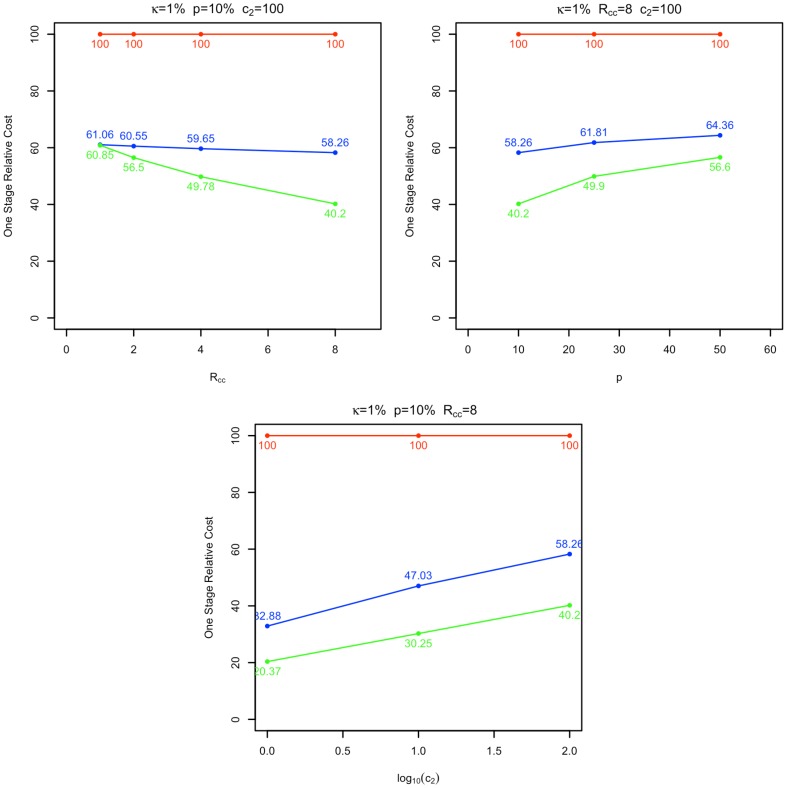
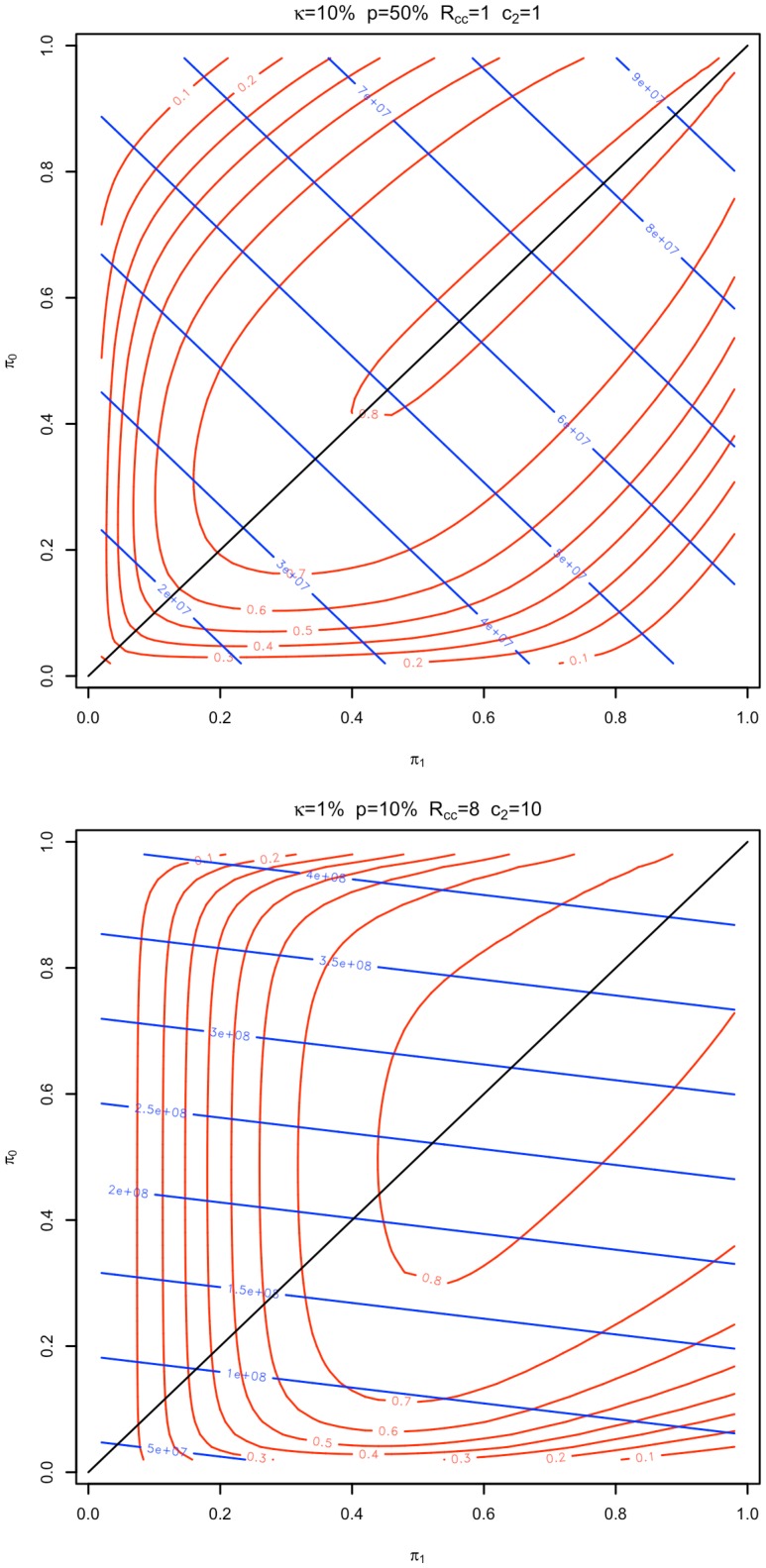
In a two stage genome-wide association study (2S-GWAS), a sample of cases and controls is allocated into two groups, and genetic markers are analyzed sequentially with respect to these groups. For such studies, experimental design considerations have primarily focused on minimizing study cost as a function of the allocation of cases and controls to stages, subject to a constraint on the power to detect an associated marker. However, most treatments of this problem implicitly restrict the set of feasible designs to only those that allocate the same proportions of cases and controls to each stage. In this paper, we demonstrate that removing this restriction can improve the cost advantages demonstrated by previous 2S-GWAS designs by up to 40%. Additionally, we consider designs that maximize study power with respect to a cost constraint, and show that recalculated power maximizing designs can recover a substantial amount of the planned study power that might otherwise be lost if study funding is reduced. We provide open source software for calculating cost minimizing or power maximizing 2S-GWAS designs.
在两阶段全基因组关联研究(2S-GWAS)中,将病例和对照样本分配到两个组中,并针对这些组顺序分析遗传标记。对于此类研究,实验设计考虑主要集中在最小化研究成本,这是作为病例和对照分配到各阶段的函数,同时满足检测相关标记的功效的约束。然而,该问题的大多数处理方法都隐含地将可行设计集限制为仅那些将相同比例的病例和对照分配到每个阶段的设计。在本文中,我们证明了取消此限制可以将以前的 2S-GWAS 设计所展示的成本优势提高多达 40%。此外,我们考虑了针对成本约束最大化研究功效的设计,并表明重新计算的功效最大化设计可以恢复大量计划研究功效,否则如果研究资金减少,这些功效可能会丢失。我们提供用于计算最小化成本或最大化功效的 2S-GWAS 设计的开源软件。