Baglio Serena Rubina, Pegtel D Michiel, Baldini Nicola
Laboratory for Orthopaedic Pathophysiology and Regenerative Medicine, Istituto Ortopedico Rizzoli Bologna, Italy.
Front Physiol. 2012 Sep 6;3:359. doi: 10.3389/fphys.2012.00359. eCollection 2012.
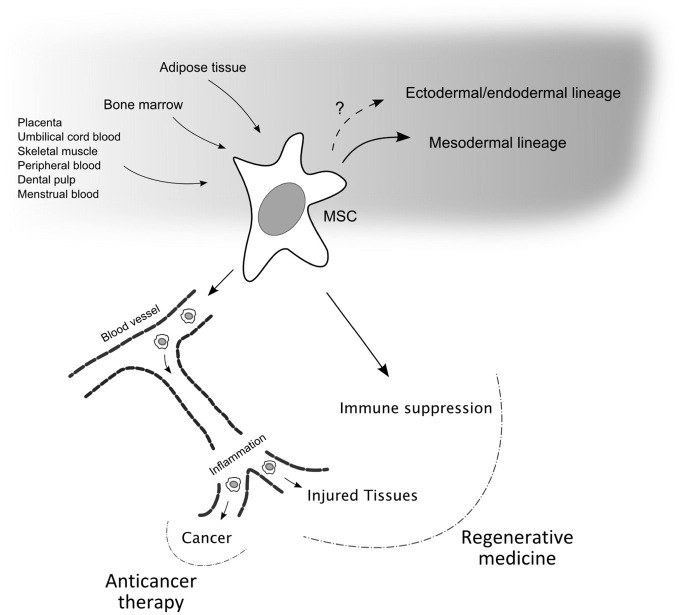
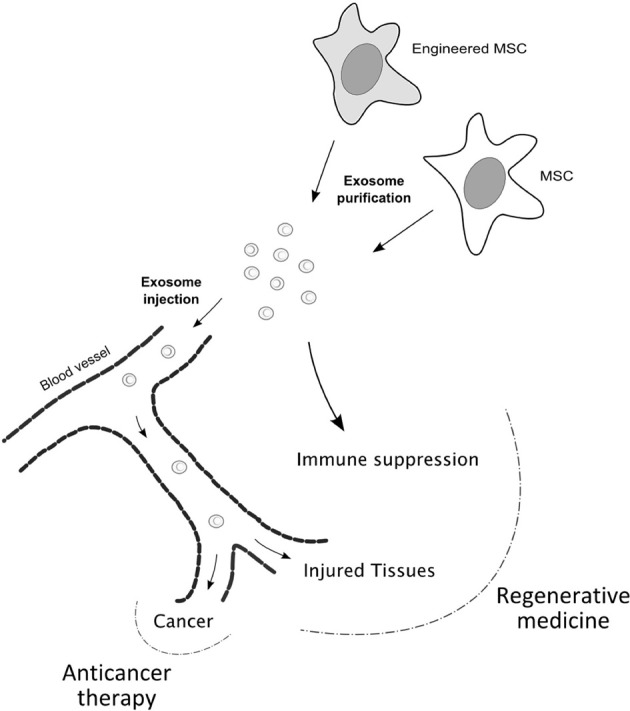
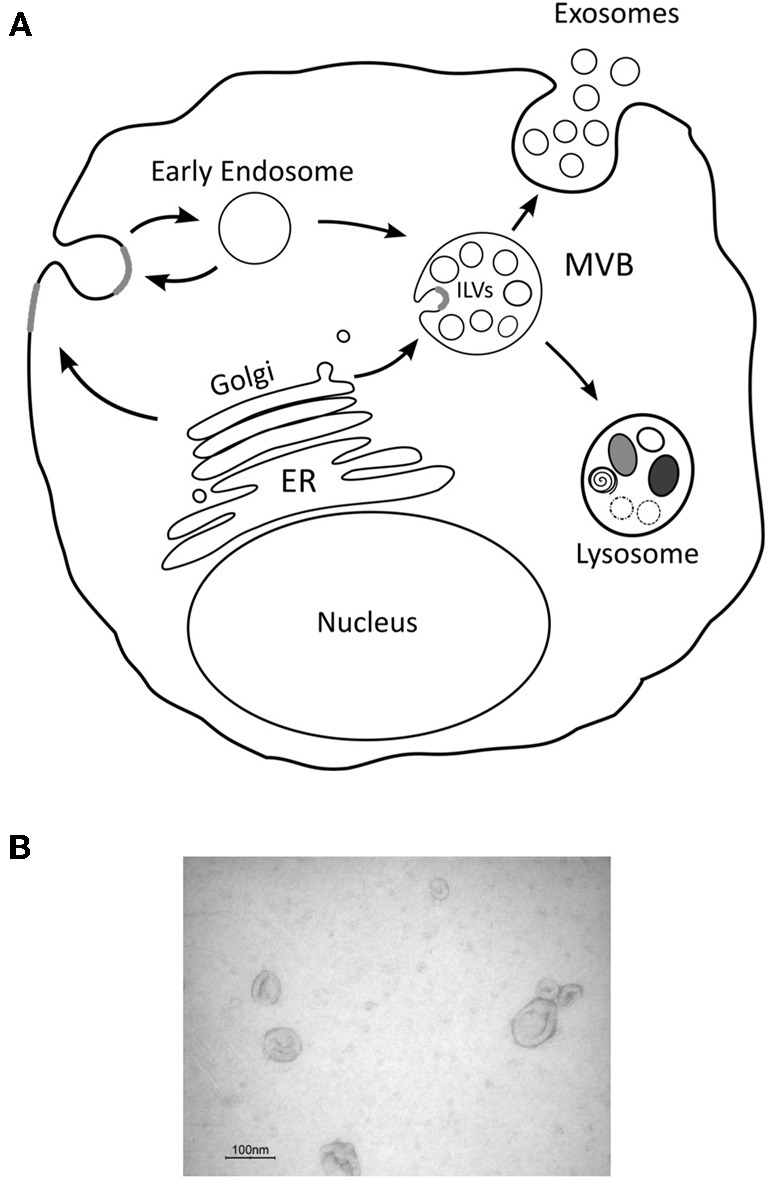
Mesenchymal stem cells (MSCs) are adult multipotent cells that give rise to various cell types of the mesodermal germ layer. MSCs are of great interest in the field of regenerative medicine and cancer therapy because of their unique ability to home to damaged and cancerous tissue. These cells also regulate the immune response and contribute to reparative processes in different pathological conditions, including musculoskeletal and cardiovascular diseases. The use of MSCs for tissue repair was initially based on the hypothesis that these cells home to and differentiate within the injured tissue into specialized cells. However, it now appears that only a small proportion of transplanted MSCs actually integrate and survive in host tissues. Thus, the predominant mechanism by which MSCs participate in tissue repair seems to be related to their paracrine activity. Indeed, MSCs provide the microenvironment with a multitude of trophic and survival signals including growth factors and cytokines. Recent discoveries suggest that lipid microvesicles released by MSCs may also be important in the physiological function of these cells. Over the past few years the biological relevance of micro- and nano-vesicles released by cells in intercellular communication has been established. Alongside the conventional mediators of cell secretome, these sophisticated nanovesicles transfer proteins, lipids and, most importantly, various forms of RNAs to neighboring cells, thereby mediating a variety of biological responses. The physiological role of MSC-derived vesicles (MSC-MVs) is currently not well understood. Nevertheless, encouraging results indicate that MSC-MVs have similar protective and reparative properties as their cellular counterparts in tissue repair and possibly anti-cancer therapy. Thus, MSC-MVs represent a promising opportunity to develop novel cell-free therapy approaches that might overcome the obstacles and risks associated with the use of native or engineered stem cells.
间充质干细胞(MSCs)是成体多能细胞,可分化为中胚层胚层的各种细胞类型。由于MSCs具有归巢至受损和癌组织的独特能力,因此在再生医学和癌症治疗领域备受关注。这些细胞还可调节免疫反应,并在包括肌肉骨骼和心血管疾病在内的不同病理状况下促进修复过程。最初,使用MSCs进行组织修复是基于这样的假设,即这些细胞归巢至受伤组织并在其中分化为特化细胞。然而,现在看来,只有一小部分移植的MSCs实际整合并存活于宿主组织中。因此,MSCs参与组织修复的主要机制似乎与其旁分泌活性有关。事实上,MSCs为微环境提供了大量的营养和存活信号,包括生长因子和细胞因子。最近的发现表明,MSCs释放的脂质微泡在这些细胞的生理功能中可能也很重要。在过去几年中,细胞释放的微泡和纳米泡在细胞间通讯中的生物学相关性已得到证实。除了细胞分泌组的传统介质外,这些复杂的纳米泡还将蛋白质、脂质,最重要的是各种形式的RNA转移至邻近细胞,从而介导多种生物学反应。目前,人们对MSCs衍生的微泡(MSC-MVs)的生理作用了解尚少。然而,令人鼓舞的结果表明,在组织修复以及可能的抗癌治疗中,MSC-MVs具有与其细胞对应物相似的保护和修复特性。因此,MSC-MVs为开发新型无细胞治疗方法提供了一个有前景的机会,这种方法可能克服与使用天然或工程干细胞相关的障碍和风险。