Park Yong Won, Kim Chang Hwan, Kim Myeong Ok, Jeong Hyung Joon, Jung Han Young
Department of Rehabilitation Medicine, Inha University College of Medicine, Incheon 400-711, Korea.
Ann Rehabil Med. 2012 Aug;36(4):556-60. doi: 10.5535/arm.2012.36.4.556. Epub 2012 Aug 27.
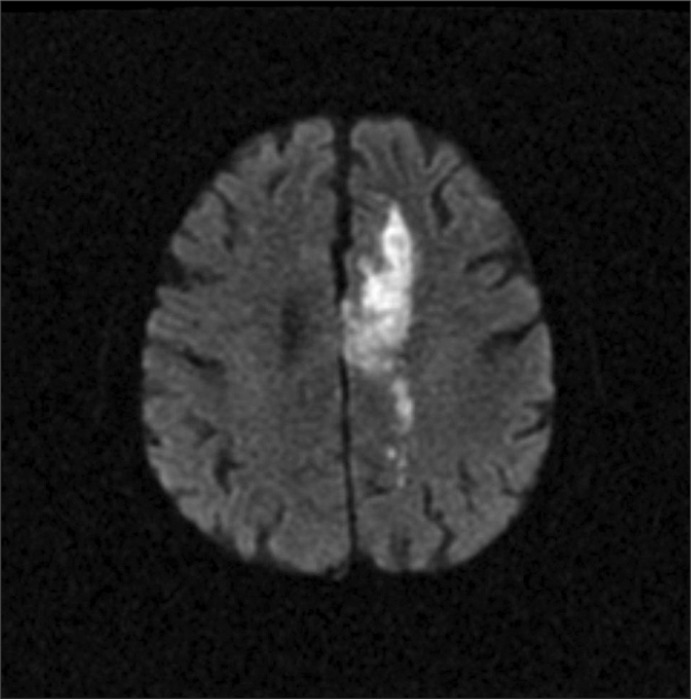
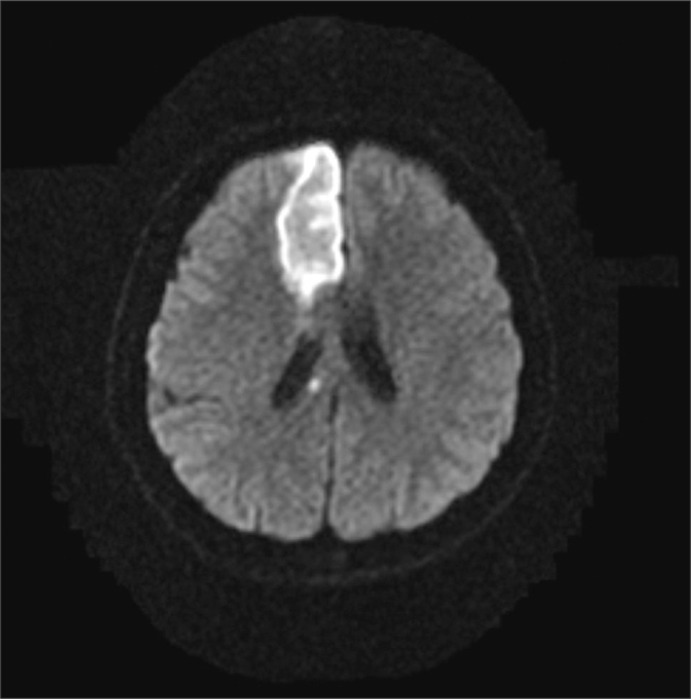
Alien Hand Syndrome is defined as unwilled, uncontrollable, but seemingly purposeful movements of an upper limb. Two major criteria for the diagnosis are complaint of a foreign limb and complex, autonomous, involuntary motor activity that is not part of an identifiable movement disorder. After a cerebrovascular accident in the corpus callosum, the parietal, or frontal regions, various abnormal involuntary motor behaviors may follow. Although different subtypes of Alien Hand Syndrome have been distinguished, this classification clearly does not cover the wide clinical variety of abnormal motor behaviors of the upper extremity. And there are few known studies about the neurophysiology of this syndrome using transcranial magnetic stimulation (TMS). We recently experienced 2 rare cases of Alien Hand Syndrome which occurred after anterior cerebral artery (ACA) infarction. A 72 year-old male with right hemiplegia following a left ACA infarct had difficulty with voluntarily releasing an object from his grasp. A 47 year-old female with left hemiplegia following a right ACA infarct had a problem termed 'intermanual conflict' in which the two hands appear to be directed at opposing purposes. Both of them had neurophysiologic studies done, and showed reduced amplitude by single pulse MEP and a lack of intracortical inhibition (ICI) by paired pulse TMS. No abnormalities were found in SSEP.
异己手综合征被定义为上肢出现不自主、无法控制但看似有目的的运动。诊断的两个主要标准是患者主诉有陌生肢体以及存在复杂、自主、非自愿的运动活动,且这些活动不属于可识别的运动障碍。在胼胝体、顶叶或额叶区域发生脑血管意外后,可能会出现各种异常的非自愿运动行为。尽管异己手综合征已被区分出不同的亚型,但这种分类显然并未涵盖上肢异常运动行为广泛的临床多样性。而且,关于使用经颅磁刺激(TMS)研究该综合征神经生理学的已知研究很少。我们最近遇到了2例罕见的异己手综合征病例,均发生在前交通动脉(ACA)梗死之后。一名72岁男性在左侧ACA梗死出现右侧偏瘫,在自愿松开手中物体时存在困难。一名47岁女性在右侧ACA梗死出现左侧偏瘫,存在一种被称为“双手冲突”的问题,即两只手似乎朝着相反的目的行动。两人均进行了神经生理学研究,单脉冲运动诱发电位(MEP)显示波幅降低,配对脉冲TMS显示皮质内抑制(ICI)缺乏。体感诱发电位(SSEP)未发现异常。