Center for Mitochondrial Diseases, School of Medicine, Case Western Reserve University, Cleveland, OH 44106‐4981, USA.
J Mol Cell Cardiol. 2013 Feb;55:31-41. doi: 10.1016/j.yjmcc.2012.09.002. Epub 2012 Sep 13.
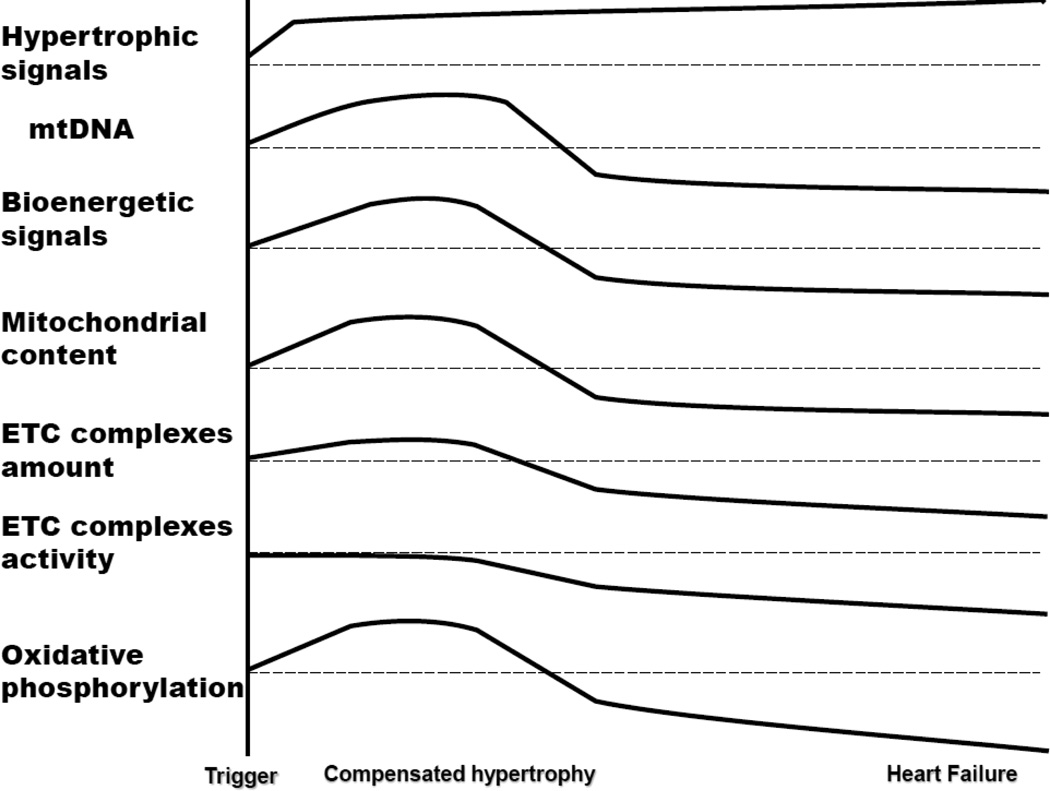
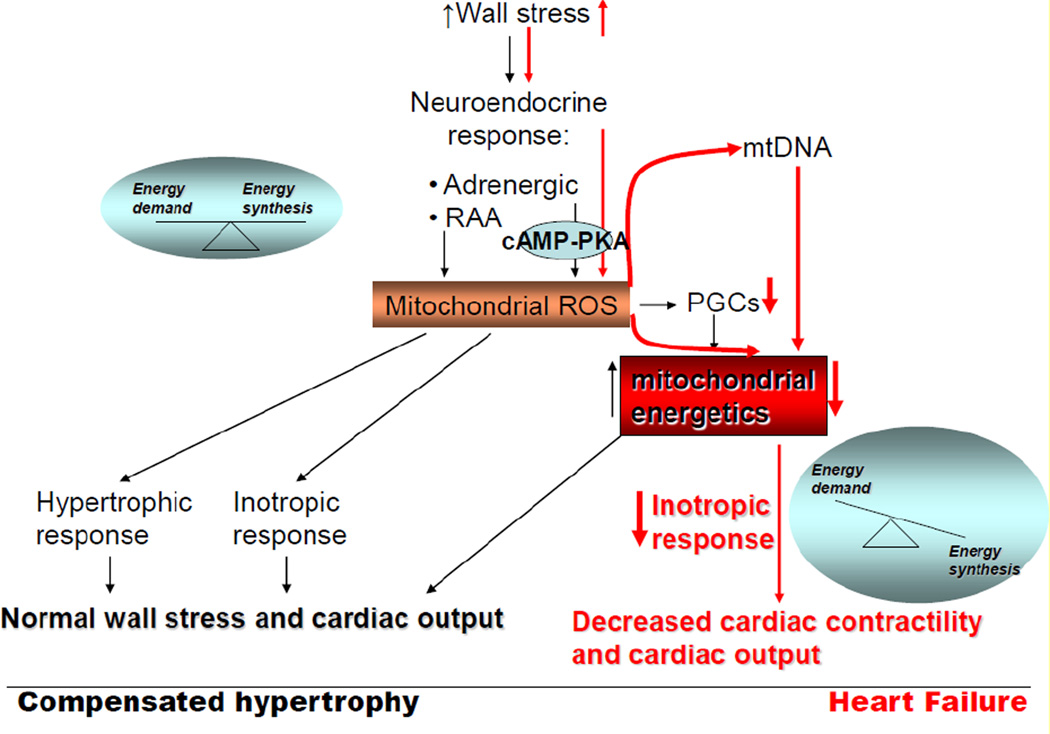
Heart failure (HF) frequently is the unfavorable outcome of pathological heart hypertrophy. In contrast to physiological cardiac hypertrophy, which occurs in response to exercise and leads to full adaptation of contractility to the increased wall stress, pathological hypertrophy occurs in response to volume or pressure overload, ultimately leading to contractile dysfunction and HF. Because cardiac hypertrophy impairs the relationship between ATP demand and production, mitochondrial bioenergetics must keep up with the cardiac hypertrophic phenotype. We review data regarding the mitochondrial proteomic and energetic remodeling in cardiac hypertrophy, as well as the temporal and causal relationships between mitochondrial failure to match the increased energy demand and progression to cardiac decompensation. We suggest that the maladaptive effect of sustained neuroendocrine signals on mitochondria leads to bioenergetic fading which contributes to the progression from cardiac hypertrophy to failure. This article is part of a Special Issue entitled "Focus on Cardiac Metabolism".
心力衰竭(HF)通常是病理性心肌肥厚的不良后果。与生理性心肌肥厚不同,后者是对运动的反应,导致收缩性完全适应增加的壁应力,病理性心肌肥厚是对容量或压力超负荷的反应,最终导致收缩功能障碍和 HF。由于心肌肥厚会损害 ATP 需求与产生之间的关系,因此线粒体生物能学必须跟上心肌肥厚表型的变化。我们回顾了有关心肌肥厚中线粒体蛋白质组学和能量重塑的资料,以及线粒体无法满足增加的能量需求与心脏失代偿进展之间的时间和因果关系。我们认为,持续的神经内分泌信号对线粒体的适应不良效应导致了生物能学的衰退,这有助于从心肌肥厚进展为衰竭。本文是特刊“关注心脏代谢”的一部分。