Animal and Bioscience Research Department, Animal & Grassland Research and Innovation Centre, Teagasc, Grange, Co, Meath, Ireland.
BMC Genomics. 2012 Sep 18;13:489. doi: 10.1186/1471-2164-13-489.
All cows experience bacterial contamination and tissue injury in the uterus postpartum, instigating a local inflammatory immune response. However mechanisms that control inflammation and achieve a physiologically functioning endometrium, while avoiding disease in the postpartum cow are not succinctly defined. This study aimed to identify novel candidate genes indicative of inflammation resolution during involution in healthy beef cows. Previous histological analysis of the endometrium revealed elevated inflammation 15 days postpartum (DPP) which was significantly decreased by 30 DPP. The current study generated a genome-wide transcriptomic profile of endometrial biopsies from these cows at both time points using mRNA-Seq. The pathway analysis tool GoSeq identified KEGG pathways enriched by significantly differentially expressed genes at both time points. Novel candidate genes associated with inflammatory resolution were subsequently validated in additional postpartum animals using quantitative real-time PCR (qRT-PCR).
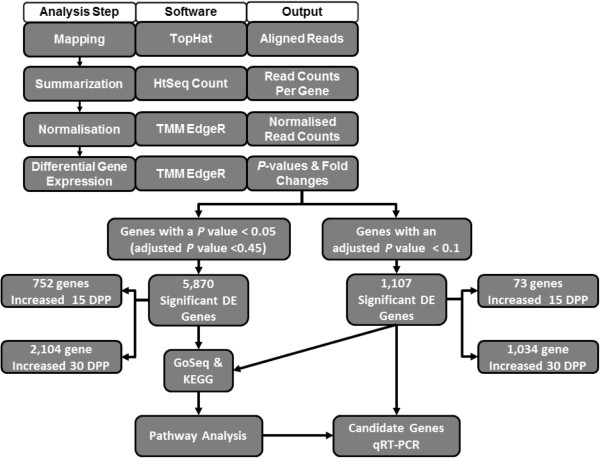
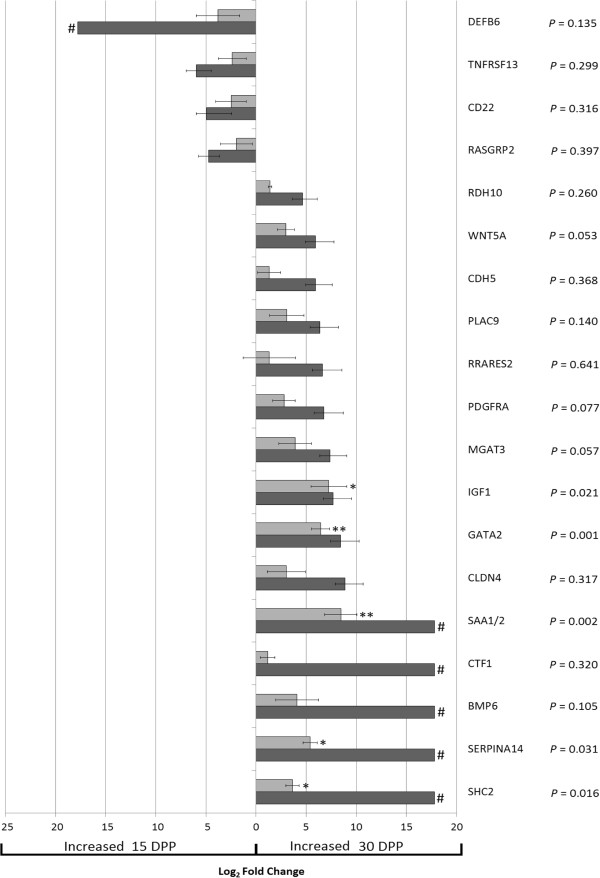
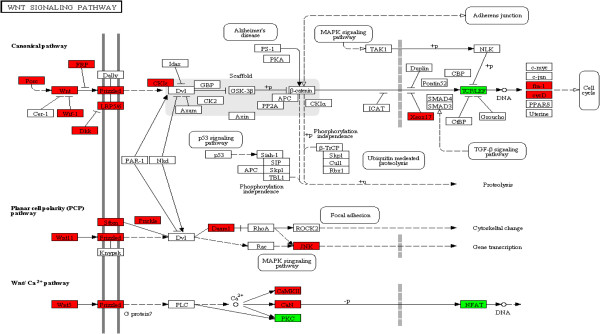
mRNA-Seq revealed 1,107 significantly differentially expressed genes, 73 of which were increased 15 DPP and 1,034 were increased 30 DPP. Early postpartum, enriched immune pathways (adjusted P < 0.1) included the T cell receptor signalling pathway, graft-versus-host disease and cytokine-cytokine receptor interaction pathways. However 30 DPP, where the majority of genes were differentially expressed, the enrichment (adjusted P < 0.1) of tissue repair and proliferative activity pathways was observed. Nineteen candidate genes selected from mRNA-Seq results, were independently assessed by qRT-PCR in additional postpartum cows (5 animals) at both time points. SAA1/2, GATA2, IGF1, SHC2, and SERPINA14 genes were significantly elevated 30 DPP and are functionally associated with tissue repair and the restoration of uterine homeostasis postpartum.
The results of this study reveal an early activation of the immune response which undergoes a temporal functional change toward tissue proliferation and regeneration during endometrial involution in healthy postpartum cows. These molecular changes mirror the activation and resolution of endometrial inflammation during involution previously classified by the degree of neutrophil infiltration. SAA1/2, GATA2, IGF1, SHC2, and SERPINA14 genes may become potential markers for resolution of endometrial inflammation in the postpartum cow.
所有奶牛在产后的子宫中都会经历细菌污染和组织损伤,引发局部炎症免疫反应。然而,控制炎症并使子宫内膜发挥生理功能,同时避免产后奶牛患病的机制尚不清楚。本研究旨在鉴定健康肉牛产后子宫复旧过程中炎症消退的新型候选基因。先前对子宫内膜的组织学分析显示,产后 15 天(DPP)的炎症水平升高,而在 30 DPP 时显著降低。本研究使用 mRNA-Seq 对这些奶牛在两个时间点的子宫内膜活检进行了全基因组转录组谱分析。通路分析工具 GoSeq 确定了在两个时间点显著差异表达基因富集的 KEGG 通路。随后,使用定量实时 PCR(qRT-PCR)在其他产后动物中验证了与炎症消退相关的新型候选基因。
mRNA-Seq 共鉴定出 1107 个差异表达基因,其中 73 个在产后 15 天增加,1034 个在产后 30 天增加。早期产后,富集的免疫途径(调整后的 P < 0.1)包括 T 细胞受体信号通路、移植物抗宿主病和细胞因子-细胞因子受体相互作用途径。然而,在 30 DPP 时,大多数基因差异表达,观察到组织修复和增殖活性途径的富集(调整后的 P < 0.1)。从 mRNA-Seq 结果中选择的 19 个候选基因,在其他产后奶牛(5 只动物)的两个时间点通过 qRT-PCR 进行了独立评估。SAA1/2、GATA2、IGF1、SHC2 和 SERPINA14 基因在 30 DPP 时显著升高,与产后组织修复和子宫内稳态的恢复功能相关。
本研究结果揭示了健康产后奶牛子宫内膜复旧过程中,免疫反应的早期激活,并随着组织增殖和再生而发生时间功能变化。这些分子变化反映了先前根据中性粒细胞浸润程度分类的子宫内膜炎症的激活和消退。SAA1/2、GATA2、IGF1、SHC2 和 SERPINA14 基因可能成为产后奶牛子宫内膜炎症消退的潜在标志物。