Adnane Mounir, Meade Kieran G, O'Farrelly Cliona
School of Biochemistry and Immunology & School of Medicine, Trinity Biomedical Sciences Institute (TBSI), Trinity College Dublin, 152-160 Pearse Street, Dublin 2, Ireland.
Institute of Veterinary Sciences, Tiaret, Algeria.
Vet Res Commun. 2018 Dec;42(4):255-263. doi: 10.1007/s11259-018-9734-0. Epub 2018 Aug 16.
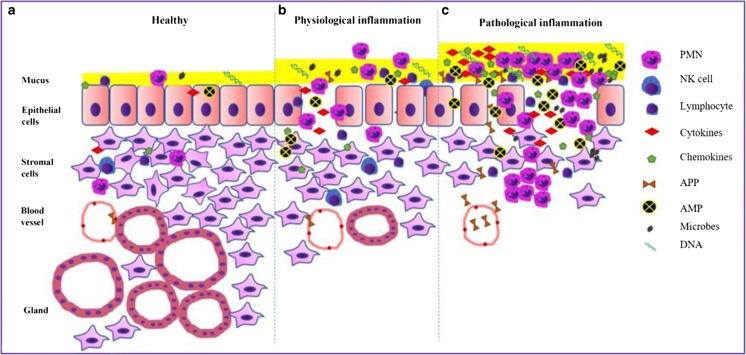
Cervico-vaginal mucus (CVM), the product of epithelial cells lining the uterus, cervix and vagina, is secreted to facilitate uterine lubrication and microbial clearance. Predominantly composed of water and mucins, CVM also contains high levels of immuno-active proteins such as immunoglobulin A (IgA), lactoferrin and lysozyme which protect against infection by blocking adhesion and mediating microbial killing. The repertoire of cytokines, chemokines and antimicrobial peptides is predominantly generated by the secretions of endometrial epithelial cells into the uterine lumen and concentrated in the CVM. The quantity and relative proportions of these inflammatory biomarkers are affected by diverse factors including the estrus cycle and health status of the animal and therefore potentially provide important diagnostic and prognostic indicators. We propose that measuring molecular signatures in bovine CVM could be a useful approach to identifying and monitoring genital tract pathologies in beef and dairy cows.
宫颈阴道黏液(CVM)是子宫、宫颈和阴道内衬上皮细胞的产物,其分泌有助于子宫润滑和微生物清除。CVM主要由水和黏蛋白组成,还含有高水平的免疫活性蛋白,如免疫球蛋白A(IgA)、乳铁蛋白和溶菌酶,它们通过阻止黏附和介导微生物杀伤来预防感染。细胞因子、趋化因子和抗菌肽主要由子宫内膜上皮细胞分泌到子宫腔中,并集中在CVM中。这些炎症生物标志物的数量和相对比例受多种因素影响,包括动物的发情周期和健康状况,因此可能提供重要的诊断和预后指标。我们认为,测量牛CVM中的分子特征可能是识别和监测肉牛和奶牛生殖道疾病的一种有用方法。