Public Health Emergency Management, Ethiopian Health and NutritionResearch Institute, Addis Ababa, Ethiopia.
Malar J. 2012 Sep 17;11:330. doi: 10.1186/1475-2875-11-330.
Routine malaria surveillance data is useful for assessing incidence and trends over time, and in stratification for targeting of malaria control. The reporting completeness and potential bias of such data needs assessment.
Data on 17 malaria indicators were extracted from the Integrated Disease Surveillance and Response System database for July 2004 to June 2009 (Ethiopian calendar reporting years 1997 to 2001). Reporting units were standardized over time with 2007 census populations. The data were analysed to show reporting completeness, variation in risk by reporting unit, and incidence trends for malaria indicators.
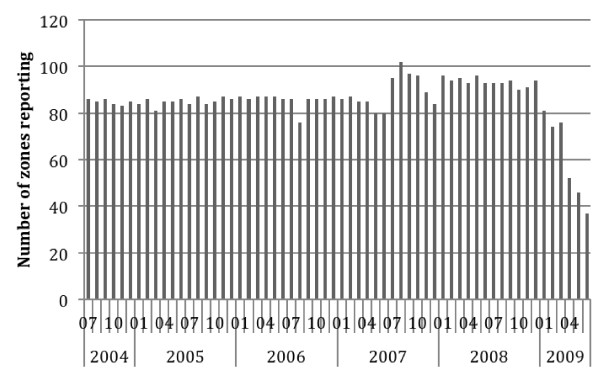
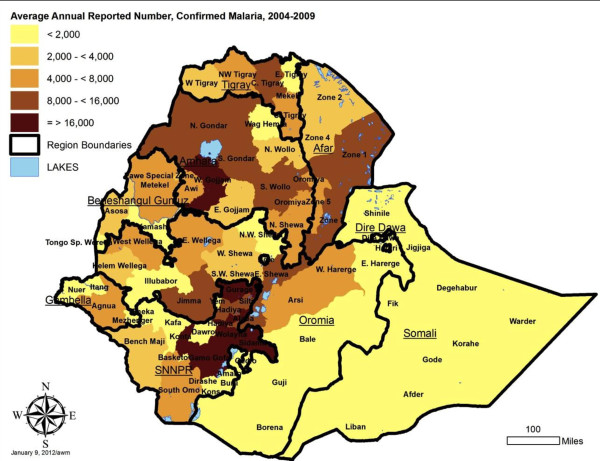
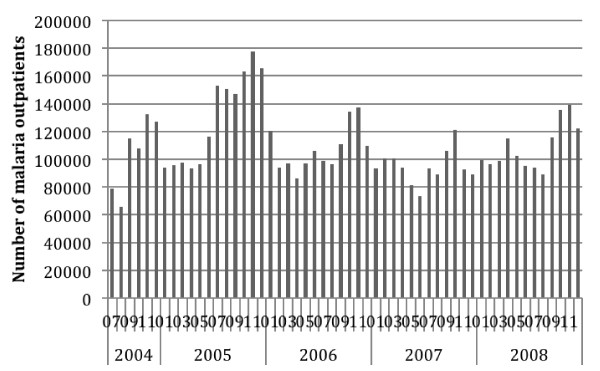
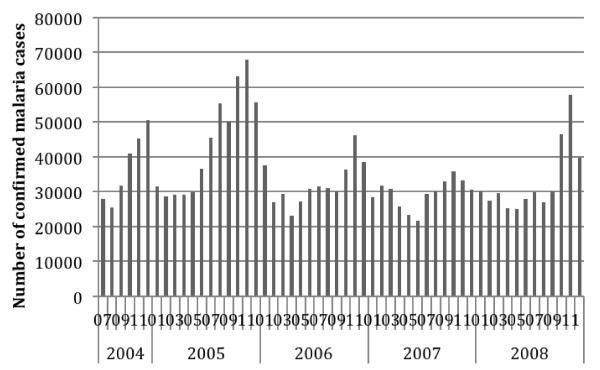
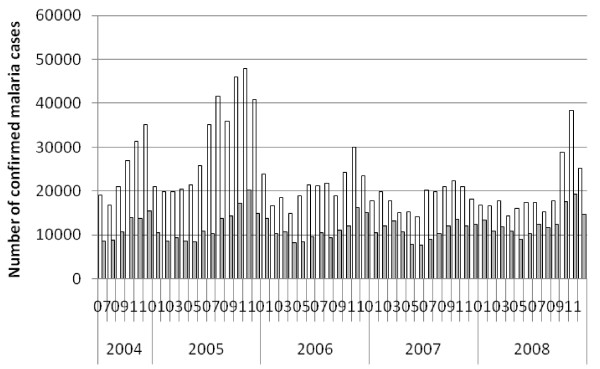
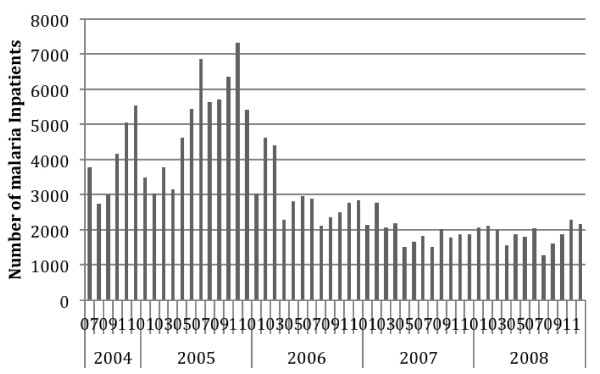
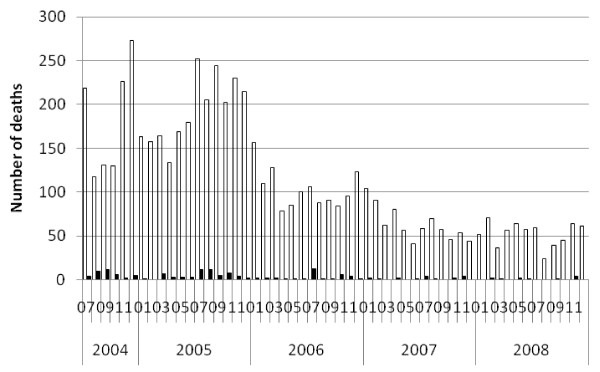
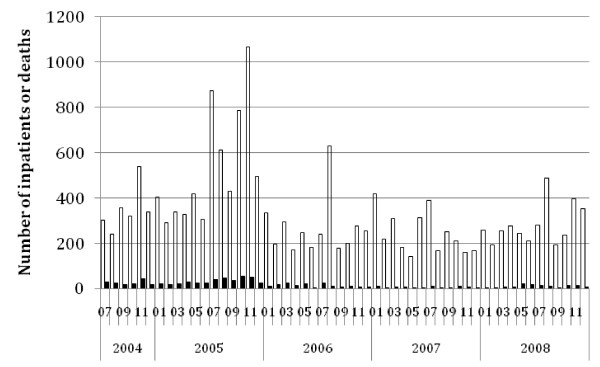
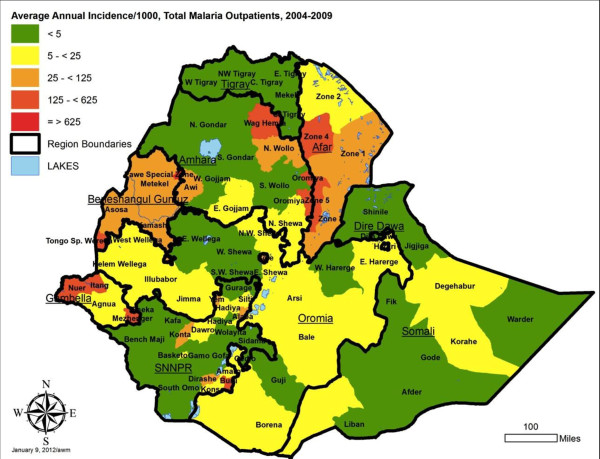
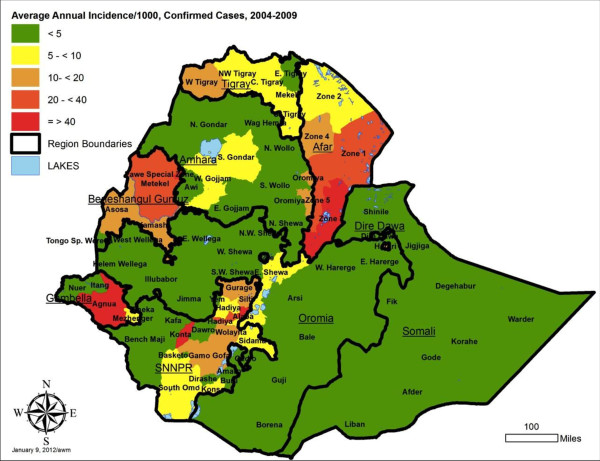
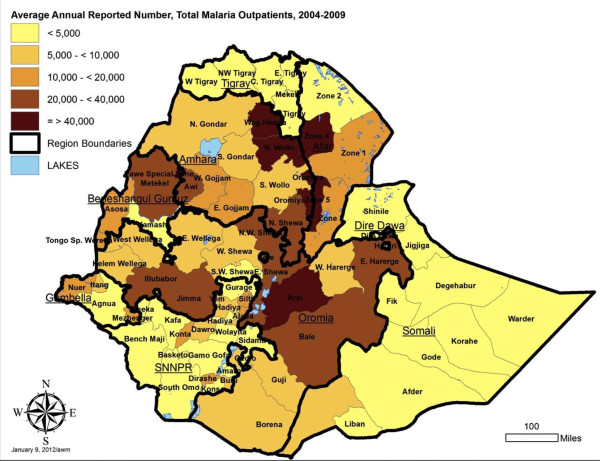
Reporting completeness, estimated as product of unit-month and health facility reporting, was over 80% until 2009, when it fell to 56% during a period of reorganization in the Ministry of Health. Nationally the average estimated annual incidence of reported total malaria for the calendar years 2005 to 2008 was 23.4 per 1000 persons, and of confirmed malaria was 7.6 per 1,000, with no clear decline in out-patient cases over the time period. Reported malaria in-patient admissions and deaths (averaging 6.4 per 10,000 and 2.3 per 100,000 per year respectively) declined threefold between 2005 and 2009, as did admissions and deaths reported as malaria with severe anaemia. Only 8 of 86 reporting units had average annual estimated incidence of confirmed malaria above 20 per 1,000 persons, while 26 units were consistently below five reported cases per 1,000 persons per year.
The Integrated Disease Surveillance and Response System functioned well over the time period mid 2004 to the end of 2008. The data suggest that the scale up of interventions has had considerable impact on malaria in-patient cases and mortality, as reported from health centres and hospitals. These trends must be regarded as relative (over space and time) rather than absolute. The data can be used to stratify areas for improved targeting of control efforts to steadily reduce incidence. They also provide a baseline of incidence estimates against which to gauge future progress towards elimination. Inclusion of climate information over this time period and extension of the dataset to more years is needed to clarify the impact of control measures compared to natural cycles on malaria.
常规疟疾监测数据可用于评估发病率随时间的变化趋势,并进行疟疾控制的分层。需要对这类数据的报告完整性和潜在偏倚进行评估。
从 2004 年 7 月至 2009 年 6 月(埃塞俄比亚日历报告年份 1997 年至 2001 年)的综合疾病监测和应对系统数据库中提取了 17 项疟疾指标的数据。通过 2007 年人口普查人口对报告单位进行了时间标准化。对数据进行了分析,以显示疟疾指标的报告完整性、报告单位风险的变化以及发病率趋势。
截至 2009 年,报告完整性(以单位-月和卫生机构报告的乘积来衡量)一直保持在 80%以上,但在卫生部重组期间下降到 56%。全国 2005 年至 2008 年日历年份报告的总疟疾平均估计年发病率为每 1000 人 23.4 例,确诊疟疾为每 1000 人 7.6 例,在此期间门诊病例并未明显减少。报告的疟疾住院病例和死亡人数(分别平均为每 10000 人 6.4 例和每 100000 人 2.3 例)在 2005 年至 2009 年间下降了三分之一,同时疟疾伴严重贫血的住院和死亡人数也有所下降。在 86 个报告单位中,只有 8 个单位的确诊疟疾年平均发病率超过每 1000 人 20 例,而 26 个单位的年报告病例始终低于每 1000 人 5 例。
综合疾病监测和应对系统在 2004 年年中至 2008 年底这段时间内运行良好。数据表明,从中等收入国家和低收入国家报告的卫生中心和医院层面来看,干预措施的扩大对疟疾住院病例和死亡率产生了重大影响。这些趋势必须被视为相对的(在空间和时间上),而不是绝对的。这些数据可用于对疟疾进行分层,以改善控制工作的针对性,从而稳步降低发病率。这些数据还提供了发病率估计的基线,可据此衡量在消除疟疾方面取得的未来进展。需要在这一时期纳入气候信息,并将数据集扩展到更多年份,以厘清控制措施对疟疾的影响与自然周期相比的情况。