Department of Internal Medicine, Faculty of Medical Sciences State University of Campinas, Campinas, São Paulo, Brazil.
Diabetes. 2013 Feb;62(2):466-70. doi: 10.2337/db12-0339. Epub 2012 Sep 18.
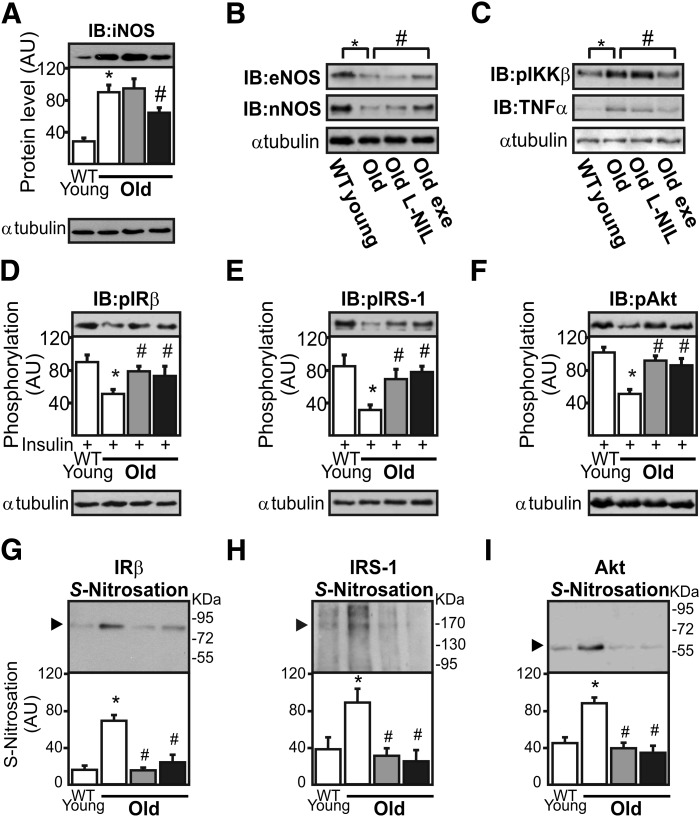
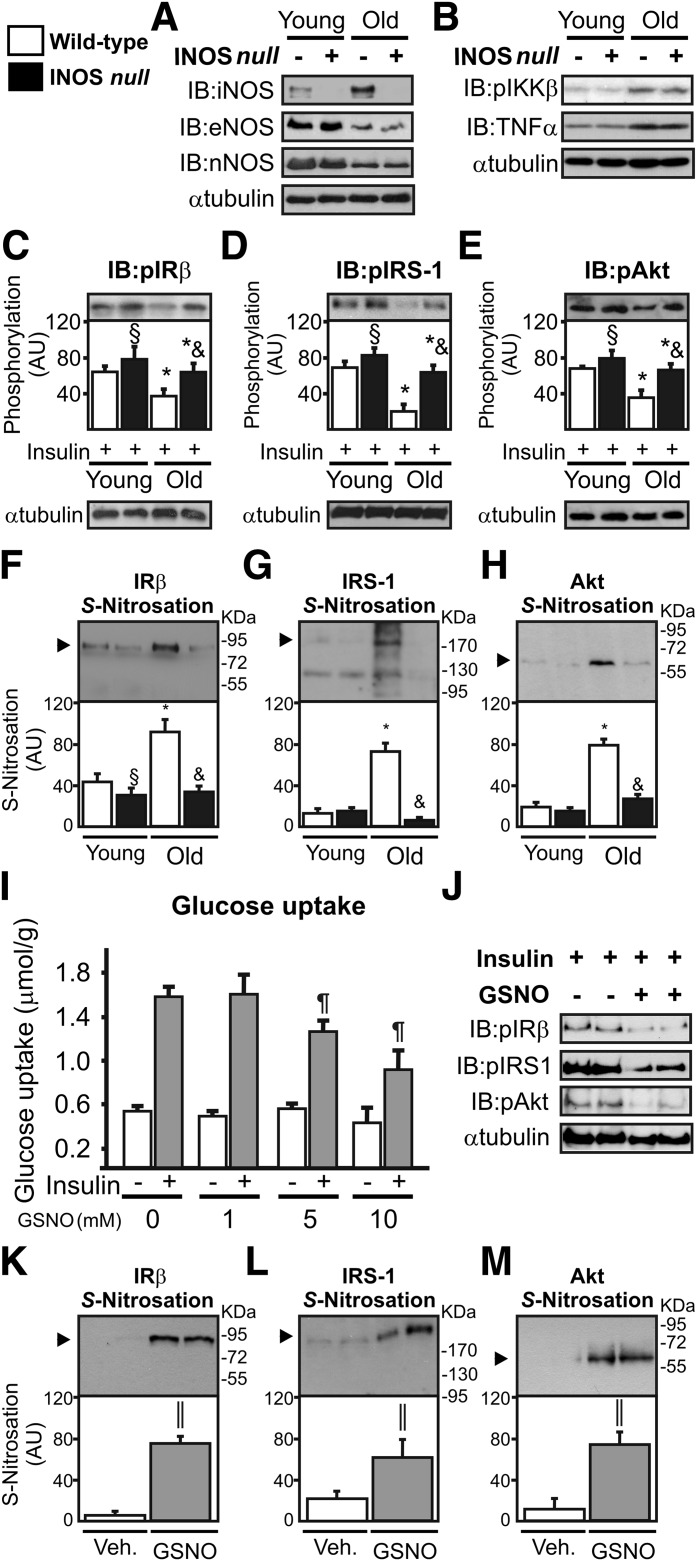
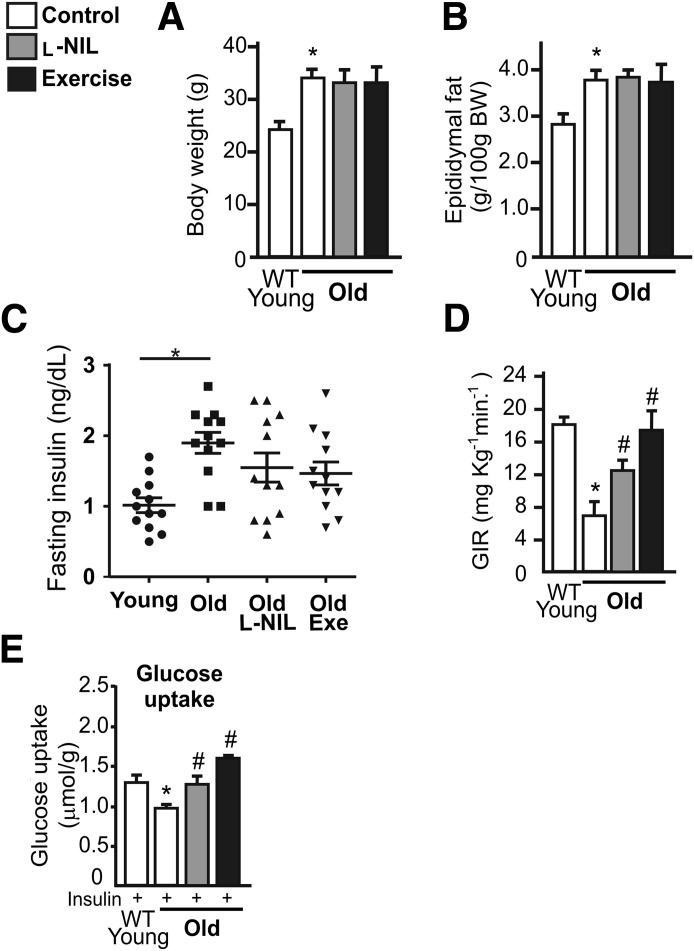
Accumulating evidence has demonstrated that S-nitrosation of proteins plays a critical role in several human diseases. Here, we explored the role of inducible nitric oxide synthase (iNOS) in the S-nitrosation of proteins involved in the early steps of the insulin-signaling pathway and insulin resistance in the skeletal muscle of aged mice. Aging increased iNOS expression and S-nitrosation of major proteins involved in insulin signaling, thereby reducing insulin sensitivity in skeletal muscle. Conversely, aged iNOS-null mice were protected from S-nitrosation-induced insulin resistance. Moreover, pharmacological treatment with an iNOS inhibitor and acute exercise reduced iNOS-induced S-nitrosation and increased insulin sensitivity in the muscle of aged animals. These findings indicate that the insulin resistance observed in aged mice is mainly mediated through the S-nitrosation of the insulin-signaling pathway.
越来越多的证据表明,蛋白质的 S-亚硝基化在几种人类疾病中起着关键作用。在这里,我们探讨了诱导型一氧化氮合酶 (iNOS) 在胰岛素信号通路早期步骤中涉及的蛋白质的 S-亚硝基化以及骨骼肌中胰岛素抵抗的作用。衰老会增加 iNOS 的表达和胰岛素信号转导中主要蛋白质的 S-亚硝基化,从而降低骨骼肌的胰岛素敏感性。相反,衰老的 iNOS 缺失小鼠则免受 S-亚硝基化诱导的胰岛素抵抗。此外,用 iNOS 抑制剂进行药物治疗和急性运动可减少衰老动物肌肉中 iNOS 诱导的 S-亚硝基化并增加胰岛素敏感性。这些发现表明,衰老小鼠中观察到的胰岛素抵抗主要是通过胰岛素信号通路的 S-亚硝基化介导的。