Department of Internal Medicine, University of Campinas, UNICAMP, Campinas, SP, Brazil.
Sci Rep. 2017 Aug 23;7(1):9265. doi: 10.1038/s41598-017-08920-z.
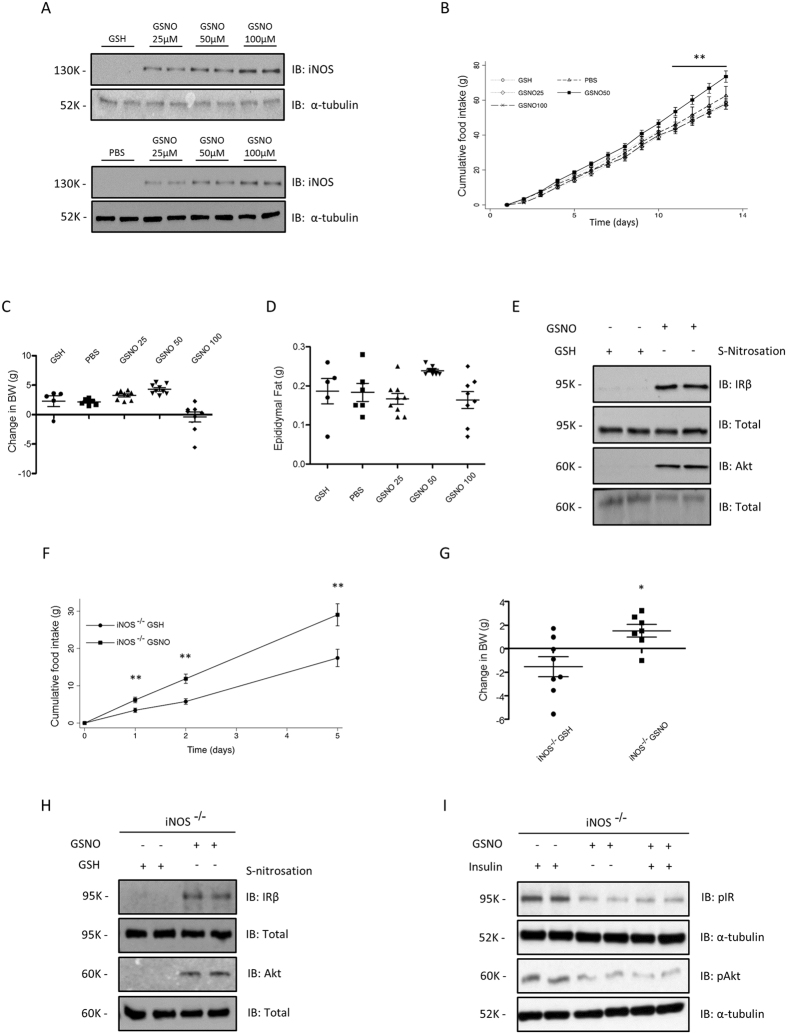
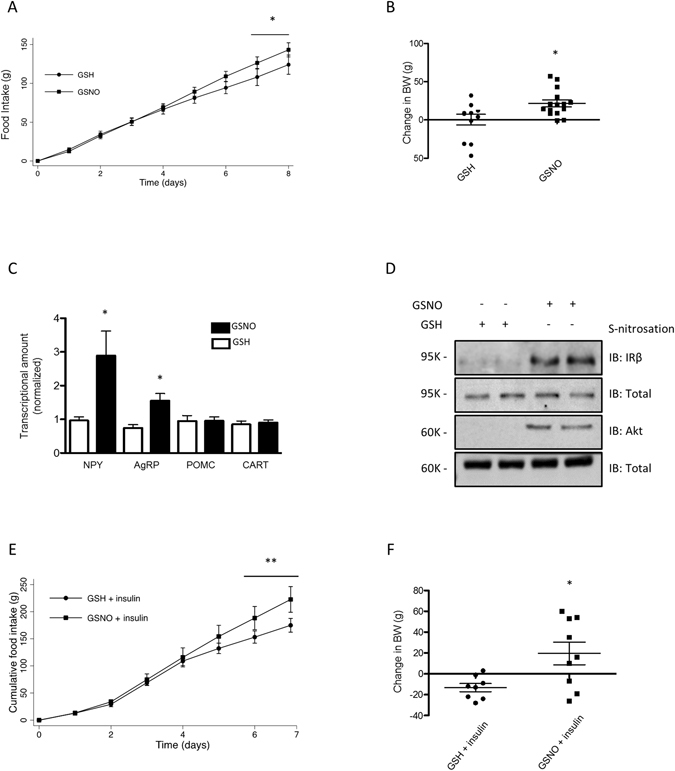
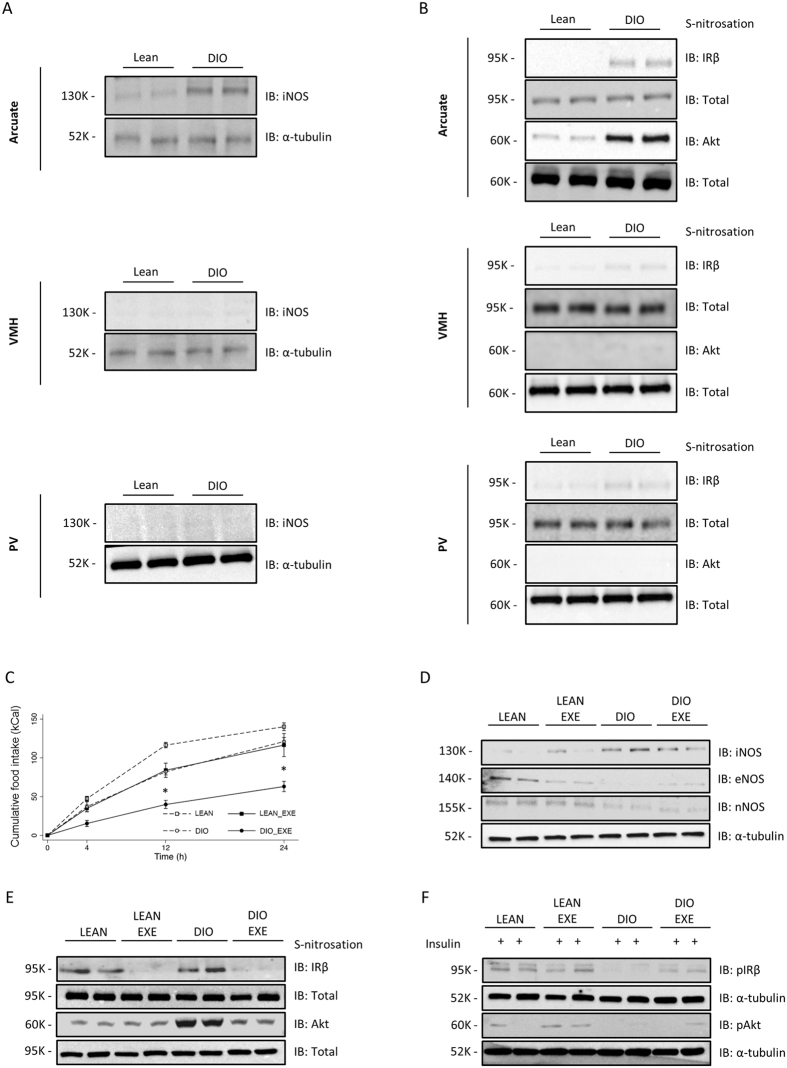
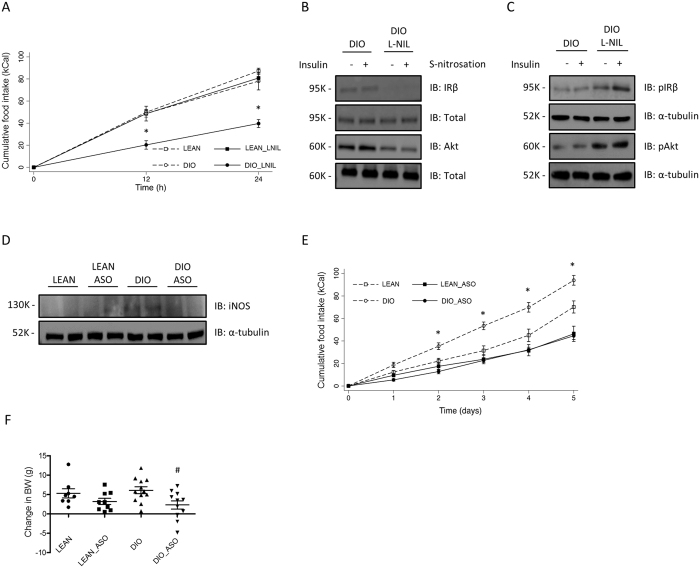
Inducible nitric oxide (iNOS)-mediated S-nitrosation of the metabolic signaling pathway has emerged as a post-translational modification that triggers insulin resistance in obesity and aging. However, the effects of S-nitrosation in controlling energy homeostasis are unknown. Thus, in the present study we aimed to evaluate the effects of S-nitrosation in insulin signaling pathway in the hypothalamus of rodents. Herein, we demonstrated that the intracerebroventricular infusion of the nitric oxide (NO) donor S-nitrosoglutathione (GSNO) promoted hypothalamic insulin signaling resistance and replicated the food intake pattern of obese individuals. Indeed, obesity induced S-nitrosation of hypothalamic IR and Akt, whereas inhibition of iNOS or S-nitrosation of insulin signaling pathway protected against hypothalamic insulin resistance and normalized energy homeostasis. Overall, these findings indicated that S-nitrosation of insulin signaling pathway is required to sustain hypothalamic insulin resistance in obesity.
诱导型一氧化氮合酶(iNOS)介导的代谢信号通路的 S-亚硝基化已成为一种翻译后修饰,可引发肥胖和衰老中的胰岛素抵抗。然而,S-亚硝基化在控制能量平衡中的作用尚不清楚。因此,在本研究中,我们旨在评估 S-亚硝基化对啮齿动物下丘脑胰岛素信号通路的影响。在此,我们证明了脑室内输注一氧化氮(NO)供体 S-亚硝基谷胱甘肽(GSNO)可促进下丘脑胰岛素信号抵抗,并复制肥胖个体的摄食模式。事实上,肥胖诱导了下丘脑胰岛素受体(IR)和 Akt 的 S-亚硝基化,而抑制 iNOS 或 S-亚硝基化胰岛素信号通路可防止下丘脑胰岛素抵抗并使能量平衡正常化。总的来说,这些发现表明,S-亚硝基化胰岛素信号通路是维持肥胖时下丘脑胰岛素抵抗所必需的。