School of Biology and Ecology, University of Maine, 5735 Hitchner Hall, Orono, ME 04469, USA.
BMC Genomics. 2012 Sep 20;13:497. doi: 10.1186/1471-2164-13-497.
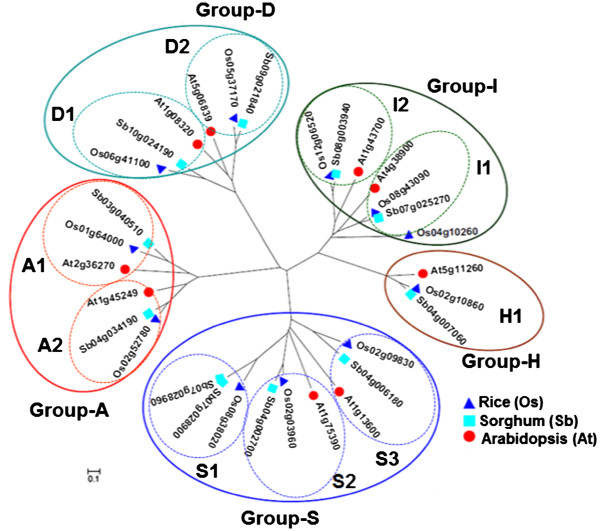
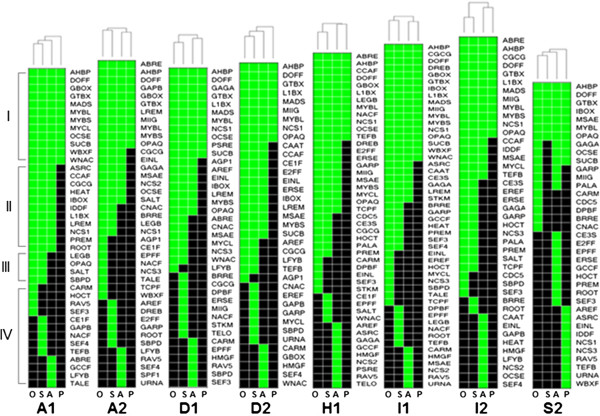
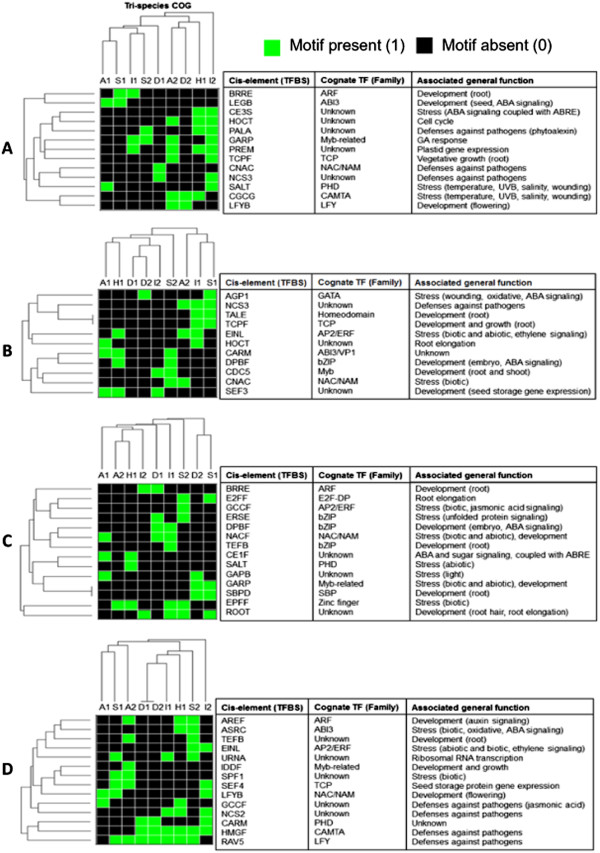
The potential contribution of upstream sequence variation to the unique features of orthologous genes is just beginning to be unraveled. A core subset of stress-associated bZIP transcription factors from rice (Oryza sativa) formed ten clusters of orthologous groups (COG) with genes from the monocot sorghum (Sorghum bicolor) and dicot Arabidopsis (Arabidopsis thaliana). The total cis-regulatory information content of each stress-associated COG was examined by phylogenetic footprinting to reveal ortholog-specific, lineage-specific and species-specific conservation patterns.
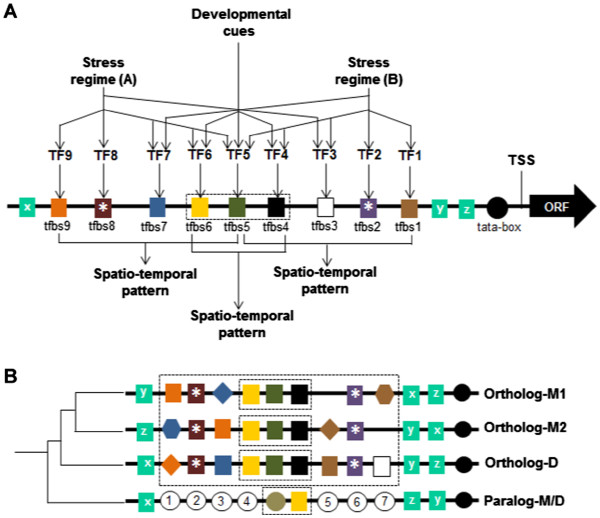
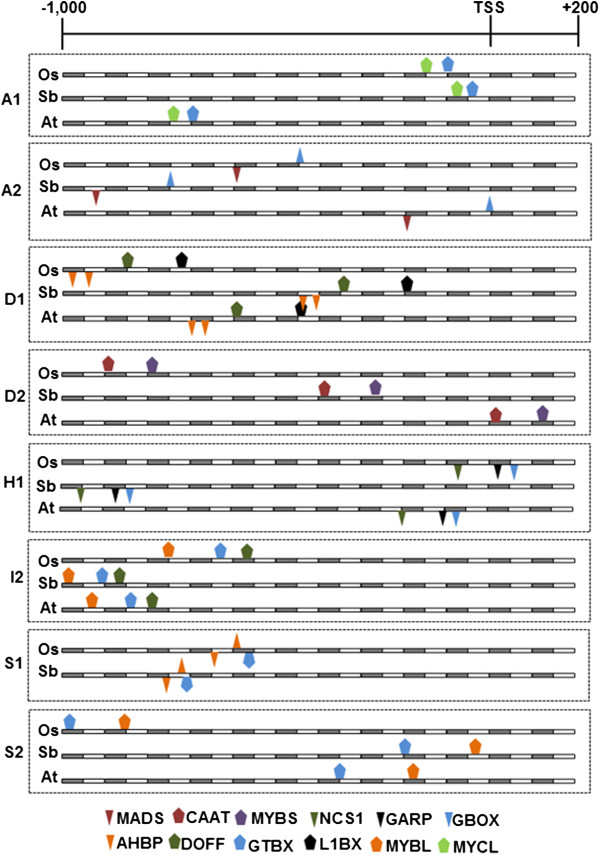
The most apparent pattern observed was the occurrence of spatially conserved 'core modules' among the COGs but not among paralogs. These core modules are comprised of various combinations of two to four putative transcription factor binding site (TFBS) classes associated with either developmental or stress-related functions. Outside the core modules are specific stress (ABA, oxidative, abiotic, biotic) or organ-associated signals, which may be functioning as 'regulatory fine-tuners' and further define lineage-specific and species-specific cis-regulatory signatures. Orthologous monocot and dicot promoters have distinct TFBS classes involved in disease and oxidative-regulated expression, while the orthologous rice and sorghum promoters have distinct combinations of root-specific signals, a pattern that is not particularly conserved in Arabidopsis.
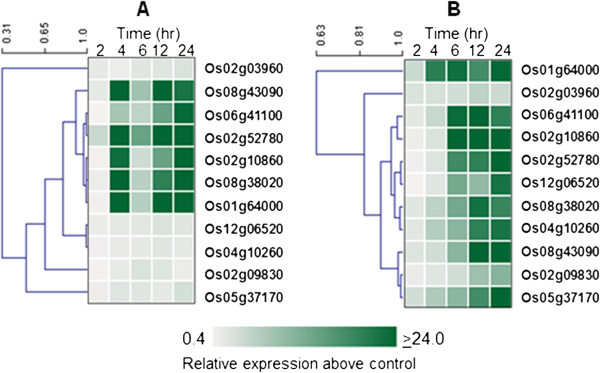
Patterns of cis-regulatory conservation imply that each ortholog has distinct signatures, further suggesting that they are potentially unique in a regulatory context despite the presumed conservation of broad biological function during speciation. Based on the observed patterns of conservation, we postulate that core modules are likely primary determinants of basal developmental programming, which may be integrated with and further elaborated by additional intrinsic or extrinsic signals in conjunction with lineage-specific or species-specific regulatory fine-tuners. This synergy may be critical for finer-scale spatio-temporal regulation, hence unique expression profiles of homologous transcription factors from different species with distinct zones of ecological adaptation such as rice, sorghum and Arabidopsis. The patterns revealed from these comparisons set the stage for further empirical validation by functional genomics.
上游序列变异对同源基因特有特征的潜在贡献才刚刚开始被揭示。来自水稻(Oryza sativa)的一组与胁迫相关的 bZIP 转录因子核心亚群与单子叶高粱(Sorghum bicolor)和双子叶拟南芥(Arabidopsis thaliana)的基因一起形成了十个同源基因簇(COG)。通过系统发育足迹分析检查每个与胁迫相关的 COG 的总顺式调控信息含量,以揭示同源特异性、谱系特异性和物种特异性的保守模式。
观察到的最明显模式是 COG 之间存在空间保守的“核心模块”,而不是在旁系同源物之间。这些核心模块由与发育或胁迫相关功能相关的两个到四个假定转录因子结合位点(TFBS)类别的各种组合组成。核心模块之外是特定的胁迫(ABA、氧化、非生物、生物)或器官相关信号,它们可能作为“调控微调器”,进一步定义谱系特异性和物种特异性的顺式调控特征。同源的单子叶植物和双子叶植物启动子具有不同的 TFBS 类,参与疾病和氧化调节表达,而同源的水稻和高粱启动子具有不同的根特异性信号组合,这种模式在拟南芥中并不特别保守。
顺式调控保守模式表明每个同源物具有独特的特征,进一步表明尽管在物种形成过程中假定广泛的生物学功能保守,但它们在调控背景下可能是独特的。基于观察到的保守模式,我们假设核心模块可能是基本发育编程的主要决定因素,它可能与谱系特异性或物种特异性的调控微调器结合,并进一步细化,与内在或外在信号一起。这种协同作用对于更精细的时空调控可能至关重要,因此不同物种的同源转录因子具有独特的表达谱,这些物种具有不同的生态适应区,如水稻、高粱和拟南芥。这些比较所揭示的模式为通过功能基因组学进行进一步的实证验证奠定了基础。