Department of Molecular Microbiology and the Howard Hughes Medical Institute, Washington University School of Medicine, St. Louis, Missouri 63110, USA.
J Biol Chem. 2012 Nov 2;287(45):37793-807. doi: 10.1074/jbc.M112.414078. Epub 2012 Sep 19.
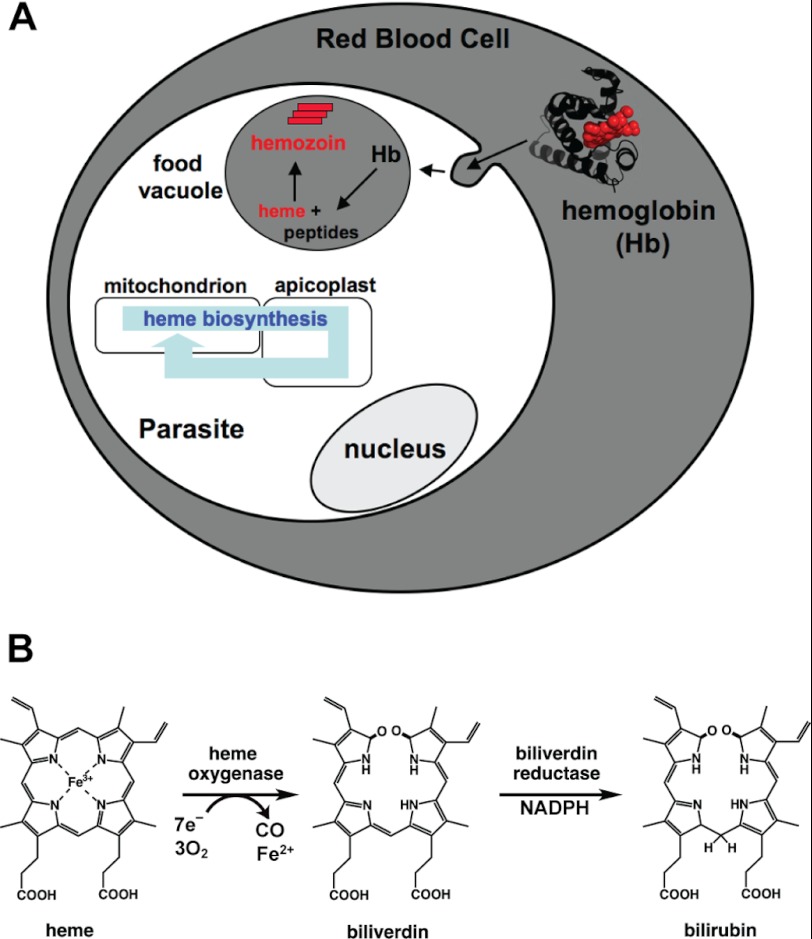
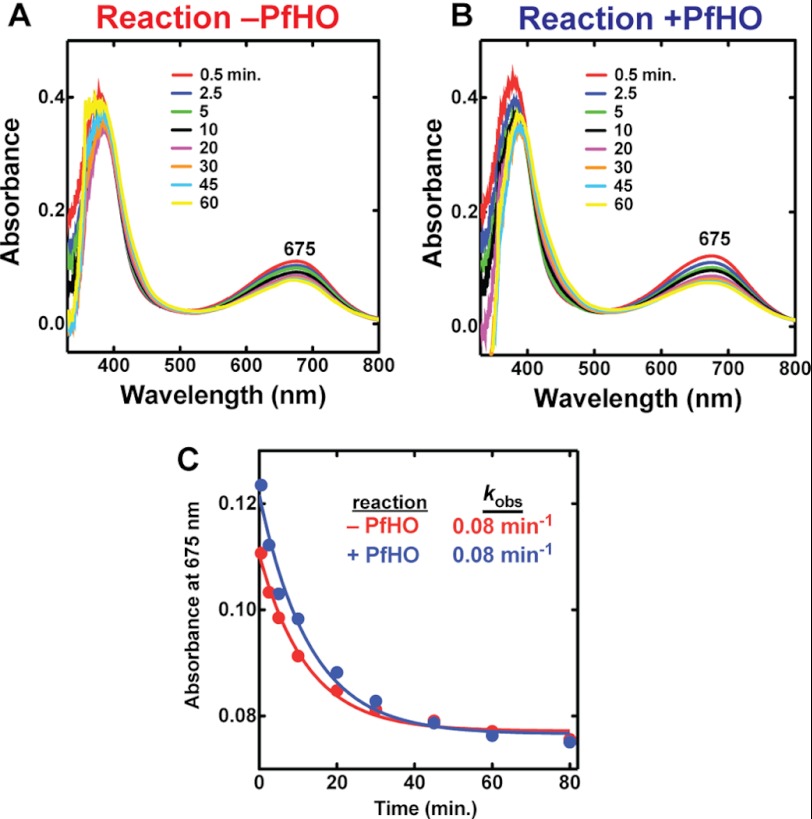
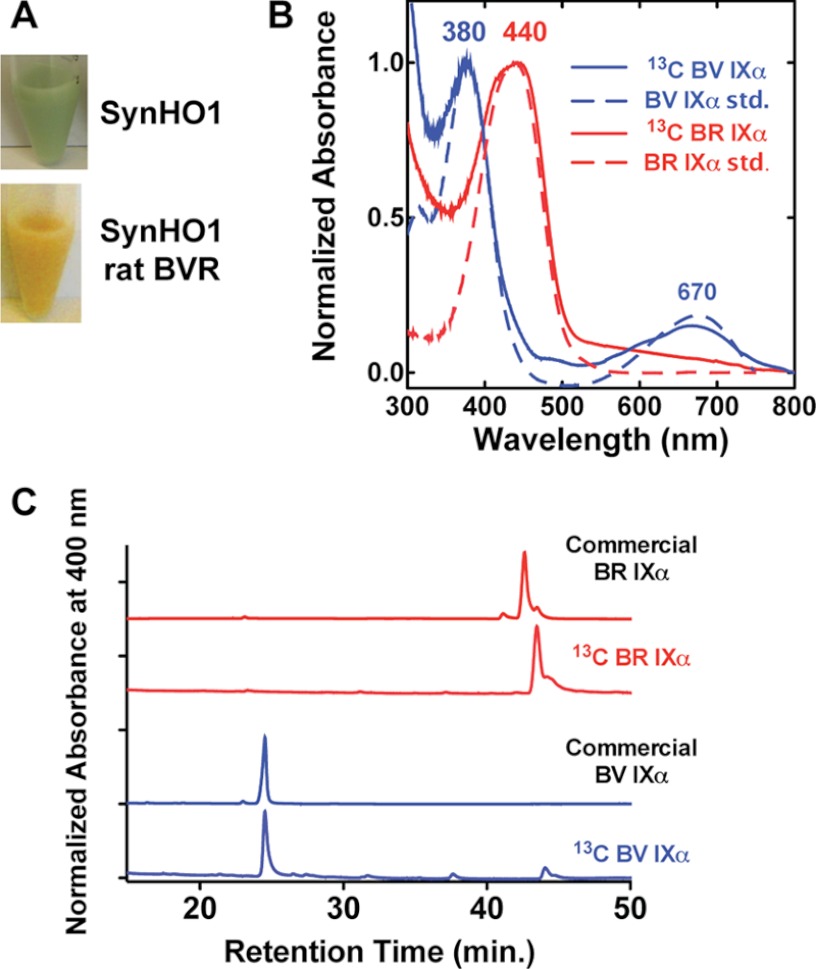
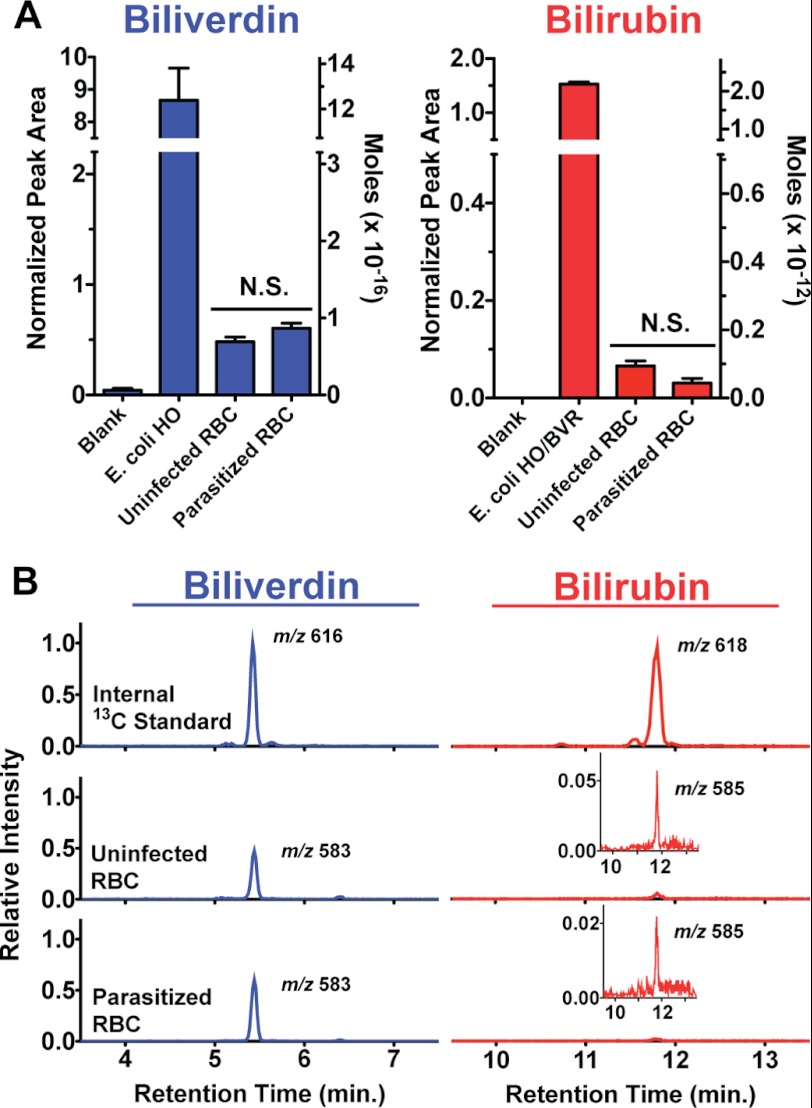
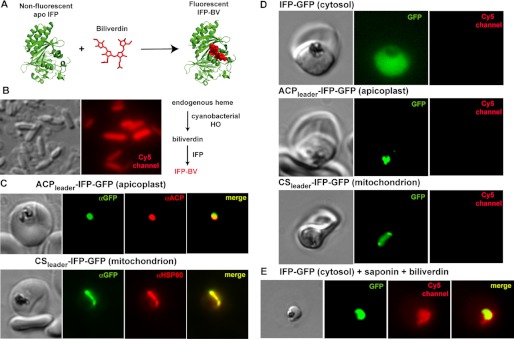
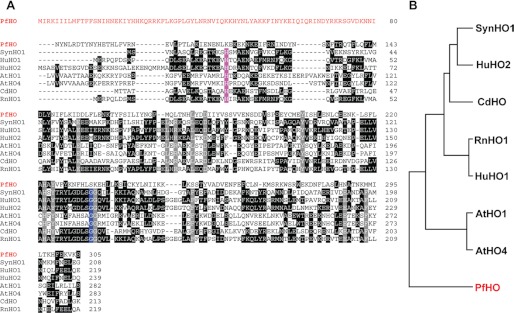
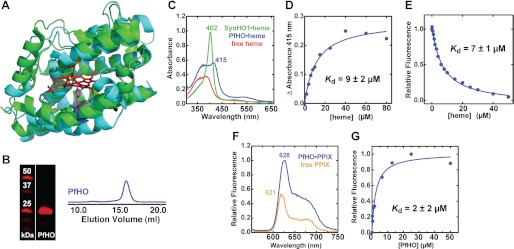
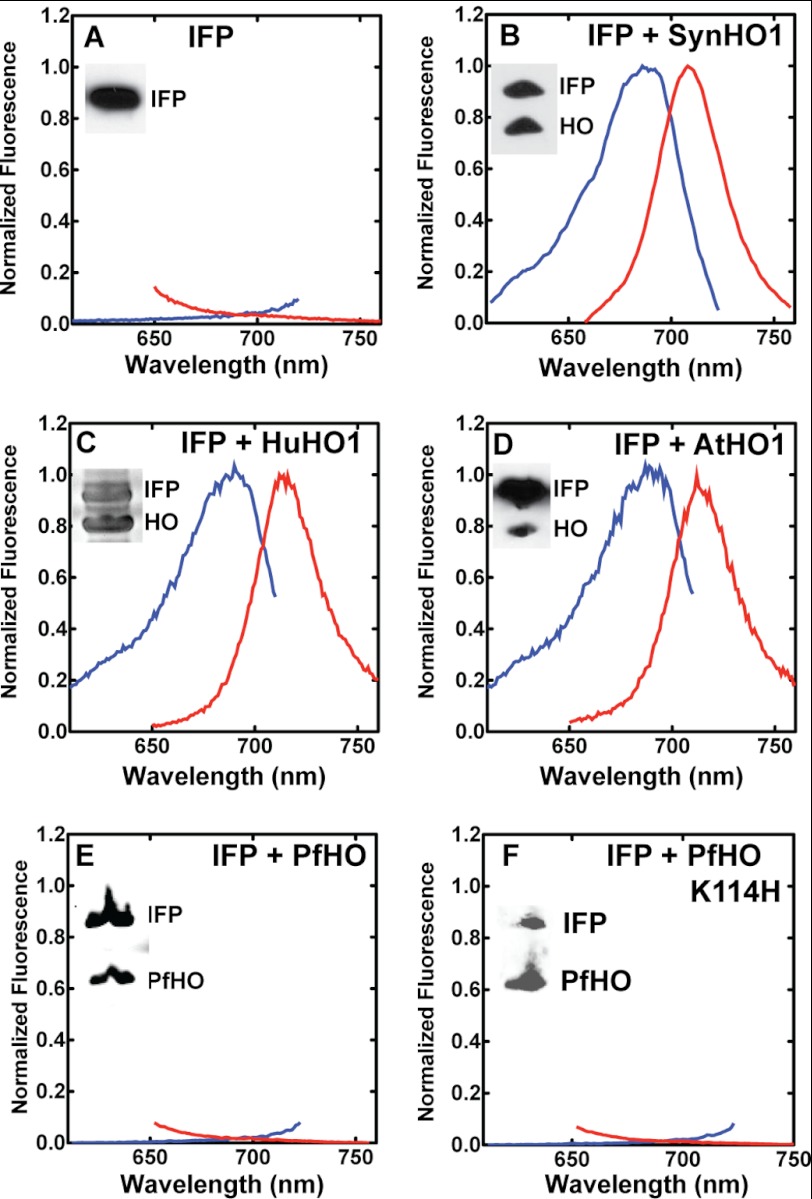
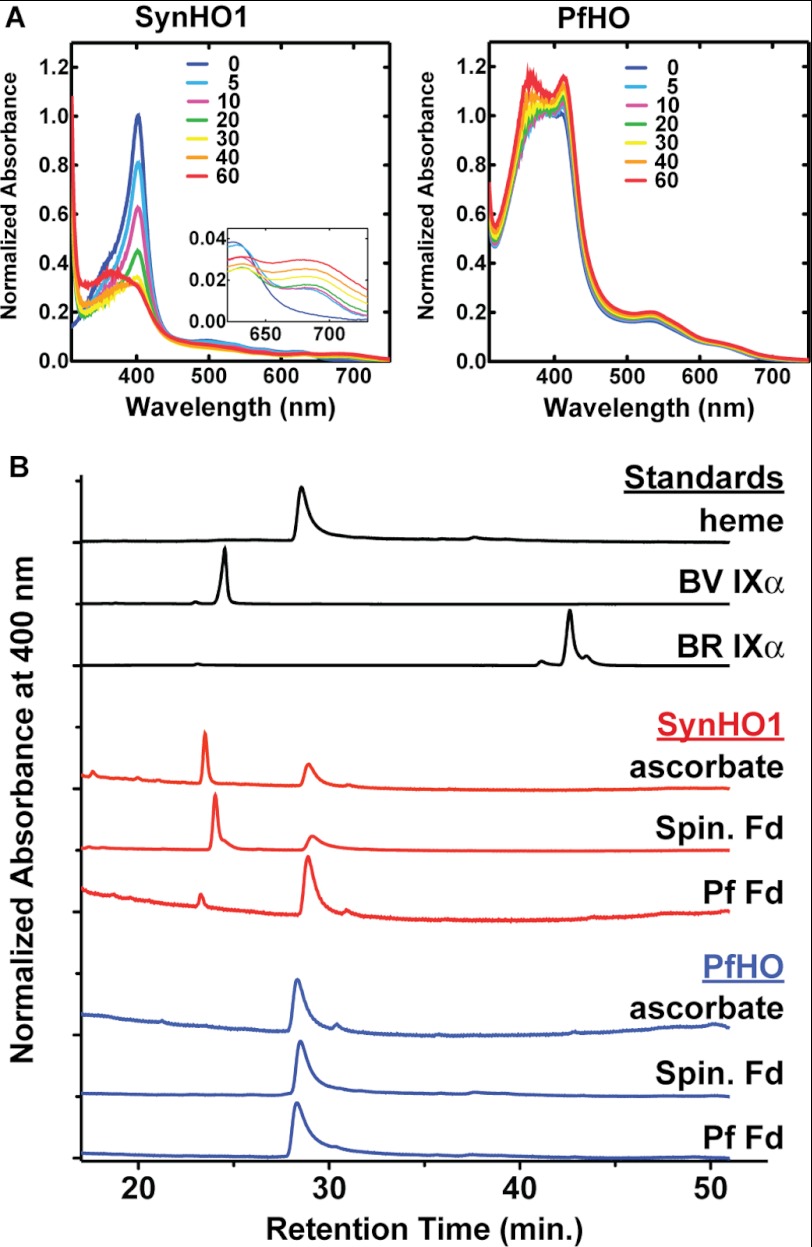
Malaria parasites generate vast quantities of heme during blood stage infection via hemoglobin digestion and limited de novo biosynthesis, but it remains unclear if parasites metabolize heme for utilization or disposal. Recent in vitro experiments with a heme oxygenase (HO)-like protein from Plasmodium falciparum suggested that parasites may enzymatically degrade some heme to the canonical HO product, biliverdin (BV), or its downstream metabolite, bilirubin (BR). To directly test for BV and BR production by P. falciparum parasites, we DMSO-extracted equal numbers of infected and uninfected erythrocytes and developed a sensitive LC-MS/MS assay to quantify these tetrapyrroles. We found comparable low levels of BV and BR in both samples, suggesting the absence of HO activity in parasites. We further tested live parasites by targeted expression of a fluorescent BV-binding protein within the parasite cytosol, mitochondrion, and plant-like plastid. This probe could detect exogenously added BV but gave no signal indicative of endogenous BV production within parasites. Finally, we recombinantly expressed and tested the proposed heme degrading activity of the HO-like protein, PfHO. Although PfHO bound heme and protoporphyrin IX with modest affinity, it did not catalyze heme degradation in vivo within bacteria or in vitro in UV absorbance and HPLC assays. These observations are consistent with PfHO's lack of a heme-coordinating His residue and suggest an alternative function within parasites. We conclude that P. falciparum parasites lack a canonical HO pathway for heme degradation and thus rely fully on alternative mechanisms for heme detoxification and iron acquisition during blood stage infection.
疟原虫在血期感染过程中通过血红蛋白消化和有限的从头生物合成产生大量血红素,但仍不清楚寄生虫是否将血红素代谢用于利用或处理。最近对来自恶性疟原虫的血红素加氧酶(HO)样蛋白的体外实验表明,寄生虫可能通过酶促作用将一些血红素降解为典型的 HO 产物胆绿素(BV)或其下游代谢产物胆红素(BR)。为了直接检测恶性疟原虫寄生虫中 BV 和 BR 的产生,我们用 DMSO 提取等量的感染和未感染的红细胞,并开发了一种灵敏的 LC-MS/MS 测定法来定量这些四吡咯。我们在两个样品中都发现了可比的低水平的 BV 和 BR,这表明寄生虫中不存在 HO 活性。我们通过在寄生虫细胞质、线粒体和植物样质体中靶向表达荧光 BV 结合蛋白进一步测试了活寄生虫。该探针可以检测到外加的 BV,但在寄生虫内没有产生内源性 BV 的信号。最后,我们重组表达并测试了 HO 样蛋白的拟议血红素降解活性。尽管 PfHO 与血红素和原卟啉 IX 具有适度的亲和力,但它在细菌体内或在 UV 吸光度和 HPLC 测定中都不能催化血红素的体内降解。这些观察结果与 PfHO 缺乏血红素配位 His 残基一致,并表明在寄生虫中有替代功能。我们得出结论,恶性疟原虫寄生虫缺乏用于血红素降解的典型 HO 途径,因此在血期感染期间完全依赖于替代机制来解毒血红素和获取铁。