Department of Physiology and Biophysics, University of Washington, Seattle, Seattle, Washington, USA.
Nat Neurosci. 2012 Nov;15(11):1572-80. doi: 10.1038/nn.3225. Epub 2012 Sep 23.
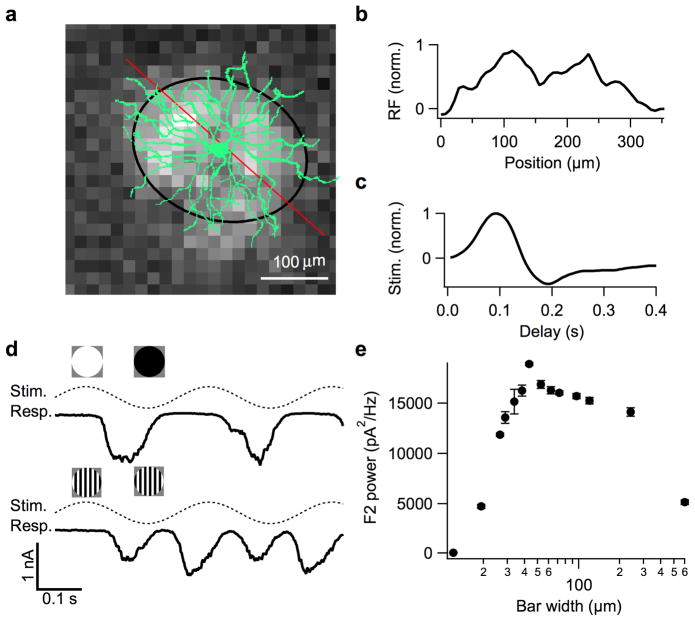
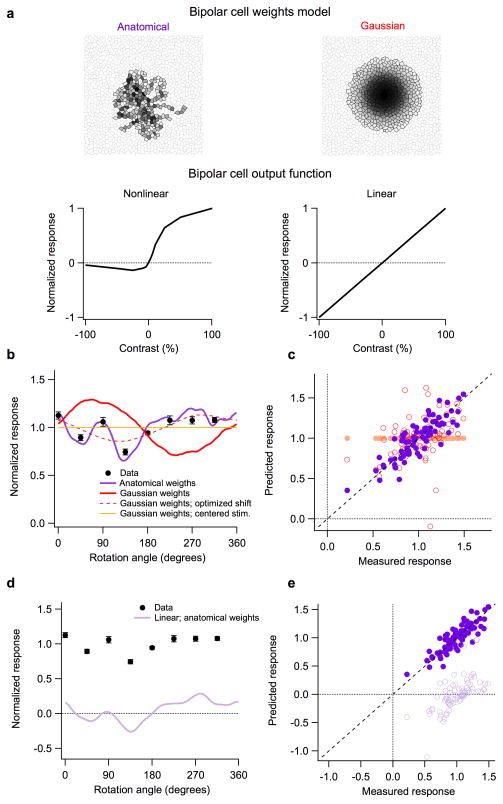
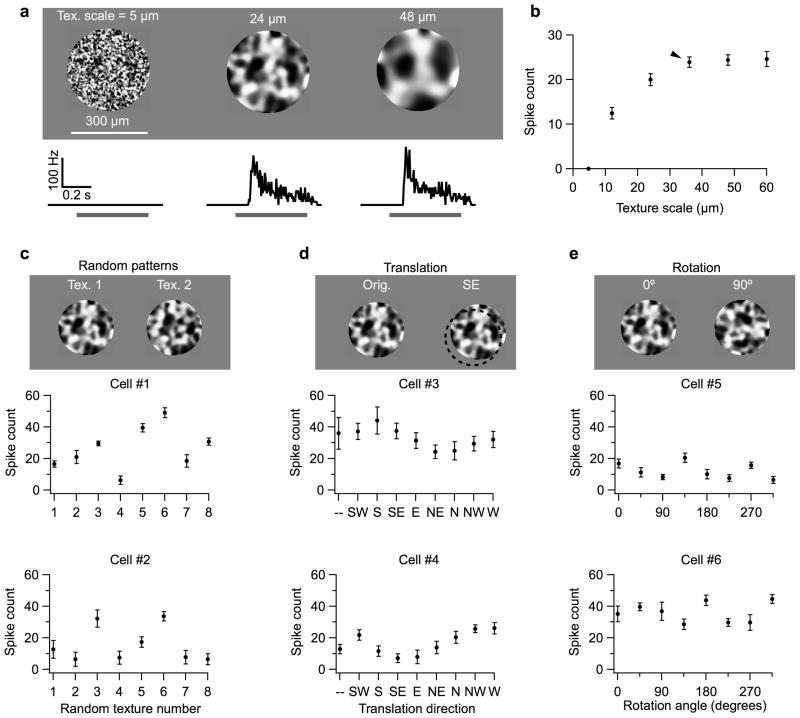
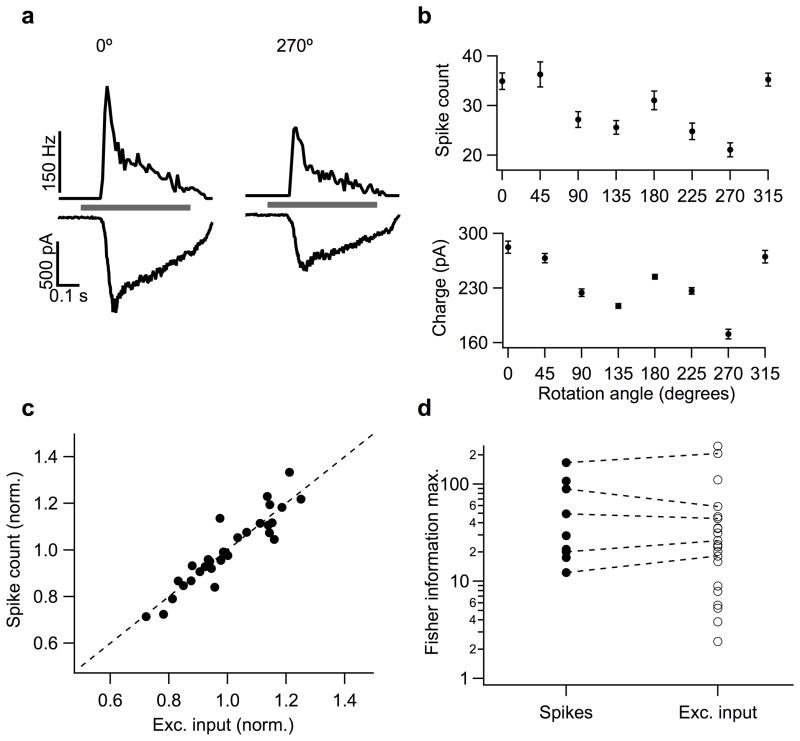
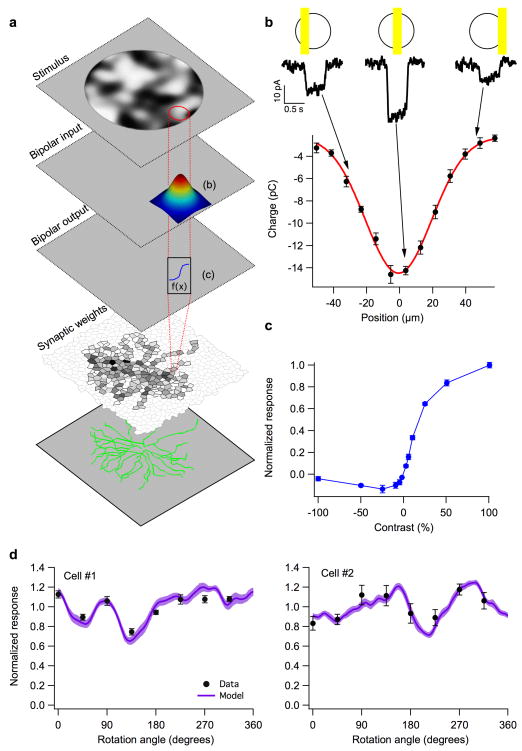
Understanding a sensory system implies the ability to predict responses to a variety of inputs from a common model. In the retina, this includes predicting how the integration of signals across visual space shapes the outputs of retinal ganglion cells. Existing models of this process generalize poorly to predict responses to new stimuli. This failure arises in part from properties of the ganglion cell response that are not well captured by standard receptive-field mapping techniques: nonlinear spatial integration and fine-scale heterogeneities in spatial sampling. Here we characterize a ganglion cell's spatial receptive field using a mechanistic model based on measurements of the physiological properties and connectivity of only the primary excitatory circuitry of the retina. The resulting simplified circuit model successfully predicts ganglion-cell responses to a variety of spatial patterns and thus provides a direct correspondence between circuit connectivity and retinal output.
理解感觉系统意味着能够根据共同模型预测对各种输入的反应。在视网膜中,这包括预测跨视觉空间的信号整合如何塑造视网膜神经节细胞的输出。现有过程模型在预测对新刺激的反应方面普遍较差。这种失败部分源于神经节细胞反应的特性,这些特性不能很好地被标准感受野映射技术所捕捉:非线性空间整合和空间采样的精细尺度异质性。在这里,我们使用基于视网膜主要兴奋性回路的生理特性和连接性测量的机制模型来描述神经节细胞的空间感受野。所得简化电路模型成功地预测了神经节细胞对各种空间模式的反应,从而在电路连接性和视网膜输出之间提供了直接对应关系。