Kerschensteiner Daniel, Morgan Josh L, Parker Edward D, Lewis Renate M, Wong Rachel O L
Department of Anatomy and Neurobiology, Washington University School of Medicine, St Louis, Missouri 63110, USA.
Nature. 2009 Aug 20;460(7258):1016-20. doi: 10.1038/nature08236.
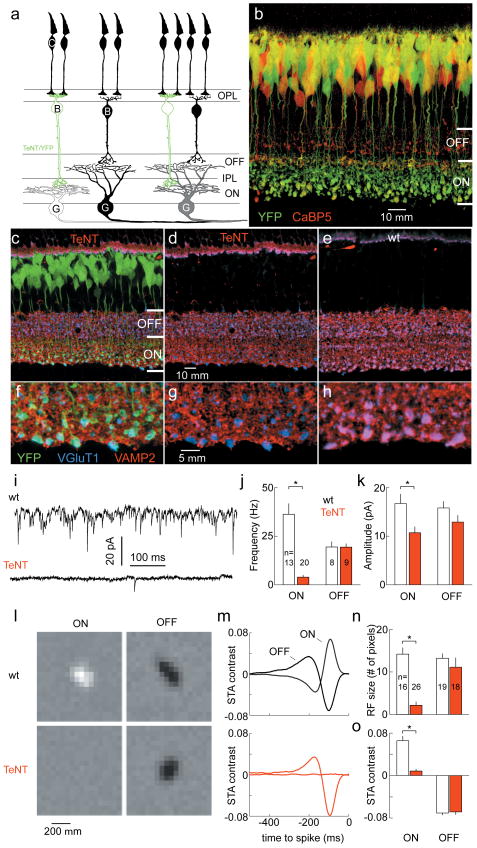
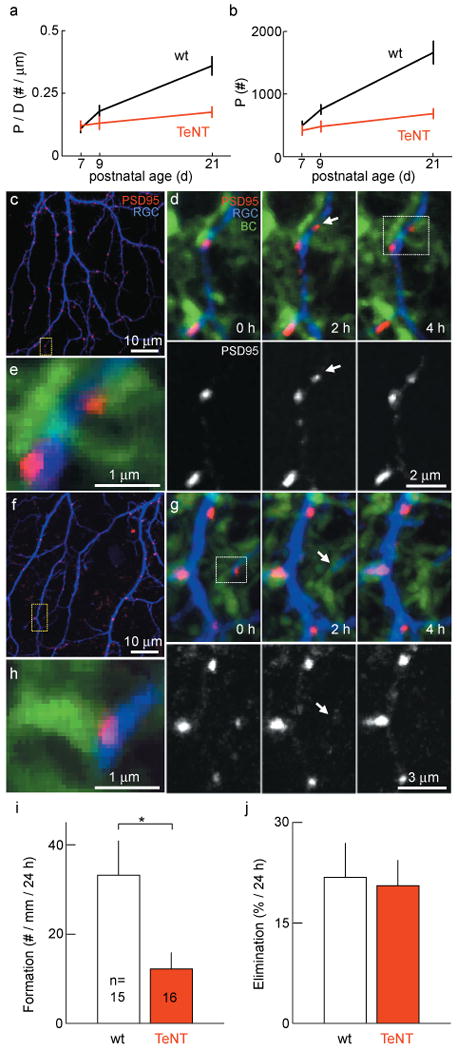
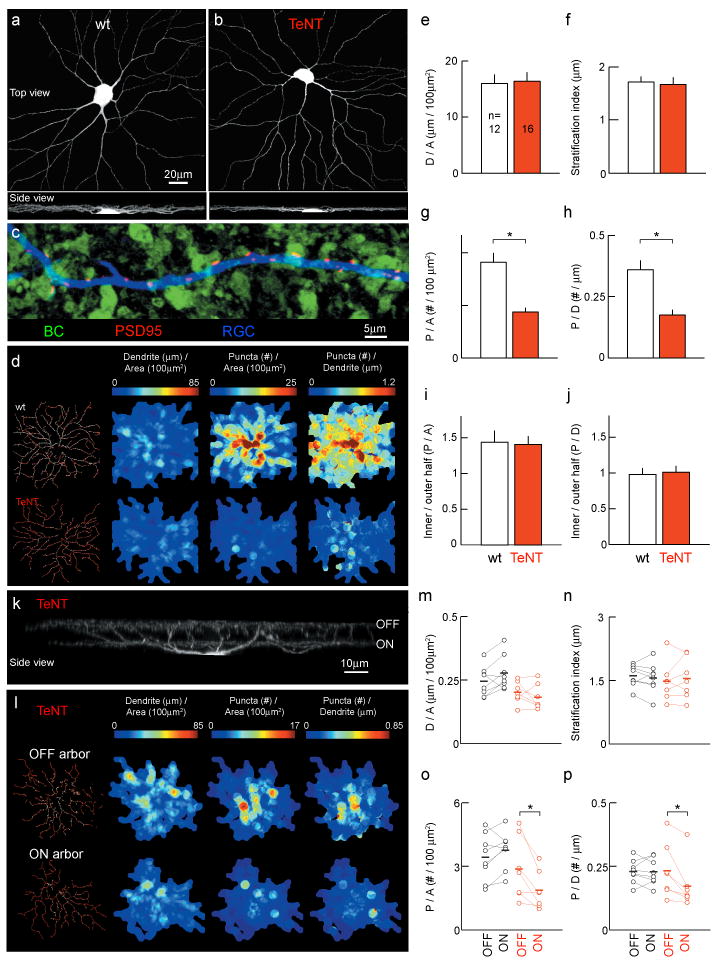
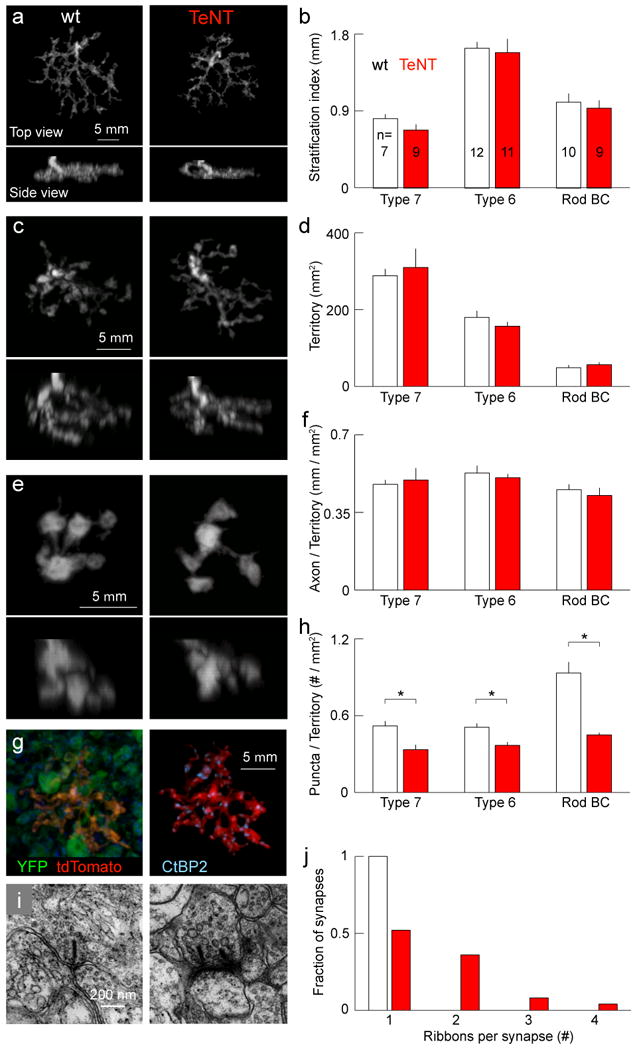
Activity is thought to guide the patterning of synaptic connections in the developing nervous system. Specifically, differences in the activity of converging inputs are thought to cause the elimination of synapses from less active inputs and increase connectivity with more active inputs. Here we present findings that challenge the generality of this notion and offer a new view of the role of activity in synapse development. To imbalance neurotransmission from different sets of inputs in vivo, we generated transgenic mice in which ON but not OFF types of bipolar cells in the retina express tetanus toxin (TeNT). During development, retinal ganglion cells (RGCs) select between ON and OFF bipolar cell inputs (ON or OFF RGCs) or establish a similar number of synapses with both on separate dendritic arborizations (ON-OFF RGCs). In TeNT retinas, ON RGCs correctly selected the silenced ON bipolar cell inputs over the transmitting OFF bipolar cells, but were connected with them through fewer synapses at maturity. Time-lapse imaging revealed that this was caused by a reduced rate of synapse formation rather than an increase in synapse elimination. Similarly, TeNT-expressing ON bipolar cell axons generated fewer presynaptic active zones. The remaining active zones often recruited multiple, instead of single, synaptic ribbons. ON-OFF RGCs in TeNT mice maintained convergence of ON and OFF bipolar cells inputs and had fewer synapses on their ON arbor without changes to OFF arbor synapses. Our results reveal an unexpected and remarkably selective role for activity in circuit development in vivo, regulating synapse formation but not elimination, affecting synapse number but not dendritic or axonal patterning, and mediating independently the refinement of connections from parallel (ON and OFF) processing streams even where they converge onto the same postsynaptic cell.
活动被认为在发育中的神经系统中引导突触连接的模式形成。具体而言,汇聚输入的活动差异被认为会导致来自活性较低输入的突触消除,并增加与活性较高输入的连接性。在这里,我们展示的研究结果对这一概念的普遍性提出了挑战,并为活动在突触发育中的作用提供了新的观点。为了在体内使来自不同输入组的神经传递失衡,我们生成了转基因小鼠,其中视网膜上的ON型而非OFF型双极细胞表达破伤风毒素(TeNT)。在发育过程中,视网膜神经节细胞(RGC)在ON和OFF双极细胞输入(ON或OFF RGC)之间进行选择,或者在单独的树突分支上与两者建立数量相似的突触(ON - OFF RGC)。在TeNT视网膜中,ON RGC在成熟时正确地选择了沉默的ON双极细胞输入而非传递信号的OFF双极细胞,但与之形成的突触较少。延时成像显示,这是由突触形成速率降低而非突触消除增加所致。同样,表达TeNT的ON双极细胞轴突产生的突触前活性区较少。其余的活性区通常募集多个而非单个突触带。TeNT小鼠中的ON - OFF RGC保持了ON和OFF双极细胞输入的汇聚,并且其ON树突上的突触较少,而OFF树突突触没有变化。我们的结果揭示了活动在体内电路发育中一个意想不到且极具选择性的作用,即调节突触形成而非消除,影响突触数量而非树突或轴突模式,并且即使在平行(ON和OFF)处理流汇聚到同一突触后细胞的情况下,也能独立介导其连接的精细化。