Department of Physics, University of Alabama at Birmingham, Birmingham, Alabama, United States of America.
PLoS One. 2012;7(9):e44544. doi: 10.1371/journal.pone.0044544. Epub 2012 Sep 17.
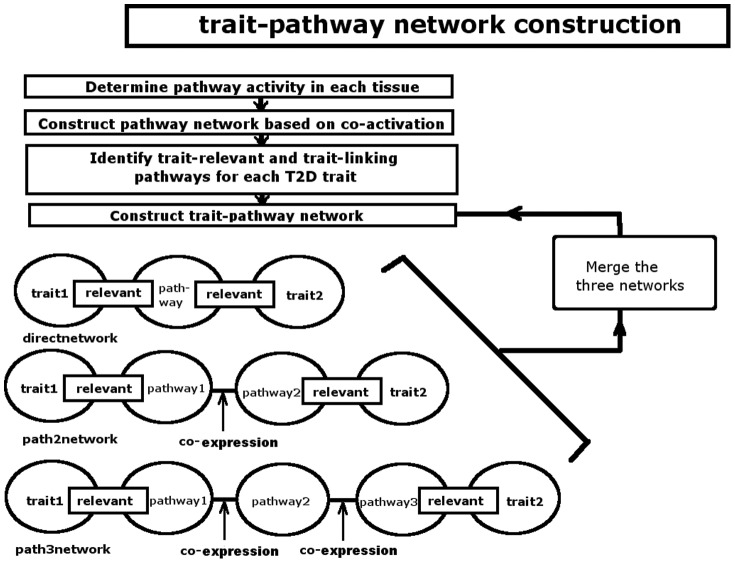
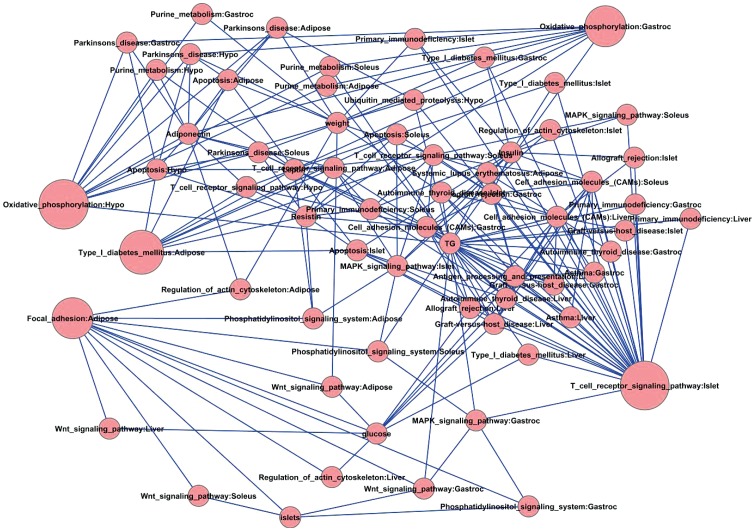
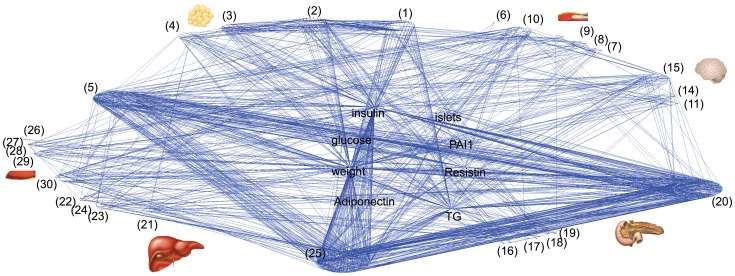
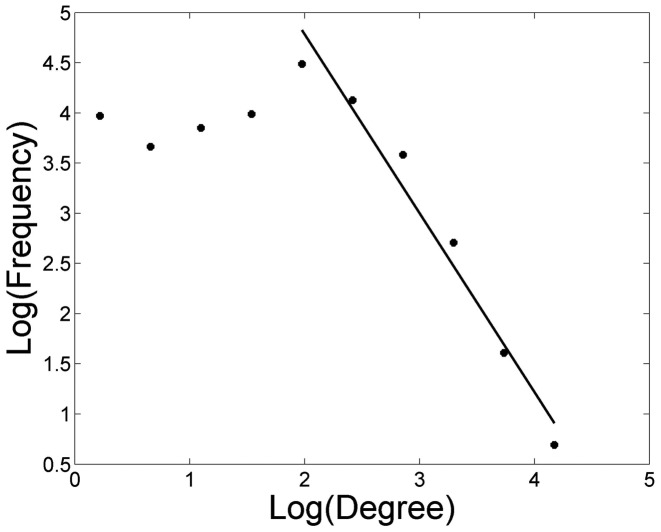
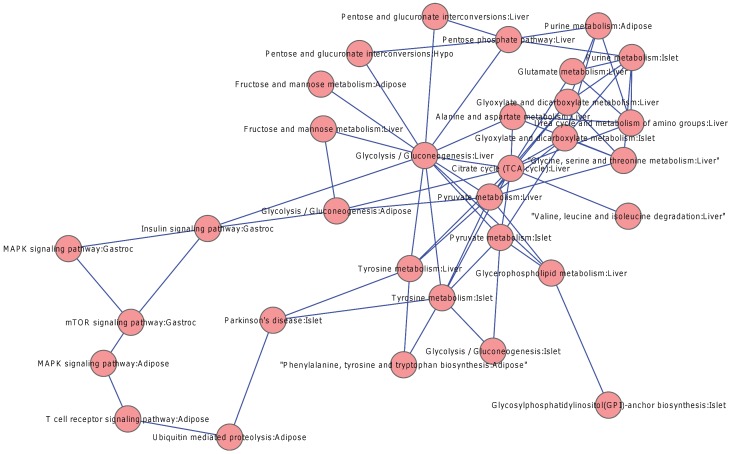
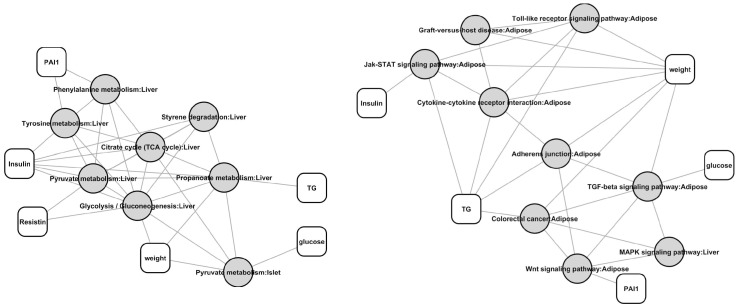
Complex disorders often involve dysfunctions in multiple tissue organs. Elucidating the communication among them is important to understanding disease pathophysiology. In this study we integrate multiple tissue gene expression and quantitative trait measurements of an obesity-induced diabetes mouse model, with databases of molecular interaction networks, to construct a cross tissue trait-pathway network. The animals belong to two strains of mice (BTBR or B6), of two obesity status (obese or lean), and at two different ages (4 weeks and 10 weeks). Only 10 week obese BTBR animals are diabetic. The expression data was first utilized to determine the state of every pathway in each tissue, which is subsequently utilized to construct a pathway co-expression network and to define trait-relevant and trait-linking pathways. Among the six tissues profiled, the adipose contains the largest number of trait-linking pathways. Among the eight traits measured, the body weight and plasma insulin level possess the most number of relevant and linking pathways. Topological analysis of the trait-pathway network revealed that the glycolysis/gluconeogenesis pathway in liver and the insulin signaling pathway in muscle are of top importance to the information flow in the network, with the highest degrees and betweenness centralities. Interestingly, pathways related to metabolism and oxidative stress actively interact with many other pathways in all animals, whereas, among the 10 week animals, the inflammation pathways were preferentially interactive in the diabetic ones only. In summary, our method offers a systems approach to delineate disease trait relevant intra- and cross tissue pathway interactions, and provides insights to the molecular basis of the obesity-induced diabetes.
复杂疾病通常涉及多个组织器官的功能障碍。阐明它们之间的通讯对于理解疾病发病机制非常重要。在这项研究中,我们整合了肥胖诱导糖尿病小鼠模型的多种组织基因表达和定量特征测量数据,以及分子相互作用网络数据库,构建了跨组织特征途径网络。这些动物属于两种品系的小鼠(BTBR 或 B6),两种肥胖状态(肥胖或瘦),以及两个不同的年龄(4 周和 10 周)。只有 10 周肥胖的 BTBR 动物是糖尿病的。表达数据首先用于确定每个组织中每条途径的状态,然后用于构建途径共表达网络,并定义特征相关和特征连接途径。在所分析的六种组织中,脂肪组织包含最多的特征连接途径。在所测量的八种特征中,体重和血浆胰岛素水平具有最多的相关和连接途径。特征途径网络的拓扑分析表明,肝脏中的糖酵解/糖异生途径和肌肉中的胰岛素信号途径对网络中的信息流具有最重要的作用,具有最高的度数和中间中心度。有趣的是,与代谢和氧化应激相关的途径与所有动物中的许多其他途径积极相互作用,而在 10 周龄动物中,炎症途径仅在糖尿病动物中优先相互作用。总之,我们的方法提供了一种系统的方法来描绘疾病特征相关的组织内和跨组织途径相互作用,并为肥胖诱导糖尿病的分子基础提供了见解。