Biotechnology Research Institute, Chinese Academy of Agricultural Sciences, Beijing, People's Republic of China.
PLoS One. 2012;7(9):e45953. doi: 10.1371/journal.pone.0045953. Epub 2012 Sep 28.
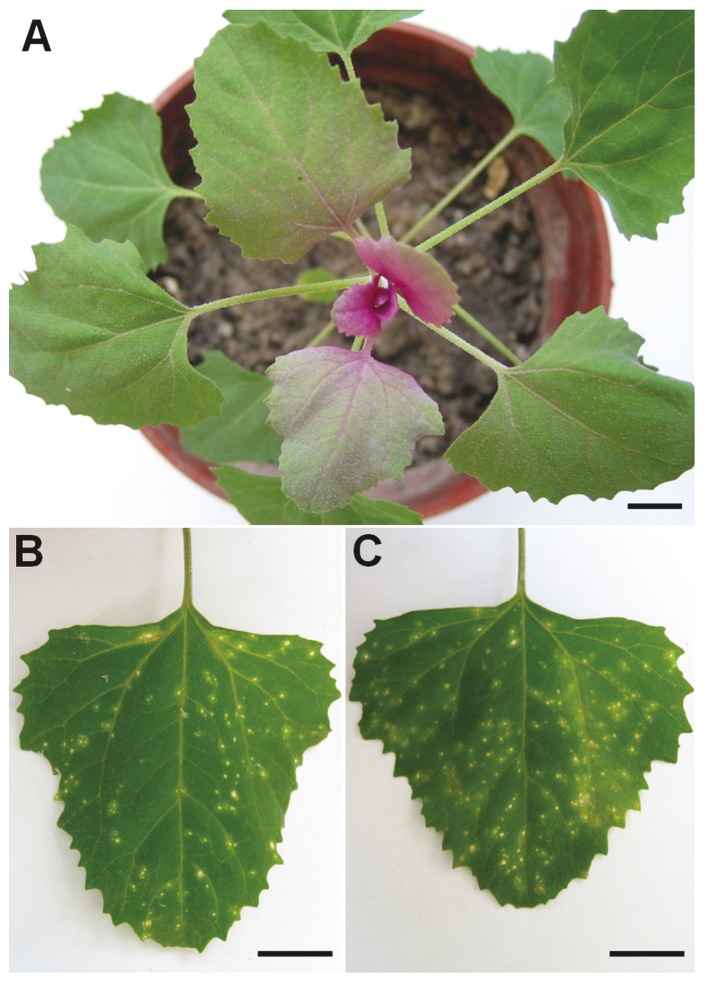
The hypersensitive response (HR) system of Chenopodium spp. confers broad-spectrum virus resistance. However, little knowledge exists at the genomic level for Chenopodium, thus impeding the advanced molecular research of this attractive feature. Hence, we took advantage of RNA-seq to survey the foliar transcriptome of C. amaranticolor, a Chenopodium species widely used as laboratory indicator for pathogenic viruses, in order to facilitate the characterization of the HR-type of virus resistance.
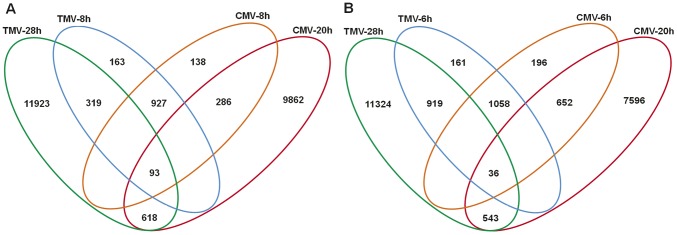
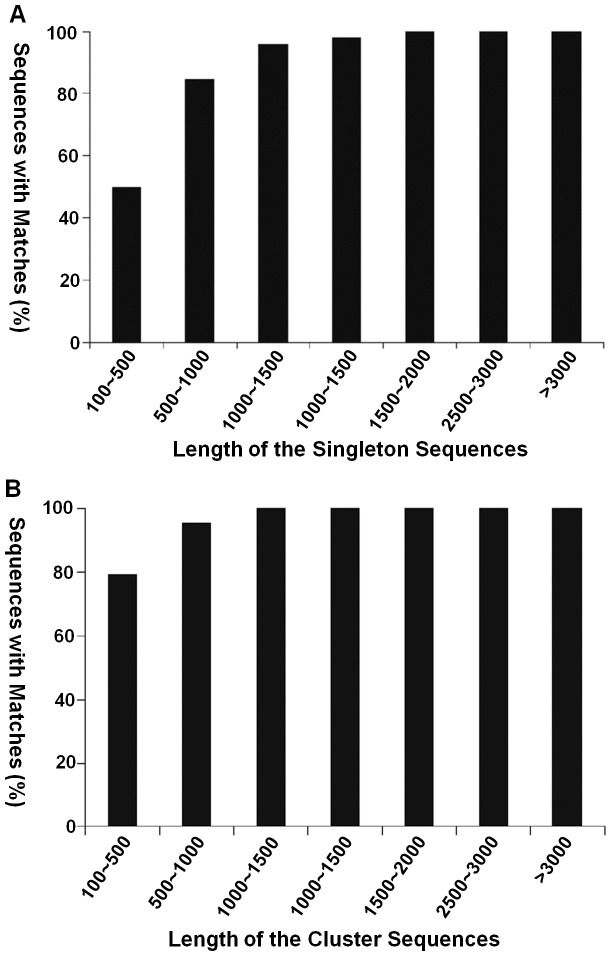
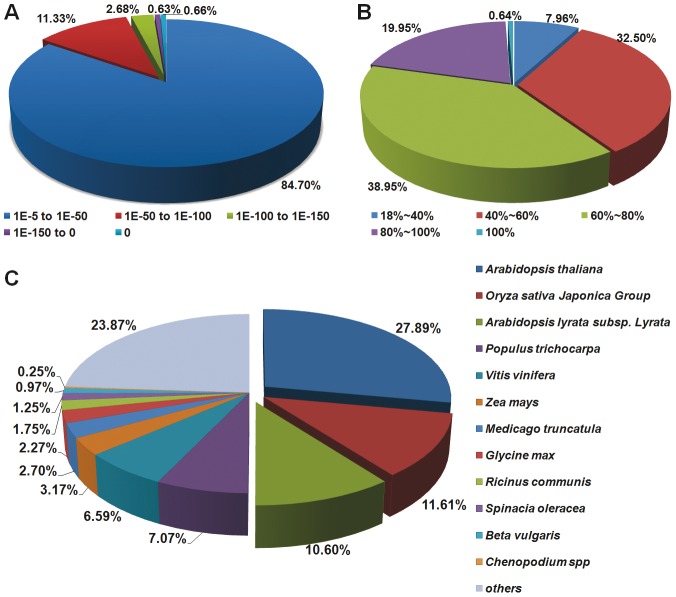
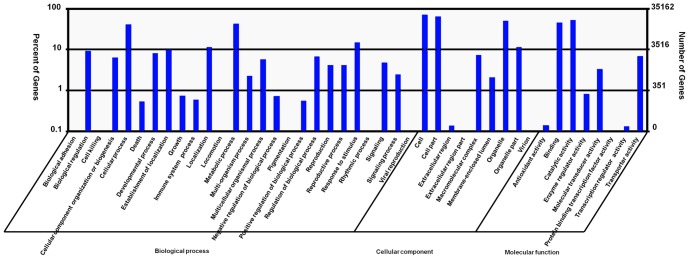
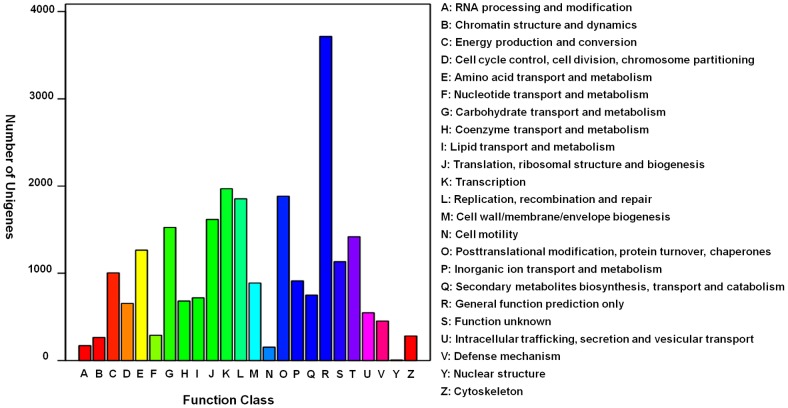
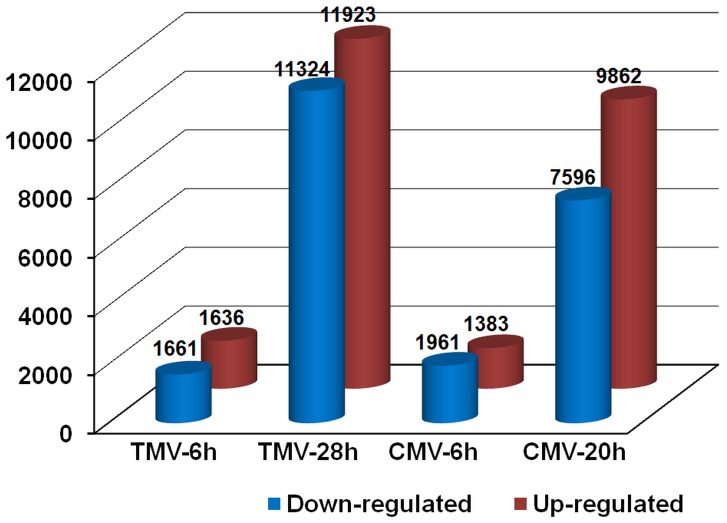
Using Illumina HiSeq™ 2000 platform, we obtained 39,868,984 reads with 3,588,208,560 bp, which were assembled into 112,452 unigenes (3,847 clusters and 108,605 singletons). BlastX search against the NCBI NR database identified 61,698 sequences with a cut-off E-value above 10(-5). Assembled sequences were annotated with gene descriptions, GO, COG and KEGG terms, respectively. A total number of 738 resistance gene analogs (RGAs) and homology sequences of 6 key signaling proteins within the R proteins-directed signaling pathway were identified. Based on this transcriptome data, we investigated the gene expression profiles over the stage of HR induced by Tobacco mosaic virus and Cucumber mosaic virus by using digital gene expression analysis. Numerous candidate genes specifically or commonly regulated by these two distinct viruses at early and late stages of the HR were identified, and the dynamic changes of the differently expressed genes enriched in the pathway of plant-pathogen interaction were particularly emphasized.
To our knowledge, this study is the first description of the genetic makeup of C. amaranticolor, providing deep insight into the comprehensive gene expression information at transcriptional level in this species. The 738 RGAs as well as the differentially regulated genes, particularly the common genes regulated by both TMV and CMV, are suitable candidates which merit further functional characterization to dissect the molecular mechanisms and regulatory pathways of the HR-type of virus resistance in Chenopodium.
Chenopodium spp 的超敏反应 (HR) 系统赋予其广谱抗病毒能力。然而,Chenopodium 在基因组水平上的知识相对较少,这阻碍了对这一引人注目的特性的深入分子研究。因此,我们利用 RNA-seq 技术来研究 Chenopodium 物种 C. amaranticolor 的叶片转录组,该物种被广泛用作致病性病毒的实验室指示物,以促进 HR 型抗病毒能力的特征描述。
我们使用 Illumina HiSeq™ 2000 平台,获得了 39868984 条reads,总长度为 3588208560bp,组装得到 112452 个 unigenes(3847 个聚类和 108605 个单基因)。将 BlastX 搜索结果与 NCBI NR 数据库进行比对,发现 61698 个序列的 E 值低于 10(-5)。组装的序列分别进行了基因描述、GO、COG 和 KEGG 术语的注释。共鉴定出 738 个抗病基因类似物(RGAs)和 R 蛋白定向信号通路中 6 个关键信号蛋白的同源序列。基于该转录组数据,我们通过数字基因表达分析研究了烟草花叶病毒和黄瓜花叶病毒诱导的 HR 阶段的基因表达谱。鉴定出了许多在 HR 早期和晚期由这两种不同病毒特异性或共同调控的候选基因,并特别强调了在植物-病原体相互作用途径中差异表达基因的动态变化。
据我们所知,本研究首次描述了 C. amaranticolor 的遗传构成,为该物种在转录水平上的综合基因表达信息提供了深入的了解。738 个 RGAs 以及差异表达基因,特别是由 TMV 和 CMV 共同调控的基因,是进一步功能特征分析的合适候选基因,以剖析 Chenopodium 中 HR 型抗病毒能力的分子机制和调控途径。