Department of Genetics, University of Córdoba/IMIBIC, 14071 Córdoba, Spain.
Nucleic Acids Res. 2012 Dec;40(22):11554-62. doi: 10.1093/nar/gks894. Epub 2012 Oct 2.
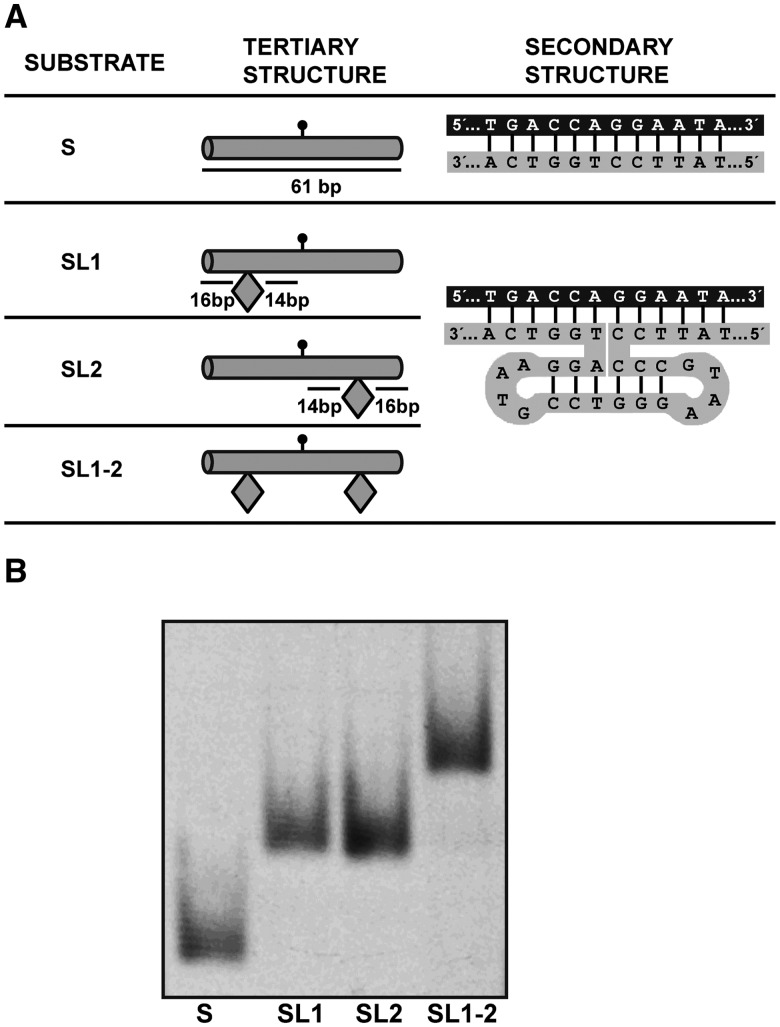
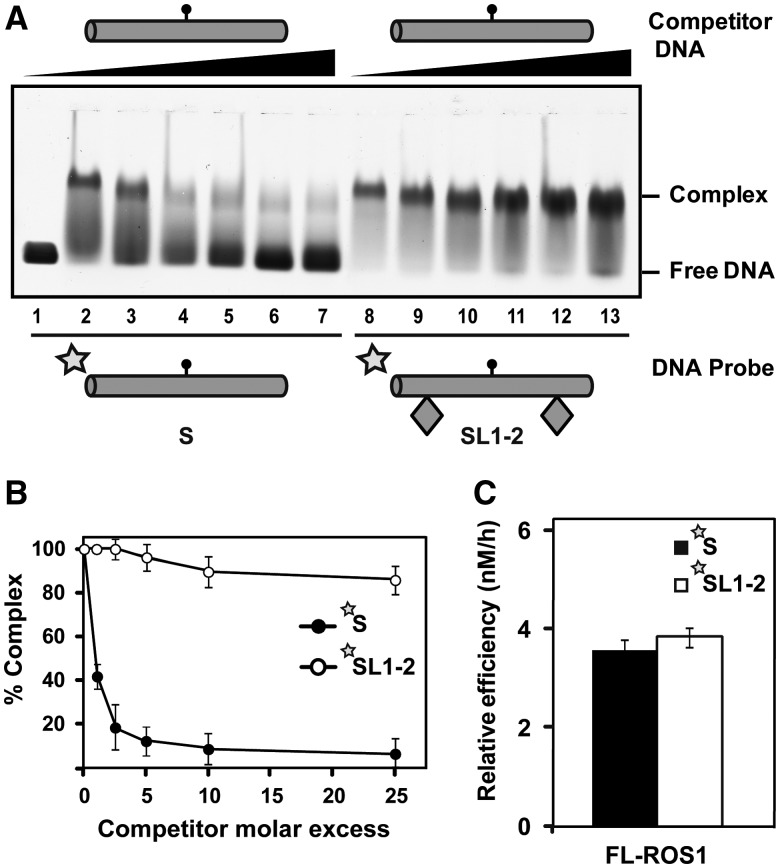
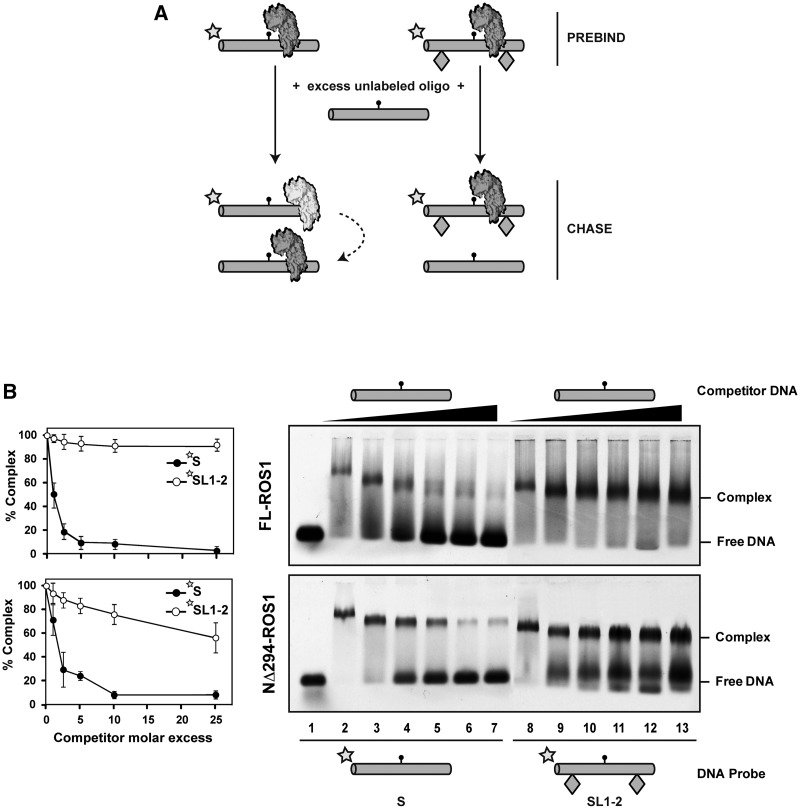
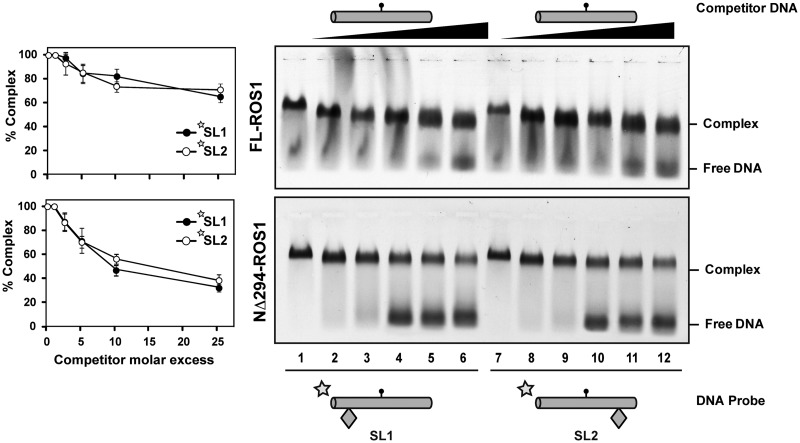
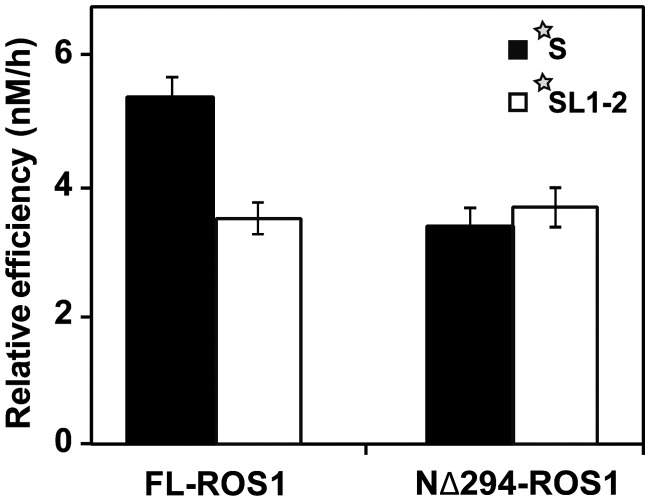
Active DNA demethylation processes play a critical role in shaping methylation patterns, yet our understanding of the mechanisms involved is still fragmented and incomplete. REPRESSOR OF SILENCING 1 (ROS1) is a prototype member of a family of plant 5-methylcytosine DNA glycosylases that initiate active DNA demethylation through a base excision repair pathway. As ROS1 binds DNA non-specifically, we have critically tested the hypothesis that facilitated diffusion along DNA may contribute to target location by the enzyme. We have found that dissociation of ROS1 from DNA is severely restricted when access to both ends is obstructed by tetraloops obstacles. Unblocking any end facilitates protein dissociation, suggesting that random surface sliding is the main route to a specific target site. We also found that removal of the basic N-terminal domain of ROS1 significantly impairs the sliding capacity of the protein. Finally, we show that sliding increases the catalytic efficiency of ROS1 on 5-meC:G pairs, but not on T:G mispairs, thus suggesting that the enzyme achieves recognition and excision of its two substrate bases by different means. A model is proposed to explain how ROS1 finds its potential targets on DNA.
活性 DNA 去甲基化过程在塑造甲基化模式方面起着关键作用,但我们对所涉及的机制的理解仍然是零碎和不完整的。沉默抑制物 1(ROS1)是植物 5-甲基胞嘧啶 DNA 糖苷酶家族的原型成员,通过碱基切除修复途径启动活性 DNA 去甲基化。由于 ROS1 非特异性地结合 DNA,我们对酶可能通过促进扩散沿 DNA 有助于目标定位的假设进行了严格测试。我们发现,当四链体障碍物阻塞两端的进入时,ROS1 从 DNA 上的解离受到严重限制。任何一端的畅通无阻都有助于蛋白质的解离,这表明随机表面滑动是到达特定靶位点的主要途径。我们还发现,去除 ROS1 的碱性 N 端结构域会显著损害蛋白质的滑动能力。最后,我们表明滑动增加了 ROS1 在 5-meC:G 对上的催化效率,但不能在 T:G 错配上,因此表明该酶通过不同的方式实现对其两个底物碱基的识别和切除。提出了一个模型来解释 ROS1 如何在 DNA 上找到其潜在的靶标。