Department of Medicine, Division of Medical Genetics, University of Washington School of Medicine, Seattle, Washington, USA.
PLoS One. 2012;7(9):e45936. doi: 10.1371/journal.pone.0045936. Epub 2012 Sep 25.
Adverse neurodevelopmental sequelae are reported among children who undergo early cardiac surgery to repair congenital heart defects (CHD). APOE genotype has previously been determined to contribute to the prediction of these outcomes. Understanding further genetic causes for the development of poor neurobehavioral outcomes should enhance patient risk stratification and improve both prevention and treatment strategies.
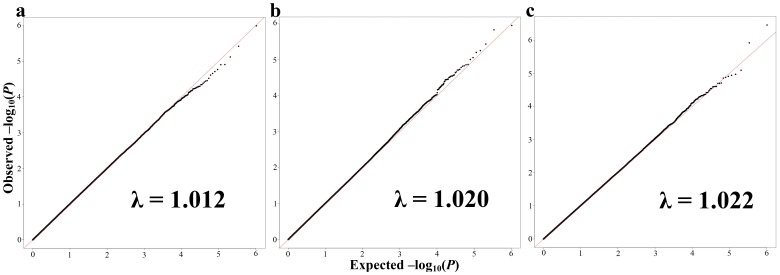
We performed a prospective observational study of children who underwent cardiac surgery before six months of age; this included a neurodevelopmental evaluation between their fourth and fifth birthdays. Attention and behavioral skills were assessed through parental report utilizing the Attention Deficit-Hyperactivity Disorder-IV scale preschool edition (ADHD-IV), and Child Behavior Checklist (CBCL/1.5-5), respectively. Of the seven investigated, three neurodevelopmental phenotypes met genomic quality control criteria. Linear regression was performed to determine the effect of genome-wide genetic variation on these three neurodevelopmental measures in 316 subjects.
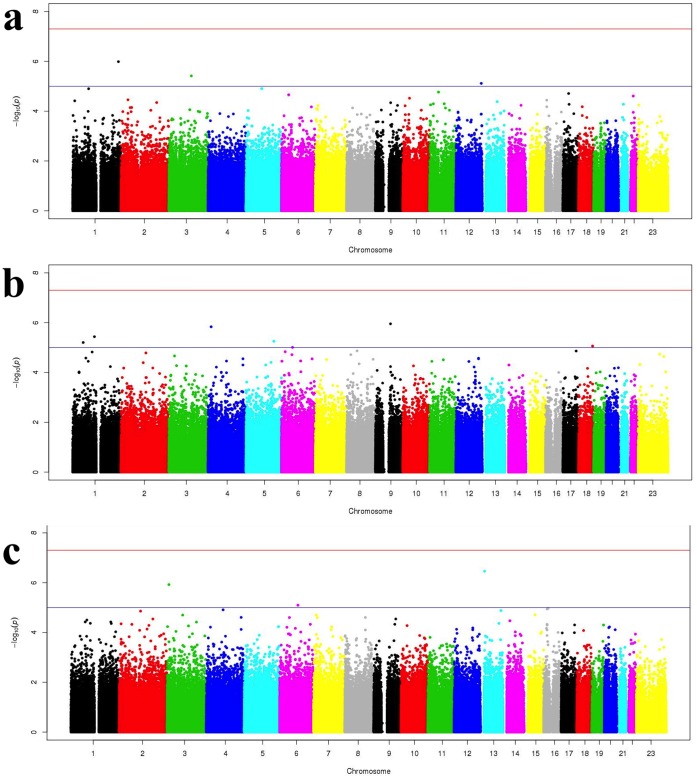
This genome-wide association study identified single nucleotide polymorphisms (SNPs) associated with three neurobehavioral phenotypes in the postoperative children ADHD-IV Impulsivity/Hyperactivity, CBCL/1.5-5 PDPs, and CBCL/1.5-5 Total Problems. The most predictive SNPs for each phenotype were: a LGALS8 intronic SNP, rs4659682, associated with ADHD-IV Impulsivity (P=1.03 × 10(-6)); a PCSK5 intronic SNP, rs2261722, associated with CBCL/1.5-5 PDPs (P=1.11 × 10(-6)); and an intergenic SNP, rs11617488, 50 kb from FGF9, associated with CBCL/1.5-5 Total Problems (P=3.47 × 10(-7)). 10 SNPs (3 for ADHD-IV Impulsivity, 5 for CBCL/1.5-5 PDPs, and 2 for CBCL/1.5-5 Total Problems) had p<10(-5).
No SNPs met genome-wide significance for our three neurobehavioral phenotypes; however, 10 SNPs reached a threshold for suggestive significance (p<10(-5)). Given the unique nature of this cohort, larger studies and/or replication are not possible. Studies to further investigate the mechanisms through which these newly identified genes may influence neurodevelopment dysfunction are warranted.
据报道,患有先天性心脏缺陷(CHD)的儿童在早期接受心脏手术后会出现不良神经发育后遗症。先前已确定 APOE 基因型有助于预测这些结果。了解导致神经行为不良结果的进一步遗传原因,应能增强患者的风险分层,并改善预防和治疗策略。
我们对在 6 个月大之前接受心脏手术的儿童进行了前瞻性观察研究;这包括在他们 4 到 5 岁生日之间进行神经发育评估。通过使用注意力缺陷多动障碍-IV 量表学龄前版(ADHD-IV)和儿童行为检查表(CBCL/1.5-5),分别通过父母报告评估注意力和行为技能。在调查的七种基因中,有三种神经发育表型符合基因组质量控制标准。对 316 名受试者的全基因组遗传变异对这三种神经发育测量的影响进行了线性回归分析。
这项全基因组关联研究确定了与术后儿童 ADHD-IV 冲动/多动、CBCL/1.5-5 PDPs 和 CBCL/1.5-5 总问题三种神经行为表型相关的单核苷酸多态性(SNP)。每个表型最具预测性的 SNP 是:LGALS8 内含子 SNP rs4659682 与 ADHD-IV 冲动(P=1.03×10(-6))相关;PCSK5 内含子 SNP rs2261722 与 CBCL/1.5-5 PDPs 相关(P=1.11×10(-6));和一个位于 FGF9 基因 50kb 处的基因间 SNP rs11617488 与 CBCL/1.5-5 总问题相关(P=3.47×10(-7))。有 10 个 SNP(3 个用于 ADHD-IV 冲动,5 个用于 CBCL/1.5-5 PDPs,2 个用于 CBCL/1.5-5 总问题)的 p<10(-5)。
我们的三种神经行为表型没有 SNP 达到全基因组显著水平;然而,有 10 个 SNP 达到了提示性显著水平(p<10(-5))。鉴于该队列的独特性,不可能进行更大规模的研究或复制。有必要进行进一步研究,以探讨这些新确定的基因可能影响神经发育功能障碍的机制。