Department of Rehabilitation and Movement Sciences, University of Medicine and Dentistry of New Jersey, School of Health Related Professions, Stratford, New Jersey, United States of America.
PLoS One. 2012;7(10):e46954. doi: 10.1371/journal.pone.0046954. Epub 2012 Oct 3.
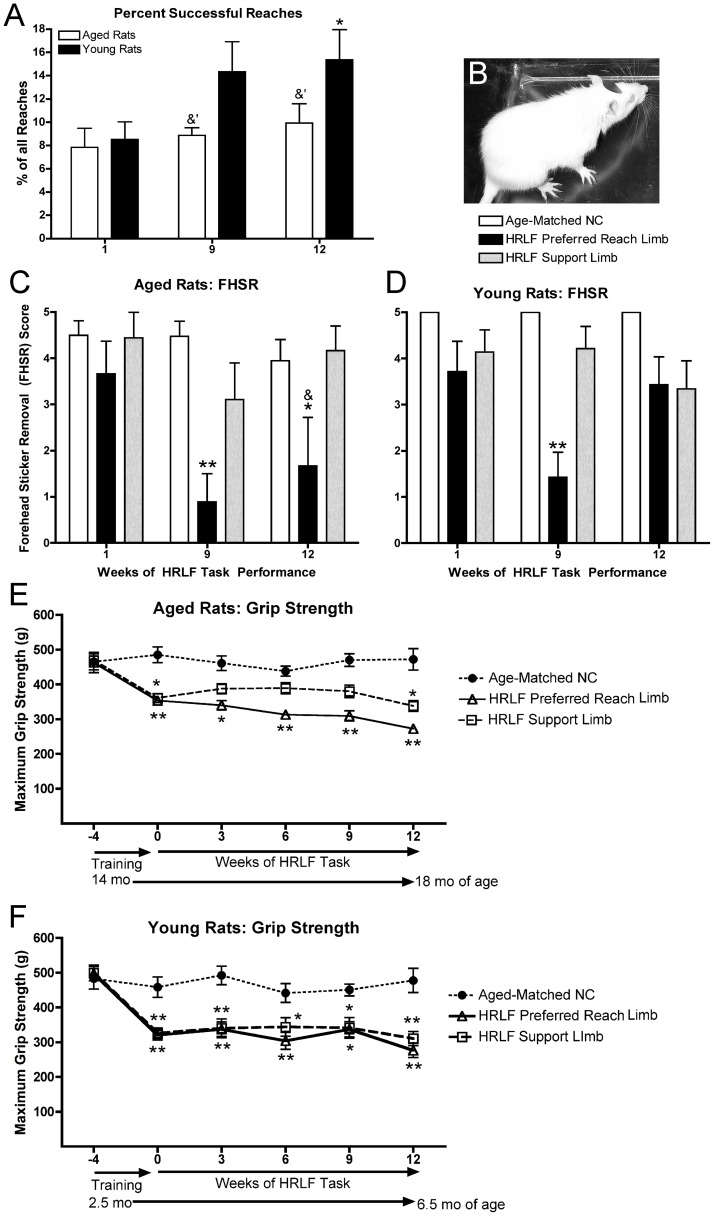
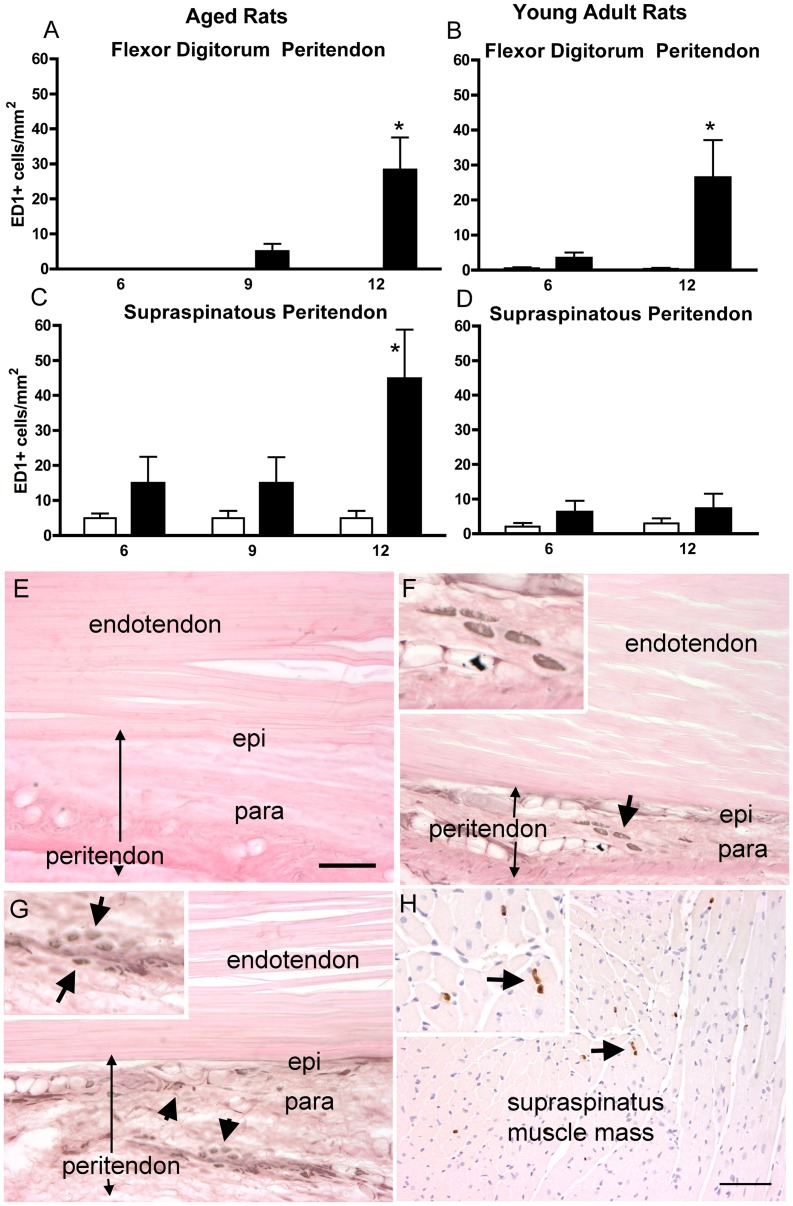
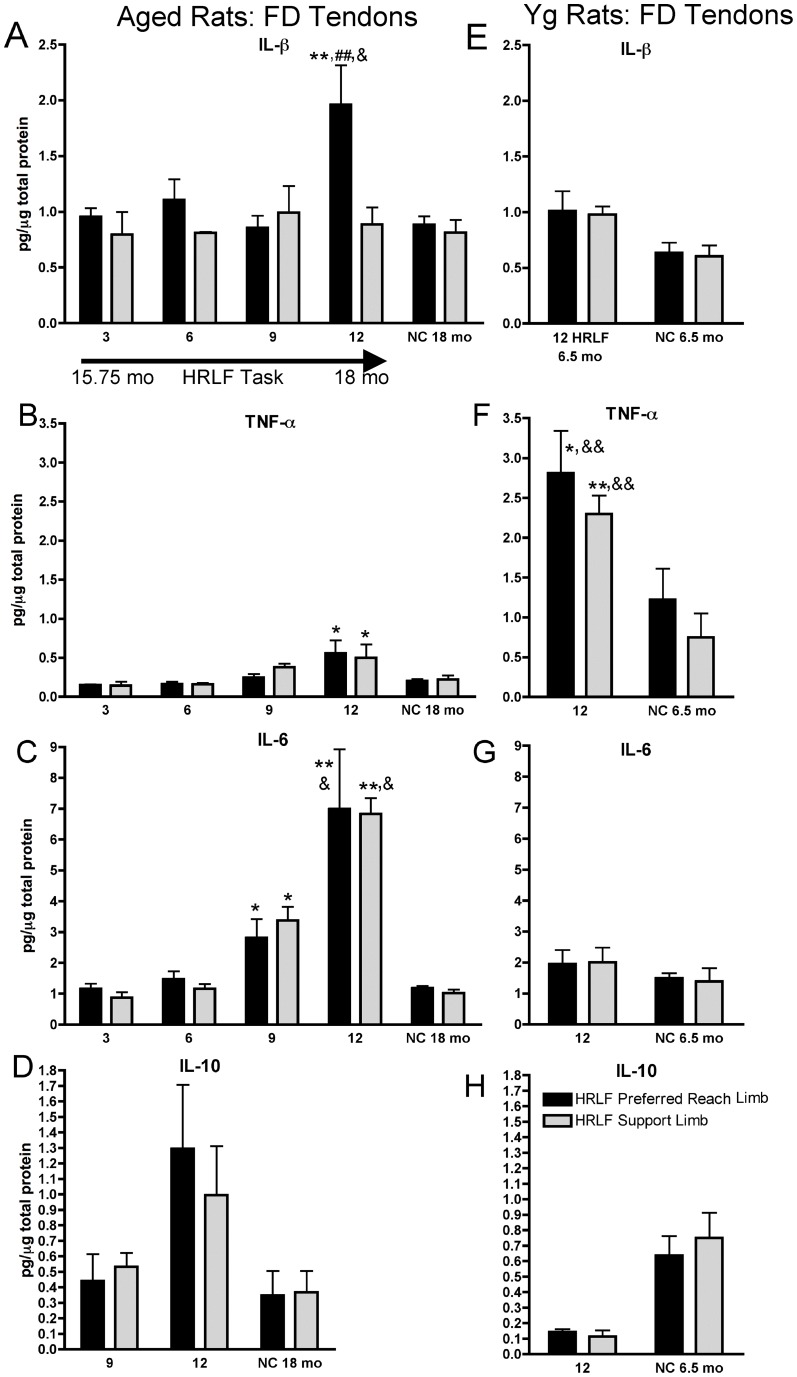
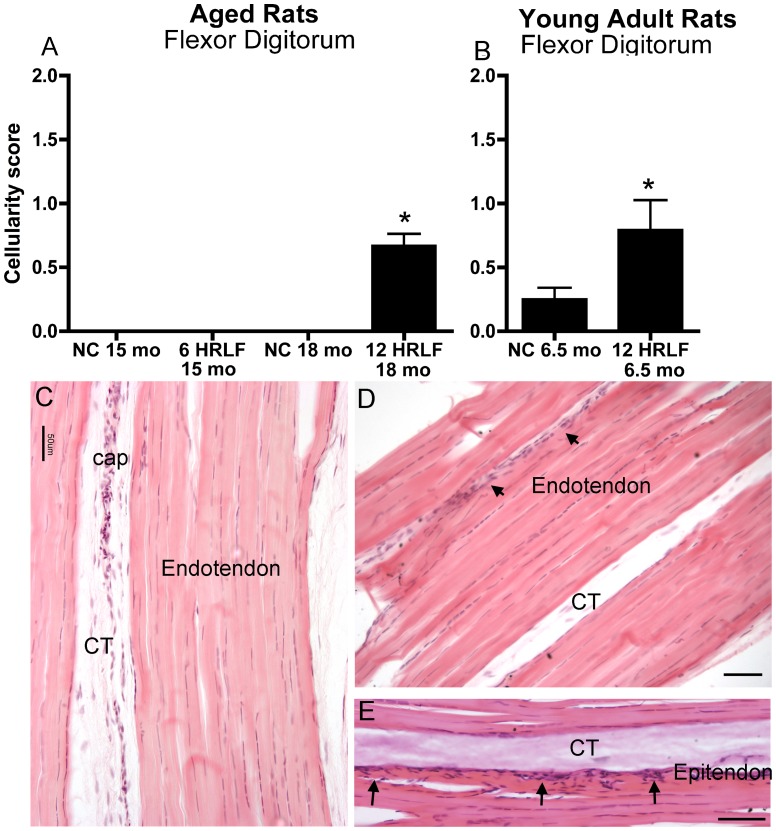
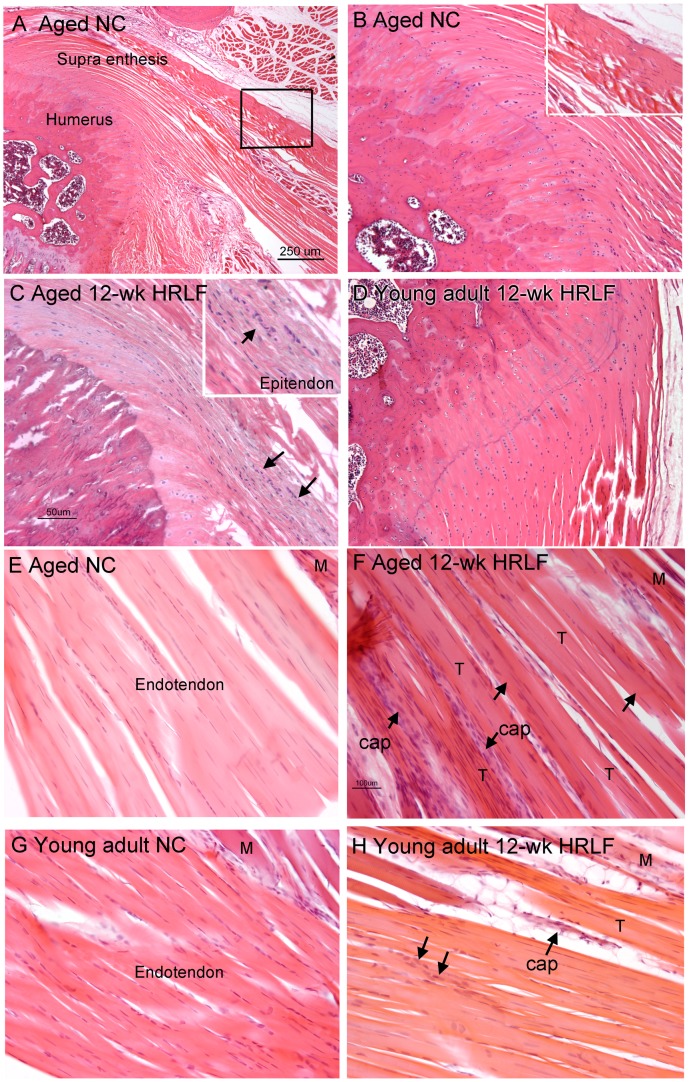
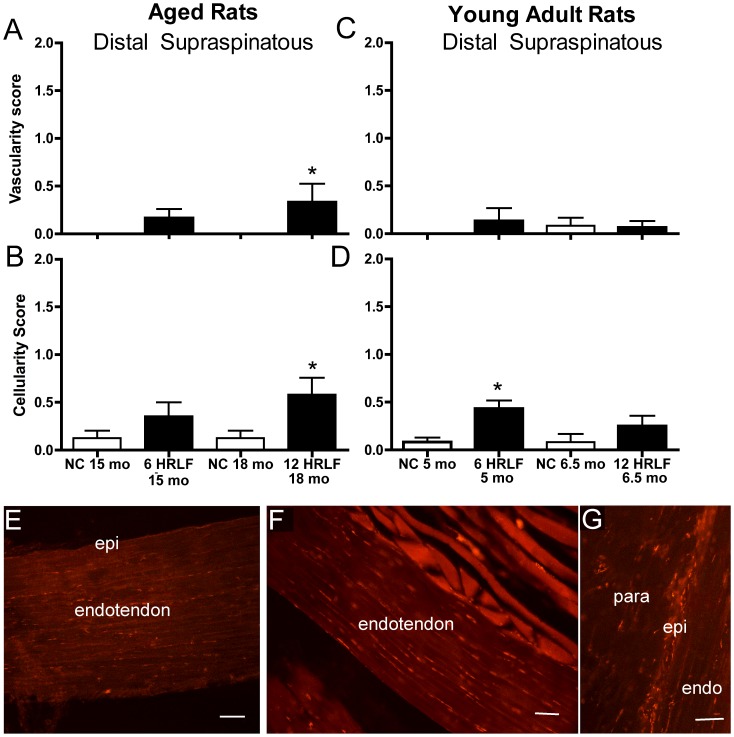
We sought to determine if tendon inflammatory and histopathological responses increase in aged rats compared to young rats performing a voluntary upper extremity repetitive task, and if these changes are associated with motor declines. Ninety-six female Sprague-Dawley rats were used in the rat model of upper extremity overuse: 67 aged and 29 young adult rats. After a training period of 4 weeks, task rats performed a voluntary high repetition low force (HRLF) handle-pulling task for 2 hrs/day, 3 days/wk for up to 12 weeks. Upper extremity motor function was assessed, as were inflammatory and histomorphological changes in flexor digitorum and supraspinatus tendons. The percentage of successful reaches improved in young adult HRLF rats, but not in aged HRLF rats. Forelimb agility decreased transiently in young adult HRLF rats, but persistently in aged HRLF rats. HRLF task performance for 12 weeks lead to increased IL-1beta and IL-6 in flexor digitorum tendons of aged HRLF rats, compared to aged normal control (NC) as well as young adult HRLF rats. In contrast, TNF-alpha increased more in flexor digitorum tendons of young adult 12-week HRLF rats than in aged HRLF rats. Vascularity and collagen fibril organization were not affected by task performance in flexor digitorum tendons of either age group, although cellularity increased in both. By week 12 of HRLF task performance, vascularity and cellularity increased in the supraspinatus tendons of only aged rats. The increased cellularity was due to increased macrophages and connective tissue growth factor (CTGF)-immunoreactive fibroblasts in the peritendon. In conclusion, aged rat tendons were overall more affected by the HRLF task than young adult tendons, particularly supraspinatus tendons. Greater inflammatory changes in aged HRLF rat tendons were observed, increases associated temporally with decreased forelimb agility and lack of improvement in task success.
我们试图确定与年轻大鼠相比,进行上肢重复性自愿任务的老年大鼠的肌腱炎症和组织病理学反应是否增加,以及这些变化是否与运动能力下降有关。 在大鼠上肢过度使用模型中使用了 96 只雌性 Sprague-Dawley 大鼠:67 只老年大鼠和 29 只年轻成年大鼠。 在 4 周的训练期后,任务大鼠每天进行 2 小时,每周 3 天,持续 12 周的自愿高重复低力(HRLF)手柄拉任务。 评估上肢运动功能,以及屈指肌腱和肩袖肌腱的炎症和组织形态学变化。 年轻成年 HRLF 大鼠的成功到达率有所提高,但老年 HRLF 大鼠则没有。 年轻成年 HRLF 大鼠的前肢敏捷性短暂下降,但老年 HRLF 大鼠则持续下降。 HRLF 任务 12 周后,与老年正常对照组(NC)以及年轻成年 HRLF 大鼠相比,老年 HRLF 大鼠屈指肌腱中的 IL-1beta 和 IL-6 增加。 相比之下,12 周 HRLF 任务后,年轻成年大鼠屈指肌腱中的 TNF-alpha 增加更多。 尽管细胞数量增加,但肌腱的血管生成和胶原纤维组织排列均不受任何年龄组 HRLF 任务的影响。 通过 HRLF 任务 12 周后,仅老年大鼠的肩袖肌腱的血管生成和细胞数量增加。 细胞数量的增加是由于腱周的巨噬细胞和结缔组织生长因子(CTGF)-免疫反应性成纤维细胞增加。 总之,与年轻成年大鼠相比,老年大鼠的肌腱总体上受到 HRLF 任务的影响更大,尤其是肩袖肌腱。 在老年 HRLF 大鼠的肌腱中观察到更大的炎症变化,这些变化与前肢敏捷性下降以及任务成功率提高有关。