Institut für Medizinische Mikrobiologie und Hygiene, Universität Tübingen, Germany.
PLoS One. 2012;7(10):e47069. doi: 10.1371/journal.pone.0047069. Epub 2012 Oct 9.
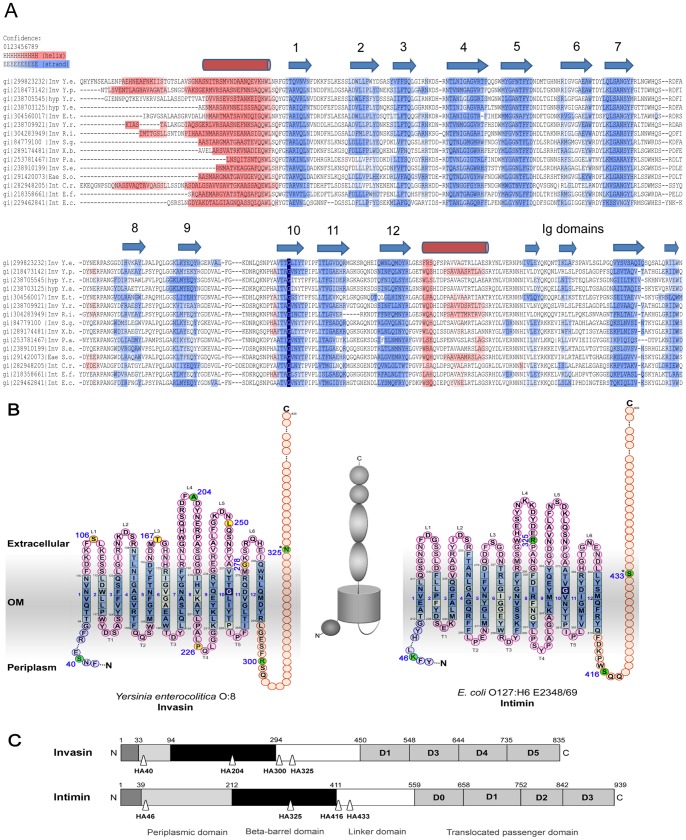
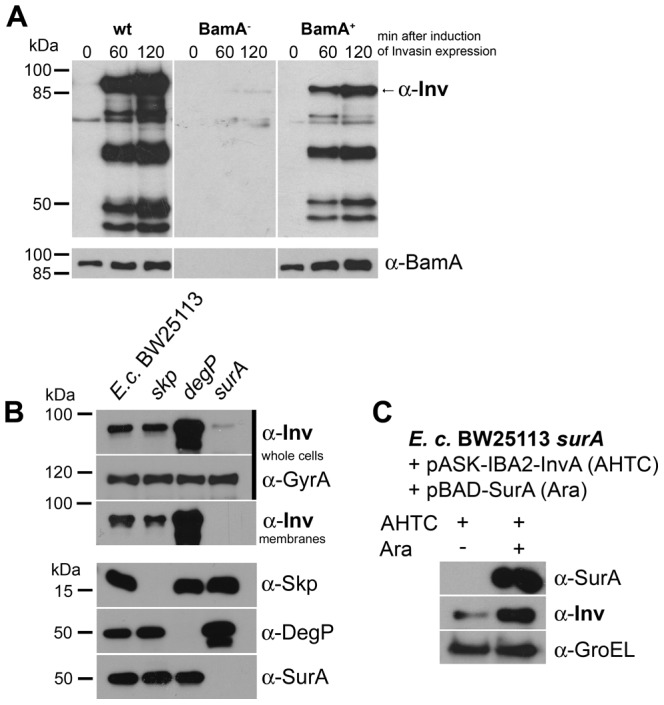
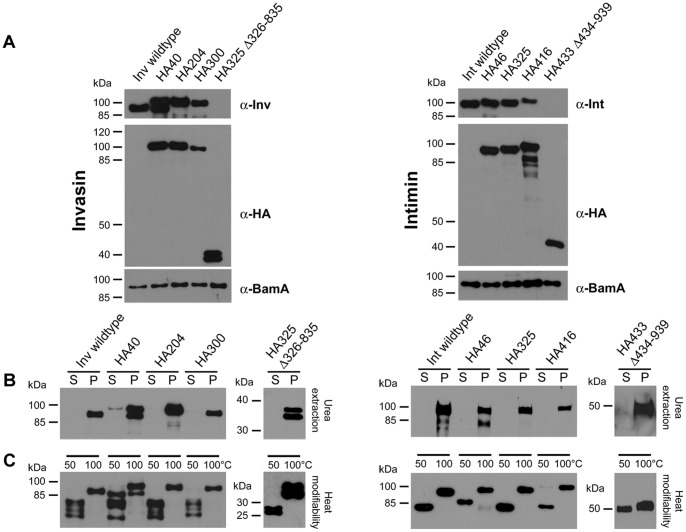
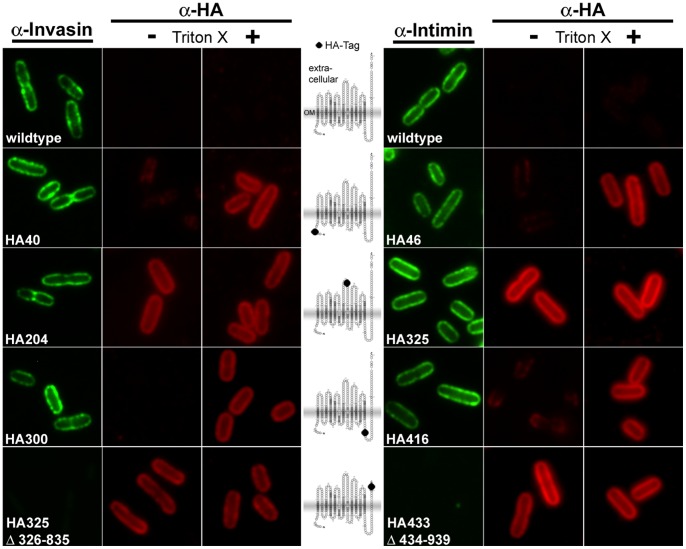
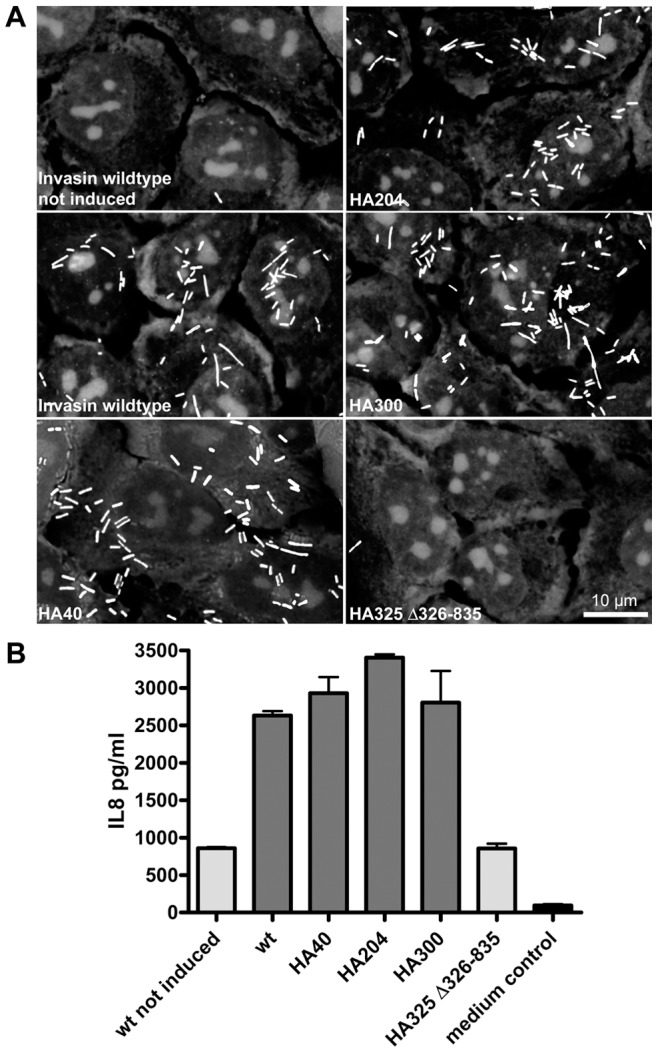
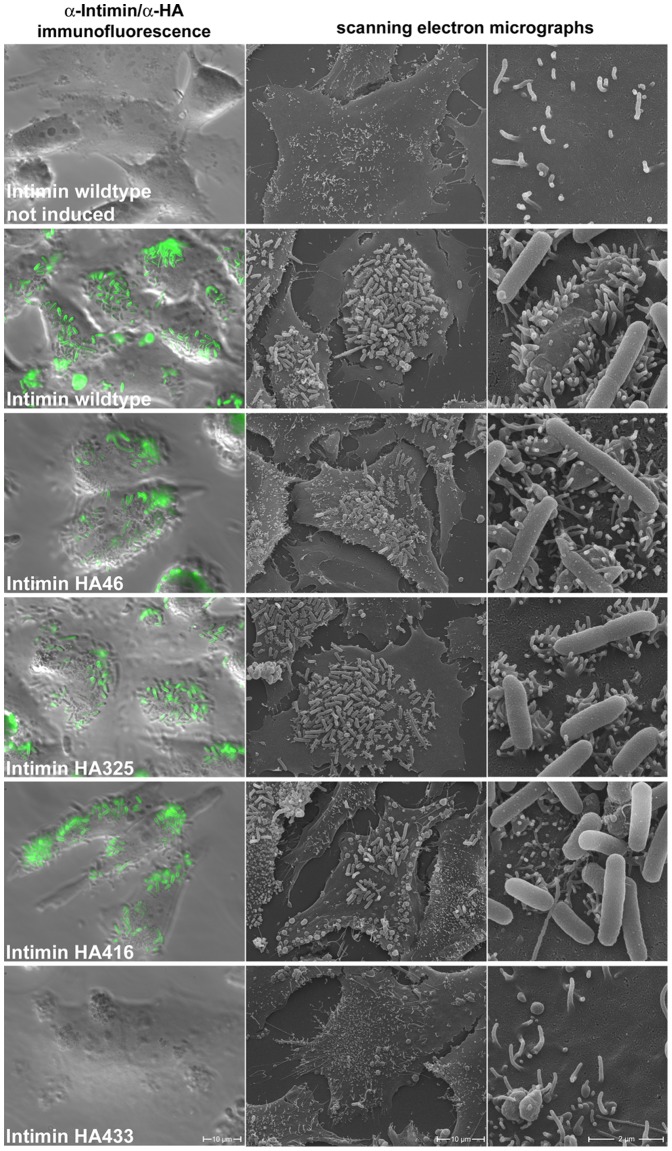
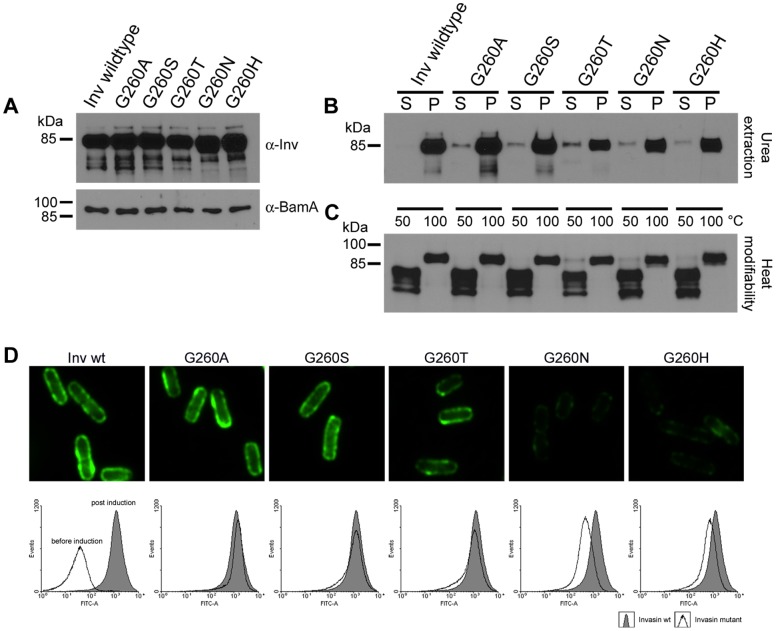
Invasin and intimin are major virulence factors of enteropathogenic Yersiniae and Escherichia coli, mediating invasion into and intimate adherence to host cells, respectively. Several studies have hinted that extracellular portion of these homologous proteins might be exported via an autotransport mechanism, but rigorous experimental proof has been lacking. Here, we present a topology model for invasin and intimin, consistent with the hypothesis that the N-terminal β-barrel domain acts as a translocation pore to secrete the C-terminal passenger domain. We confirmed this topology model by inserting epitope tags into the loops of the β-barrel. We further show that obstructing the pore of β-barrel hinders the export of the passenger domain. As for classical autotransport, the biogenesis of invasin and intimin is dependent on the Bam complex and the periplasmic chaperone SurA, whereas the chaperone/protease DegP is involved in quality control. However, compared to classical autotransporters (Type Va secretion), the domain structure of intimin and invasin is inverted. We conclude that proteins of the intimin and invasin family constitute a novel group of autotransported proteins, and propose that this class of autotransporters be termed Type Ve secretion.
侵袭素和紧密素是肠致病性耶尔森氏菌和大肠杆菌的主要毒力因子,分别介导宿主细胞的侵袭和紧密粘附。有几项研究表明,这些同源蛋白的细胞外部分可能通过自转运机制进行输出,但缺乏严格的实验证据。在这里,我们提出了侵袭素和紧密素的拓扑模型,该模型与以下假设一致,即 N 端 β-桶结构域充当分泌 C 端载体结构域的易位孔。我们通过在β-桶的环中插入表位标签来证实该拓扑模型。我们进一步表明,阻塞β-桶的孔会阻碍载体结构域的输出。与经典的自转运一样,侵袭素和紧密素的生物发生依赖于 Bam 复合物和周质伴侣 SurA,而伴侣/蛋白酶 DegP 则参与质量控制。然而,与经典的自转运体(Type Va 分泌)相比,紧密素和侵袭素的结构域结构是倒置的。我们得出结论,紧密素和侵袭素家族的蛋白构成了一类新型的自转运蛋白,并提出将此类自转运体命名为 Type Ve 分泌。