Universités Montpellier 2 et 1, Montpellier, France.
PLoS One. 2012;7(10):e47125. doi: 10.1371/journal.pone.0047125. Epub 2012 Oct 8.
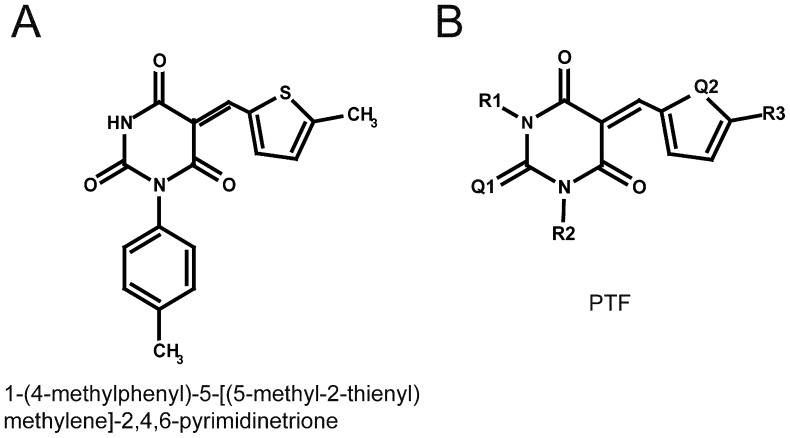
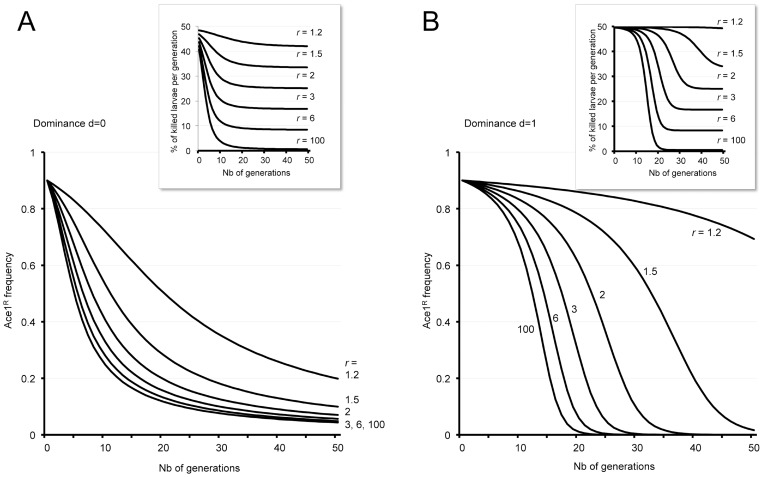
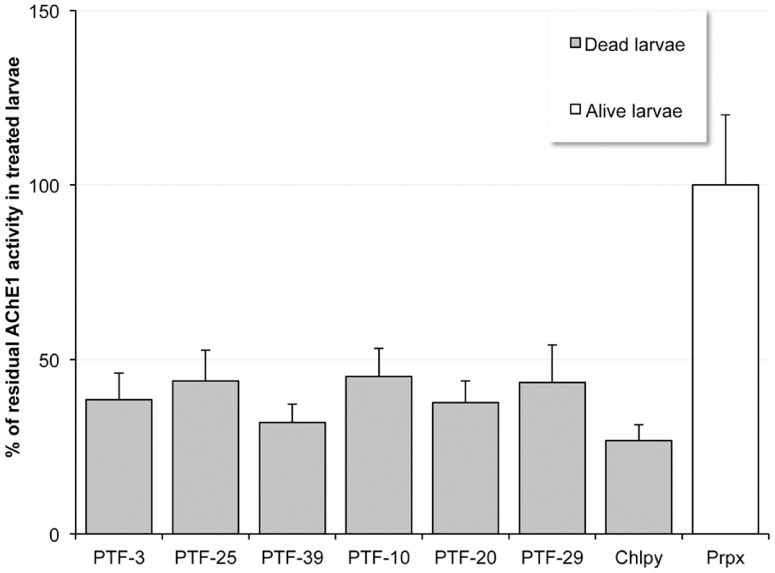
Resistance to insecticides has become a critical issue in pest management and it is particularly chronic in the control of human disease vectors. The gravity of this situation is being exacerbated since there has not been a new insecticide class produced for over twenty years. Reasoned strategies have been developed to limit resistance spread but have proven difficult to implement in the field. Here we propose a new conceptual strategy based on inhibitors that preferentially target mosquitoes already resistant to a currently used insecticide. Application of such inhibitors in rotation with the insecticide against which resistance has been selected initially is expected to restore vector control efficacy and reduce the odds of neo-resistance. We validated this strategy by screening for inhibitors of the G119S mutated acetylcholinesterase-1 (AChE1), which mediates insensitivity to the widely used organophosphates (OP) and carbamates (CX) insecticides. PyrimidineTrione Furan-substituted (PTF) compounds came out as best hits, acting biochemically as reversible and competitive inhibitors of mosquito AChE1 and preferentially inhibiting the mutated form, insensitive to OP and CX. PTF application in bioassays preferentially killed OP-resistant Culex pipiens and Anopheles gambiae larvae as a consequence of AChE1 inhibition. Modeling the evolution of frequencies of wild type and OP-insensitive AChE1 alleles in PTF-treated populations using the selectivity parameters estimated from bioassays predicts a rapid rise in the wild type allele frequency. This study identifies the first compound class that preferentially targets OP-resistant mosquitoes, thus restoring OP-susceptibility, which validates a new prospect of sustainable insecticide resistance management.
抗药性已成为害虫管理中的一个关键问题,在控制人类疾病传播媒介方面尤其严重。由于 20 多年来没有生产出新的杀虫剂类别,这种情况变得更加严重。已经制定了合理的策略来限制抗药性的传播,但在实际应用中却很难实施。在这里,我们提出了一种新的基于抑制剂的概念性策略,该策略优先针对已经对目前使用的杀虫剂产生抗药性的蚊子。预计将这种抑制剂与最初选择的杀虫剂交替使用,将恢复对病媒的控制效果,并降低产生新抗性的可能性。我们通过筛选对介导对广泛使用的有机磷(OP)和氨基甲酸酯(CX)杀虫剂不敏感的 G119S 突变乙酰胆碱酯酶-1(AChE1)的抑制剂来验证了这一策略。嘧啶三酮呋喃取代物(PTF)化合物是最佳的抑制剂,它们作为蚊子 AChE1 的可逆和竞争性抑制剂发挥作用,并且优先抑制突变体,对 OP 和 CX 不敏感。在生物测定中,PTF 的应用优先杀死对 OP 具有抗性的库蚊和疟蚊幼虫,这是由于 AChE1 的抑制作用。使用从生物测定中估计的选择性参数来模拟 PTF 处理种群中野生型和 OP 不敏感 AChE1 等位基因频率的进化,预测野生型等位基因频率将迅速上升。这项研究确定了优先针对 OP 抗性蚊子的第一个化合物类别,从而恢复了 OP 敏感性,这验证了可持续杀虫剂抗性管理的新前景。