Department of Anesthesiology and Pain Medicine, Soonchunhyang University Seoul Hospital, Seoul, Korea.
Korean J Anesthesiol. 2012 Sep;63(3):227-32. doi: 10.4097/kjae.2012.63.3.227. Epub 2012 Sep 14.
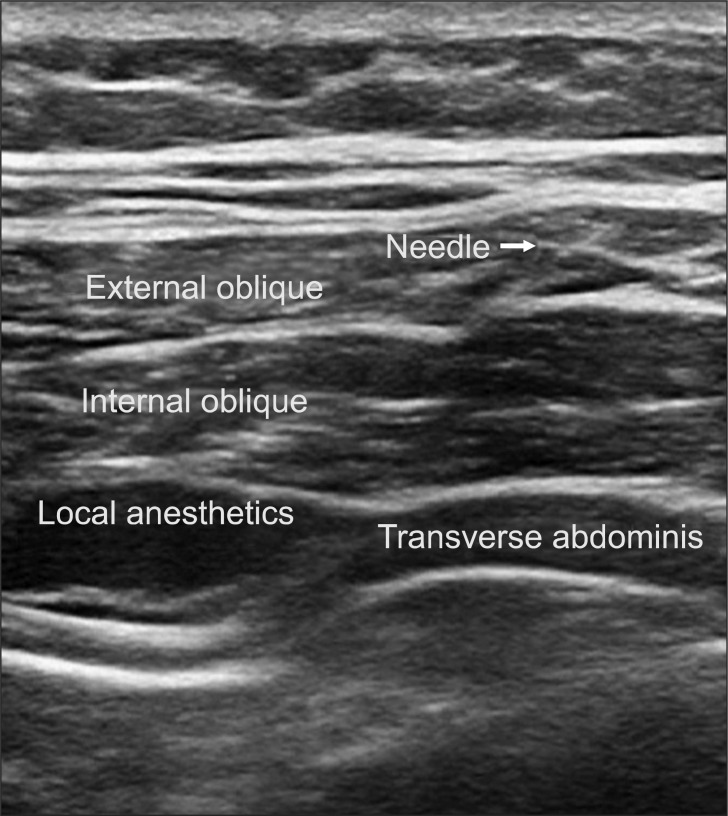
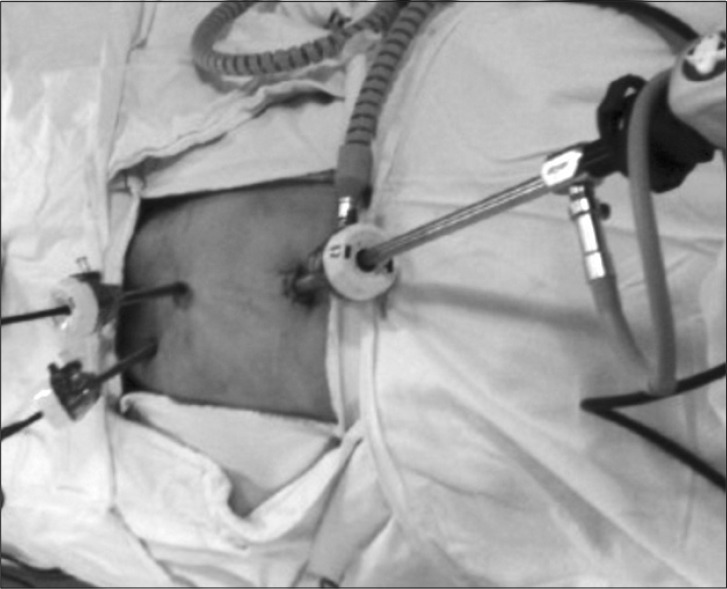
The ultrasound-guided transverse abdominis plane block (TAPB) reduces postoperative pain after laparoscopic abdominal surgery. But, its effect post laparoscopic totally extraperitoneal hernia repair (TEP) is not clear. In this study, we evaluated the analgesic effect of ultrasound-guided TAPB in TEP.
In this prospective, randomized study, forty adult patients (ASA I-II) scheduled for a TEP under general anesthesia were studied. In the TAPB group (n = 20), an ultrasound-guided bilateral TAPB was performed with 0.375% ropivacaine 15 ml on each side after the induction of general anesthesia. The control group (n = 20) did not have TAPB performed. Fentanyl 50 µg was repeatedly injected as per the patient's request in the recovery room. Pain scores at rest and on coughing were assessed postoperatively in the recovery room (20 min, at discharge) and at 4, 8, and 24 hours after surgery.
In the recovery room, pain scores (numeric rating scale, 0-10) at postoperative 20 min were lower in the TAPB group (3.9 ± 1.6, 4.9 ± 1.8) than the control group (6.9 ± 1.6, 8.0 ± 1.6) at rest and on coughing. Also, pain scores upon discharge from the recovery room were lower in the TAPB group (3.2 ± 1.2, 4.2 ± 1.5) than the control group (5.3 ± 1.6, 6.5 ± 1.8) at rest and on coughing.
The ultrasound-guided TAPB in patients that had undergone TEP reduced postoperative pain scores and the fentanyl requirement in the recovery room. Also, pain scores on coughing were reduced until postoperative 8 hours.
超声引导下腹横肌平面阻滞(TAPB)可减轻腹腔镜腹部手术后的疼痛。但是,其在腹腔镜完全腹膜外疝修补术(TEP)后的效果尚不清楚。在本研究中,我们评估了超声引导下 TAPB 在 TEP 中的镇痛效果。
在这项前瞻性、随机研究中,研究了 40 名接受全身麻醉下 TEP 的成年患者(ASA I-II 级)。在 TAPB 组(n = 20)中,在全身麻醉诱导后,每侧用 0.375%罗哌卡因 15 ml 行超声引导下双侧 TAPB。对照组(n = 20)未行 TAPB。在恢复室中,根据患者的要求重复注射芬太尼 50 µg。在恢复室(术后 20 分钟、出院时)以及术后 4、8 和 24 小时评估静息和咳嗽时的疼痛评分。
在恢复室中,TAPB 组(静息时 3.9 ± 1.6,咳嗽时 4.9 ± 1.8)术后 20 分钟的疼痛评分(数字评分量表,0-10)低于对照组(静息时 6.9 ± 1.6,咳嗽时 8.0 ± 1.6)。从恢复室出院时,TAPB 组(静息时 3.2 ± 1.2,咳嗽时 4.2 ± 1.5)的疼痛评分也低于对照组(静息时 5.3 ± 1.6,咳嗽时 6.5 ± 1.8)。
在接受 TEP 的患者中,超声引导下 TAPB 可降低术后疼痛评分和恢复室中芬太尼的需求。此外,咳嗽时的疼痛评分直到术后 8 小时仍会降低。