Department of Medicine, University of Massachusetts Medical School, Worcester, Massachusetts, United States of America.
PLoS One. 2012;7(10):e44915. doi: 10.1371/journal.pone.0044915. Epub 2012 Oct 10.
BACKGROUND & AIMS: Hepatitis C virus (HCV) is difficult to eradicate and type III interferons (IFN-λ, composed of IL-28A, IL-28B and IL-29) are novel therapeutic candidates. We hypothesized that IFN-λ have immunomodulatory effects in HCV- infected individuals.
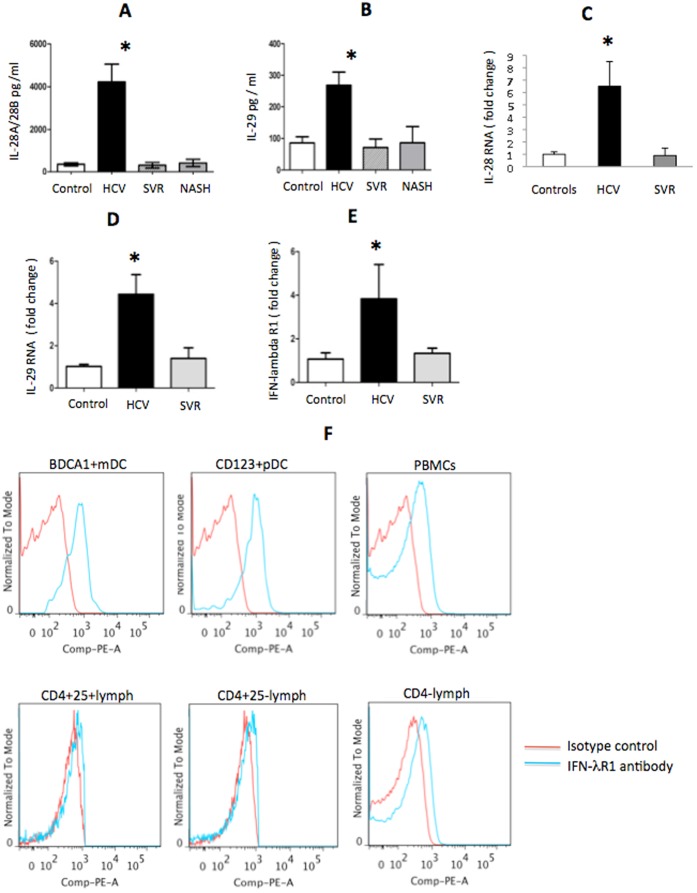
We analyzed the expression of IFN-λ and its receptor (composed of IL-10R2 and IFN-λR subunits) in the blood and livers of patients with chronic (c)HCV infection compared to controls (those who cleared HCV by sustained virological response, SVR, and those with liver inflammation of non-viral origin, non-alcoholic steatohepatitis, NASH). We also compared the proliferative capacity of dendritic cells (DCs) obtained from healthy individuals and those with chronic HCV using a mixed leukocyte reaction combined with 3H-Td incorporation. In addition, the composition of the IFN-λ receptor (IFN-λR) on myeloid DCs, plasmacytoid DCs, PBMCs, and T cells was determined by FACS analysis.
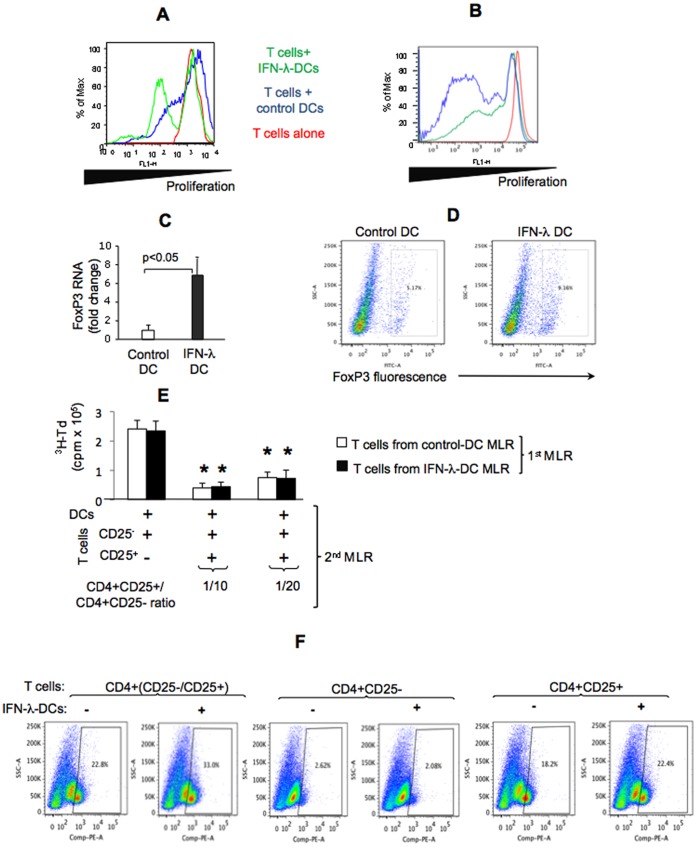
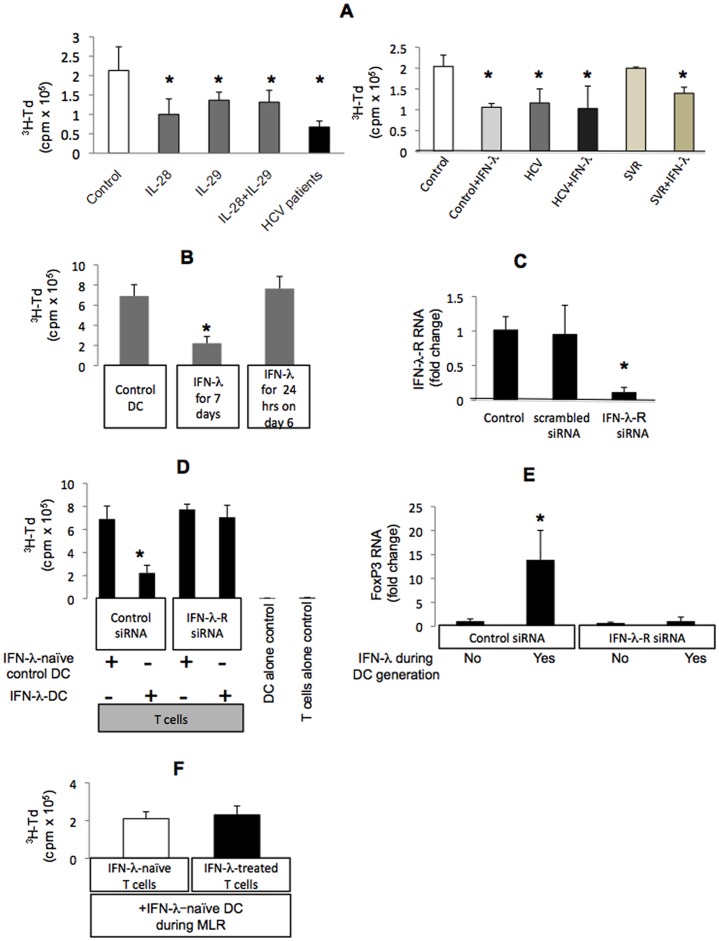
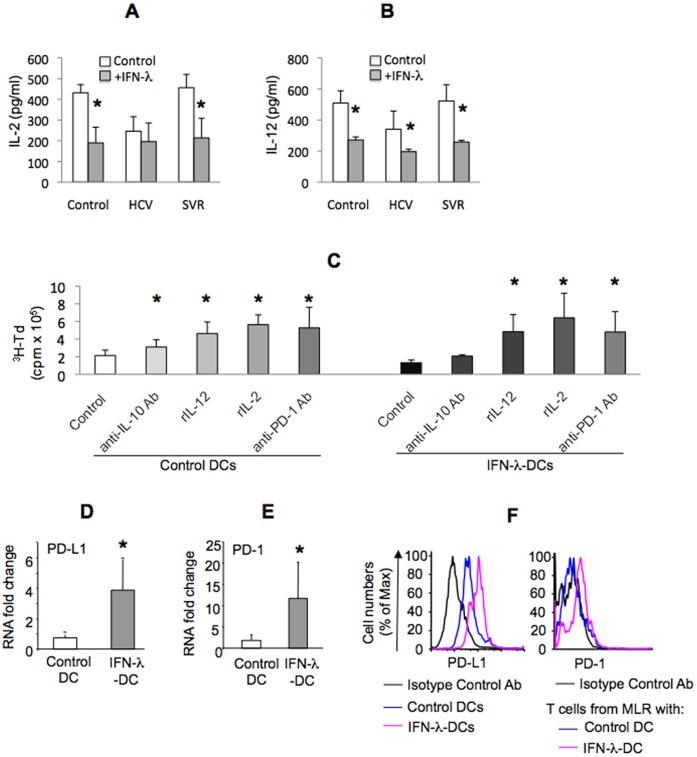
We report that the expression of IFN-λ protein in serum and mRNA in liver is increased in cHCV patients, but not in those with HCV SVR or NASH, compared to controls. Liver level of IFN-λR mirrored the expression of serum IFN-λ and was higher in cHCV, compared to controls and HCV-SVR patients, suggesting that elevation of IFN-λ and IFN-λR are HCV-dependent. We further identified that innate immune cell populations expressed complete IFN-λ receptor. In vitro, recombinant IFN-λ promoted differentiation of monocyte-derived dendritic cells (DCs) into a phenotype with low T cell stimulatory capacity and high PD-L1 expression, which further promoted expansion of existing regulatory T cells. IFN-λ-DCs failed to induce de novo generation of regulatory T cells. The inhibitory capacity of IFN-λ-DCs was counteracted by recombinant IL-12 and by neutralization of the PD-1/PD-L1 system.
Our novel findings of the immunomodulatory effect of IFN-λ contribute to the understanding of the anti-inflammatory and/or anti-viral potential of IFN-λ in cHCV.
丙型肝炎病毒(HCV)难以根除,而 III 型干扰素(IFN-λ,由 IL-28A、IL-28B 和 IL-29 组成)是新型治疗候选物。我们假设 IFN-λ 在 HCV 感染个体中具有免疫调节作用。
我们分析了慢性(c)HCV 感染患者与对照组(通过持续病毒学应答(SVR)清除 HCV 的患者和非病毒性肝炎症(非酒精性脂肪性肝炎,NASH)的患者)的血液和肝脏中 IFN-λ 及其受体(由 IL-10R2 和 IFN-λR 亚基组成)的表达。我们还比较了来自健康个体和慢性 HCV 患者的树突状细胞(DC)的增殖能力,方法是将混合白细胞反应与 3H-Td 掺入相结合。此外,通过 FACS 分析确定髓样 DC、浆细胞样 DC、PBMC 和 T 细胞上 IFN-λ 受体(IFN-λR)的组成。
我们报告称,与对照组相比,cHCV 患者血清 IFN-λ 蛋白表达和肝内 IFN-λ mRNA 表达增加,但 HCV-SVR 或 NASH 患者无此增加。IFN-λR 在肝脏中的水平反映了血清 IFN-λ 的表达,且在 cHCV 中高于对照组和 HCV-SVR 患者,提示 IFN-λ 和 IFN-λR 的升高是 HCV 依赖性的。我们进一步发现固有免疫细胞群体表达完整的 IFN-λR。体外,重组 IFN-λ 促进单核细胞衍生的树突状细胞(DC)分化为具有低 T 细胞刺激能力和高 PD-L1 表达的表型,这进一步促进了现有调节性 T 细胞的扩增。IFN-λ-DC 未能诱导新的调节性 T 细胞生成。重组 IL-12 和中和 PD-1/PD-L1 系统可消除 IFN-λ-DC 的抑制能力。
我们关于 IFN-λ 的免疫调节作用的新发现有助于理解 IFN-λ 在 cHCV 中的抗炎和/或抗病毒潜力。