
目前热带美洲可可树的空间多样性模式反映了更新世避难所的遗传分化,随后是受人类影响的扩散。
Present spatial diversity patterns of Theobroma cacao L. in the neotropics reflect genetic differentiation in pleistocene refugia followed by human-influenced dispersal.
机构信息
Regional Office for the Americas, Bioversity International, Cali, Colombia.
出版信息
PLoS One. 2012;7(10):e47676. doi: 10.1371/journal.pone.0047676. Epub 2012 Oct 24.
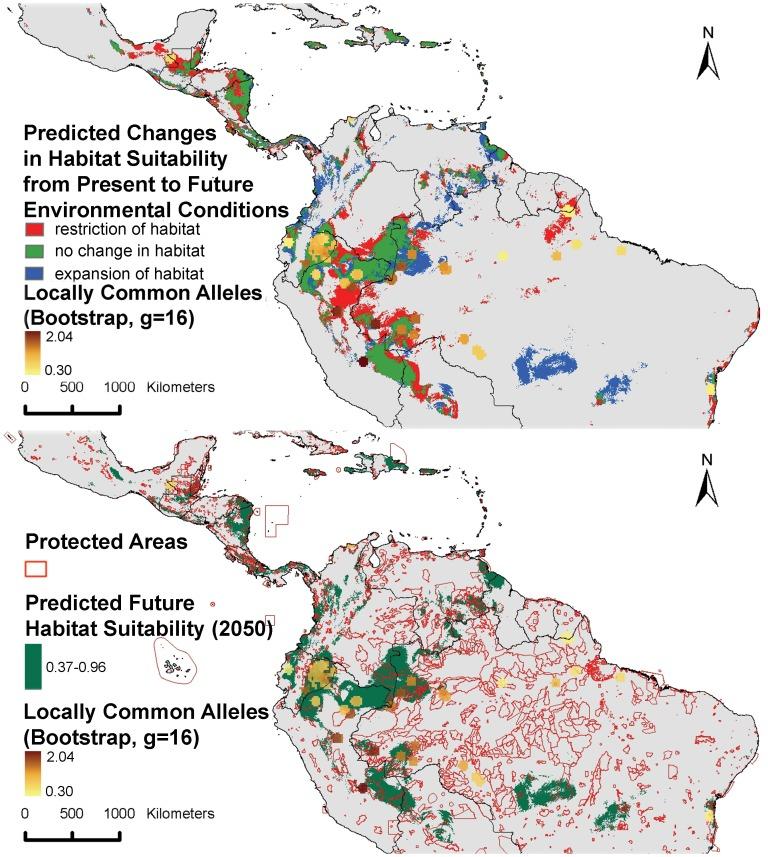
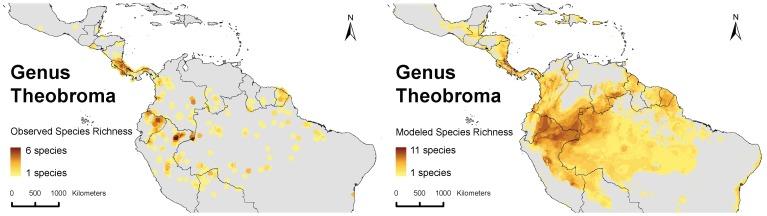
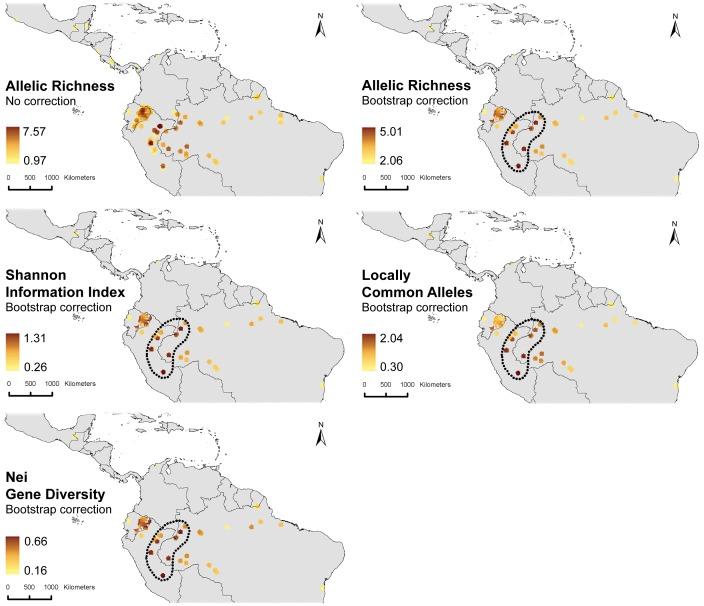
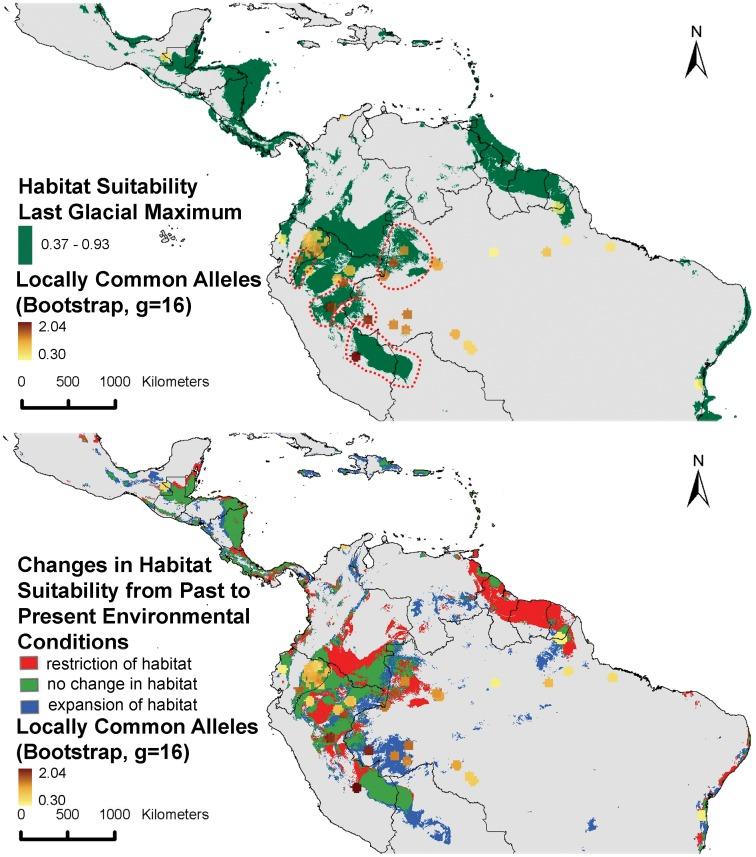
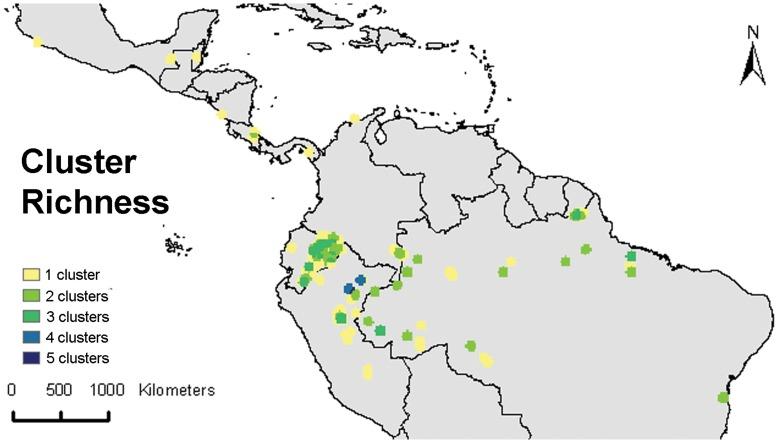
Cacao (Theobroma cacao L.) is indigenous to the Amazon basin, but is generally believed to have been domesticated in Mesoamerica for the production of chocolate beverage. However, cacao's distribution of genetic diversity in South America is also likely to reflect pre-Columbian human influences that were superimposed on natural processes of genetic differentiation. Here we present the results of a spatial analysis of the intra-specific diversity of cacao in Latin America, drawing on a dataset of 939 cacao trees genotypically characterized by means of 96 SSR markers. To assess continental diversity patterns we performed grid-based calculations of allelic richness, Shannon diversity and Nei gene diversity, and distinguished different spatially coherent genetic groups by means of cluster analysis. The highest levels of genetic diversity were observed in the Upper Amazon areas from southern Peru to the Ecuadorian Amazon and the border areas between Colombia, Peru and Brazil. On the assumption that the last glaciation (22,000-13,000 BP) had the greatest pre-human impact on the current distribution and diversity of cacao, we modeled the species' Pleistocene niche suitability and overlaid this with present-day diversity maps. The results suggest that cacao was already widely distributed in the Western Amazon before the onset of glaciation. During glaciations, cacao populations were likely to have been restricted to several refugia where they probably underwent genetic differentiation, resulting in a number of genetic clusters which are representative for, or closest related to, the original wild cacao populations. The analyses also suggested that genetic differentiation and geographical distribution of a number of other clusters seem to have been significantly affected by processes of human management and accompanying genetic bottlenecks. We discuss the implications of these results for future germplasm collection and in situ, on farm and ex situ conservation of cacao.
可可(Theobroma cacao L.)原产于亚马逊盆地,但一般认为它是在中美洲被驯化的,用于生产巧克力饮料。然而,可可在南美洲的遗传多样性分布也可能反映了在自然遗传分化过程之上叠加的前哥伦布时期人类的影响。在这里,我们根据通过 96 个 SSR 标记对 939 棵可可树进行的基因型特征分析的数据集,介绍了拉丁美洲可可种内多样性的空间分析结果。为了评估大陆多样性模式,我们进行了基于网格的等位基因丰富度、香农多样性和 Nei 基因多样性的计算,并通过聚类分析区分了不同的空间一致的遗传群体。遗传多样性水平最高的是从秘鲁南部到厄瓜多尔亚马逊河以及哥伦比亚、秘鲁和巴西之间边界地区的上亚马逊地区。假设末次冰期(22000-13000 BP)对可可当前分布和多样性的人类影响最大,我们对该物种的更新世适居性进行了建模,并将其与当前的多样性地图叠加。结果表明,在冰川作用开始之前,可可已经在西亚马逊广泛分布。在冰川作用期间,可可种群可能局限于几个避难所,在那里它们可能经历了遗传分化,从而产生了一些遗传群体,这些群体代表或与原始野生可可种群最接近。分析还表明,一些其他群体的遗传分化和地理分布似乎受到了人类管理和伴随而来的遗传瓶颈过程的显著影响。我们讨论了这些结果对未来种质收集以及可可的原位、农场内和场外保护的影响。




 Zotero 插件