Translational Genomics Group, Department of Genetics, University of Valencia, Doctor Moliner 50, 46100 Burjasot, Valencia, Spain.
Dis Model Mech. 2013 Jan;6(1):184-96. doi: 10.1242/dmm.009563. Epub 2012 Nov 1.
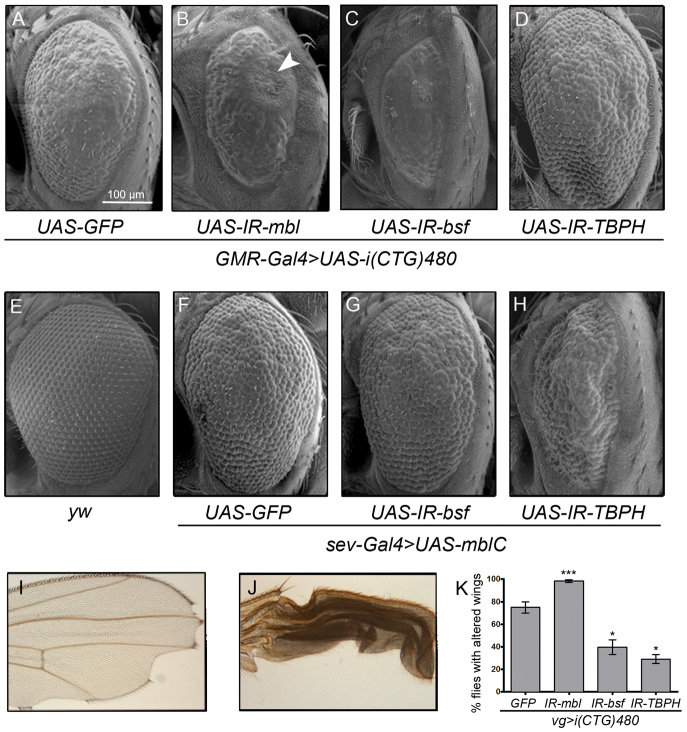
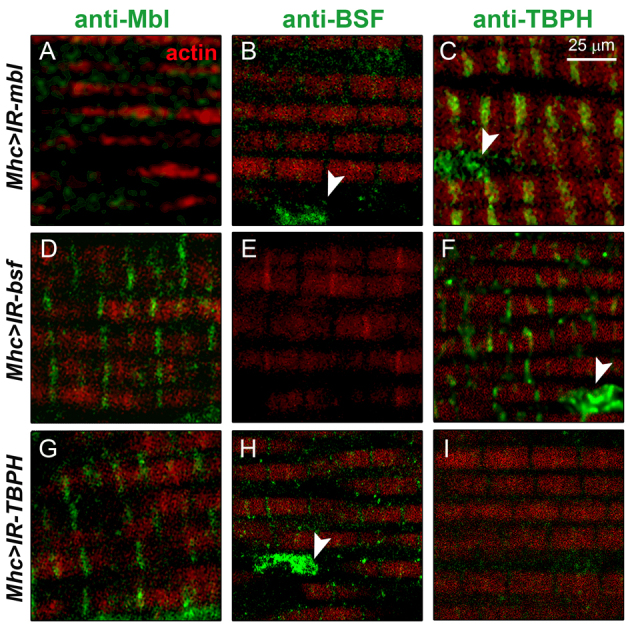
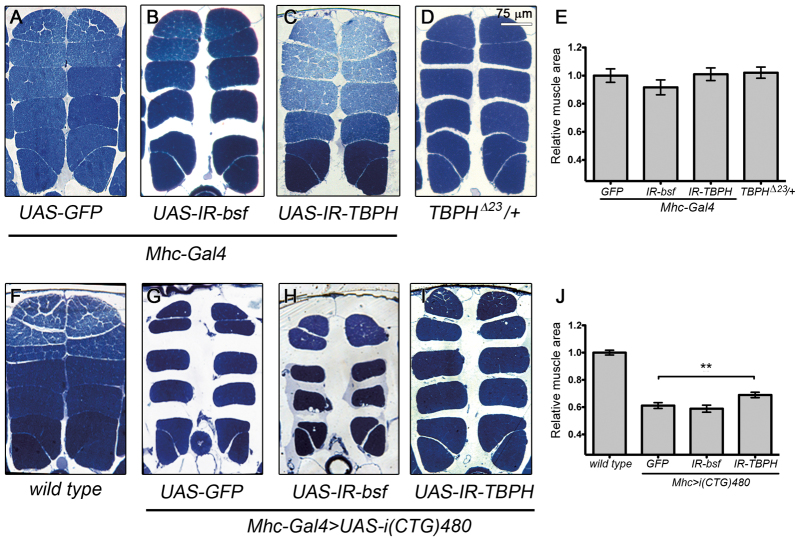
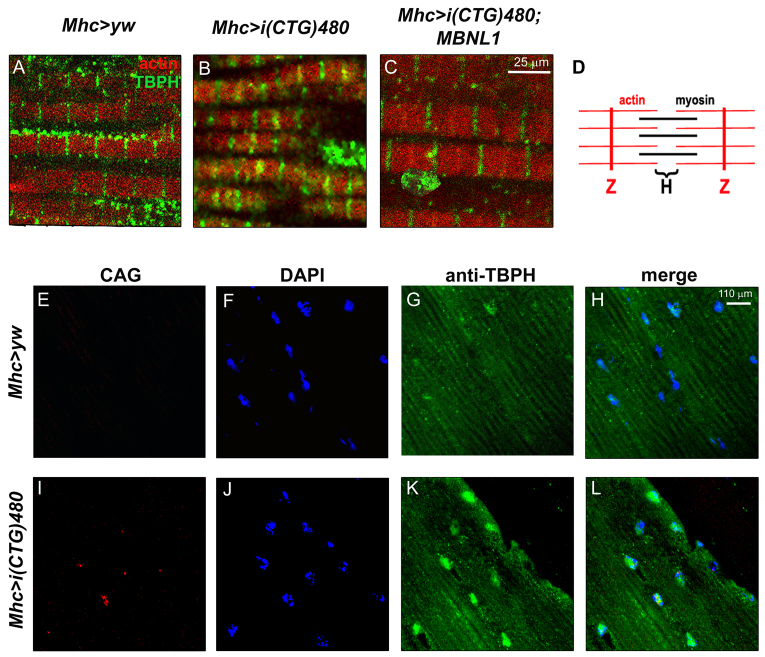
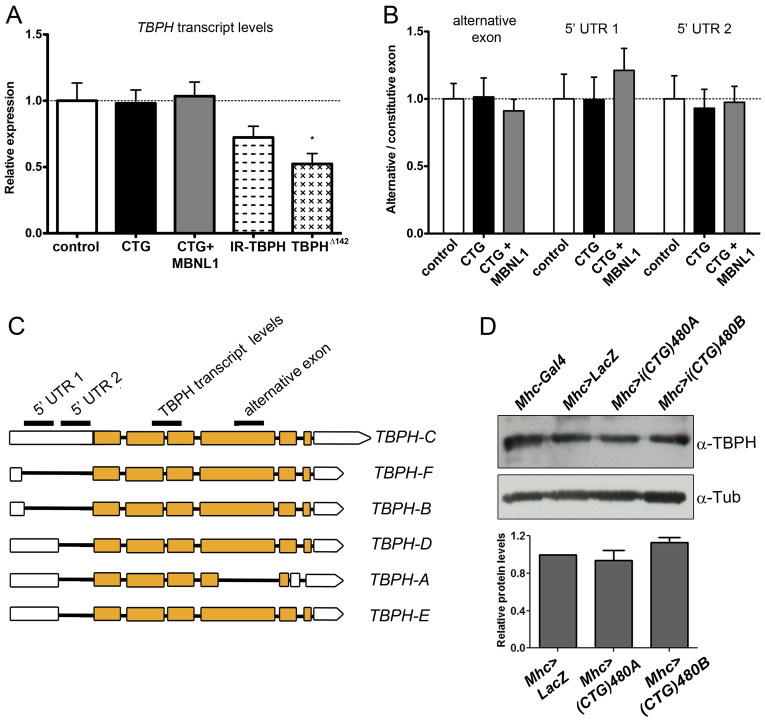
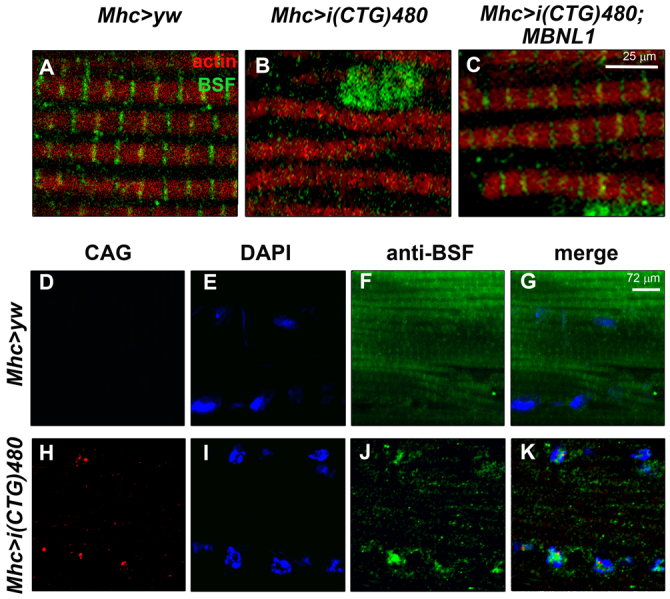
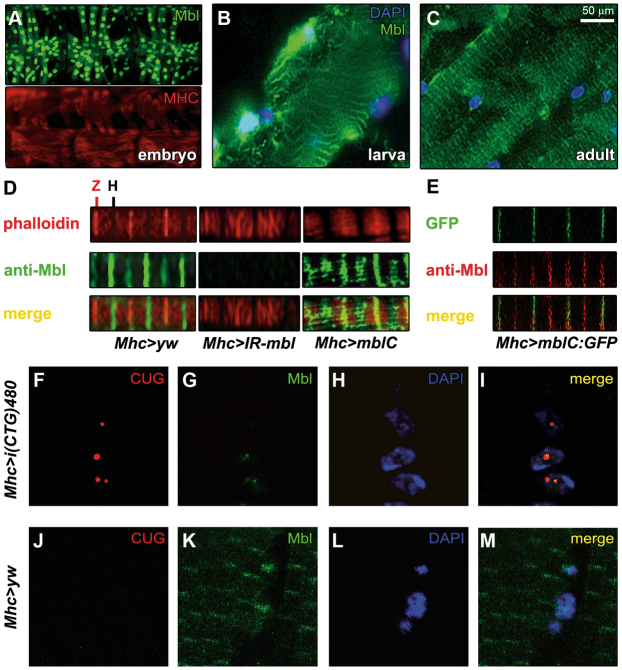
Myotonic dystrophy type 1 (DM1) is a genetic disease caused by the pathological expansion of a CTG trinucleotide repeat in the 3' UTR of the DMPK gene. In the DMPK transcripts, the CUG expansions sequester RNA-binding proteins into nuclear foci, including transcription factors and alternative splicing regulators such as MBNL1. MBNL1 sequestration has been associated with key features of DM1. However, the basis behind a number of molecular and histological alterations in DM1 remain unclear. To help identify new pathogenic components of the disease, we carried out a genetic screen using a Drosophila model of DM1 that expresses 480 interrupted CTG repeats, i(CTG)480, and a collection of 1215 transgenic RNA interference (RNAi) fly lines. Of the 34 modifiers identified, two RNA-binding proteins, TBPH (homolog of human TAR DNA-binding protein 43 or TDP-43) and BSF (Bicoid stability factor; homolog of human LRPPRC), were of particular interest. These factors modified i(CTG)480 phenotypes in the fly eye and wing, and TBPH silencing also suppressed CTG-induced defects in the flight muscles. In Drosophila flight muscle, TBPH, BSF and the fly ortholog of MBNL1, Muscleblind (Mbl), were detected in sarcomeric bands. Expression of i(CTG)480 resulted in changes in the sarcomeric patterns of these proteins, which could be restored by coexpression with human MBNL1. Epistasis studies showed that Mbl silencing was sufficient to induce a subcellular redistribution of TBPH and BSF proteins in the muscle, which mimicked the effect of i(CTG)480 expression. These results provide the first description of TBPH and BSF as targets of Mbl-mediated CTG toxicity, and they suggest an important role of these proteins in DM1 muscle pathology.
肌强直性营养不良 1 型(DM1)是一种由 DMPK 基因 3'UTR 中的 CTG 三核苷酸重复序列病理性扩增引起的遗传性疾病。在 DMPK 转录本中,CUG 扩展将 RNA 结合蛋白隔离到核斑点中,包括转录因子和替代剪接调节剂,如 MBNL1。MBNL1 的隔离与 DM1 的关键特征有关。然而,DM1 中许多分子和组织学改变的基础仍不清楚。为了帮助鉴定该疾病的新致病成分,我们使用表达 480 个中断 CTG 重复序列 i(CTG)480 的果蝇模型进行了遗传筛选,并使用 1215 个转基因 RNA 干扰 (RNAi) 蝇系的集合。在鉴定的 34 个修饰因子中,两个 RNA 结合蛋白 TBPH(人 TAR DNA 结合蛋白 43 或 TDP-43 的同源物)和 BSF(Bicoid 稳定性因子;人 LRPPRC 的同源物)特别有趣。这些因子修饰了果蝇眼睛和翅膀中的 i(CTG)480 表型,TBPH 沉默也抑制了飞行肌中的 CTG 诱导缺陷。在果蝇飞行肌中,TBPH、BSF 和果蝇 MBNL1 的同源物 Muscleblind (Mbl) 在肌节带中被检测到。i(CTG)480 的表达导致这些蛋白质的肌节模式发生变化,这些变化可以通过与人类 MBNL1 的共表达来恢复。上位性研究表明,Mbl 沉默足以诱导 TBPH 和 BSF 蛋白在肌肉中的亚细胞重新分布,这模拟了 i(CTG)480 表达的效果。这些结果首次描述了 TBPH 和 BSF 作为 Mbl 介导的 CTG 毒性的靶标,并表明这些蛋白在 DM1 肌肉病理学中具有重要作用。