Foxwell B M, Simon J, Herrero J J, Taylor D, Woerly G, Cantrell D, Ryffel B
Sandoz Ltd, Basle, Switzerland.
Immunology. 1990 Jan;69(1):104-9.
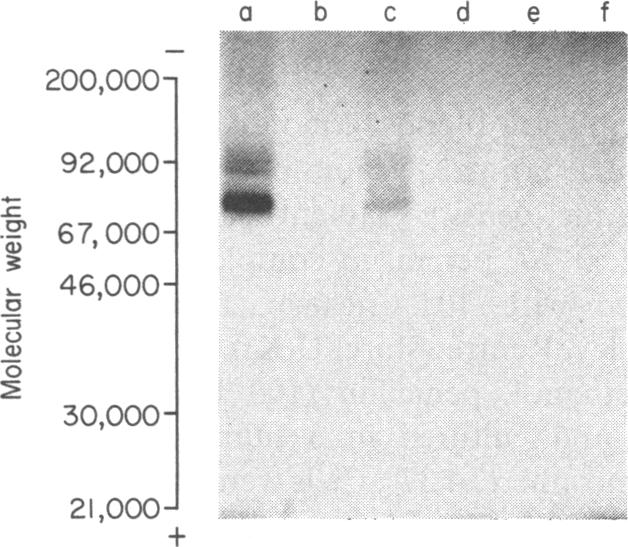
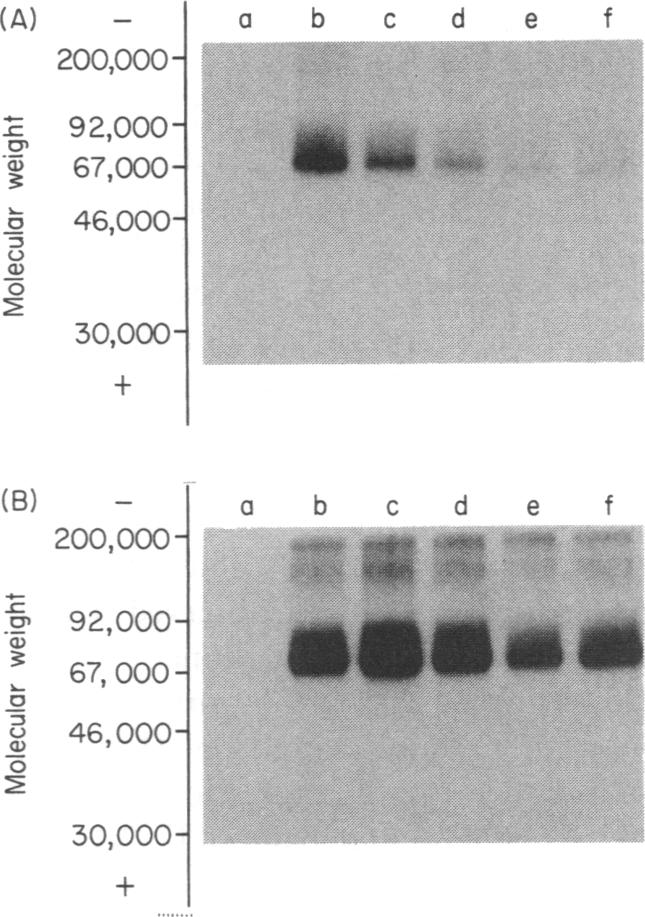
The inhibitory effect of cyclosporin (CsA) was investigated on human lymphocytes stimulated by anti-T-cell antibodies (anti-CD3 and -CD2) or mitogenic lectins. Whereas inhibition of cell proliferation (50%) occurred at 10 ng/ml CsA after cell activation via CD3 or CD2, higher CsA concentrations (300 ng/ml) were necessary to inhibit lectin-mediated cell activation (PHA, Con A). Exogenous recombinant interleukin-2 (rIL-2) partially reversed the inhibitory effect on antibody-stimulated cells only; however, at higher CsA concentrations (300 ng/ml) proliferation was again inhibited. Thus, CsA affected IL-2R expression and/or function at higher concentrations (300 ng/ml). CsA had no effect on receptor function as measured on IL-2-dependent cell growth of CTLL cells or preactivated lymphocytes. However, CsA inhibited both high and low affinity receptor expression as shown by [125I]IL-2 equilibrium binding studies on anti-CD3-stimulated cells. Cross-linking studies revealed that both p55 (TAC) and p75 chains of the IL-2R were not induced at low CsA concentrations (10 ng/ml). However, addition of rIL-2 reversed CsA inhibition of IL-2R expression. It is concluded that CsA, at least in anti-CD3-stimulated cells, inhibits IL-2R expression and cell proliferation with similar potency. Exogenous rIL-2 reverses CsA inhibition of IL-2R expression. This might be due to binding of rIL-2 to receptors which escape CsA inhibition, thereby up-regulating receptor expression which is drug resistant.
研究了环孢素(CsA)对由抗T细胞抗体(抗CD3和抗CD2)或促有丝分裂凝集素刺激的人淋巴细胞的抑制作用。通过CD3或CD2激活细胞后,在10 ng/ml CsA时发生细胞增殖抑制(50%),而抑制凝集素介导的细胞激活(PHA、Con A)则需要更高的CsA浓度(300 ng/ml)。外源性重组白细胞介素-2(rIL-2)仅部分逆转了对抗体刺激细胞的抑制作用;然而,在更高的CsA浓度(300 ng/ml)下增殖再次受到抑制。因此,CsA在更高浓度(300 ng/ml)时影响IL-2R的表达和/或功能。CsA对CTLL细胞或预激活淋巴细胞的IL-2依赖性细胞生长所测量的受体功能没有影响。然而,如在抗CD3刺激细胞上进行的[125I]IL-2平衡结合研究所显示,CsA抑制高亲和力和低亲和力受体的表达。交联研究表明,在低CsA浓度(10 ng/ml)下,IL-2R的p55(TAC)和p75链均未被诱导。然而,添加rIL-2可逆转CsA对IL-2R表达的抑制。得出的结论是,CsA至少在抗CD3刺激的细胞中,以相似的效力抑制IL-2R表达和细胞增殖。外源性rIL-2可逆转CsA对IL-2R表达的抑制。这可能是由于rIL-2与逃避CsA抑制的受体结合,从而上调对药物耐药的受体表达。