Faculty of Medicine, Institute of Bioinformatics, University of Muenster, Muenster, Germany.
PLoS One. 2012;7(10):e47972. doi: 10.1371/journal.pone.0047972. Epub 2012 Oct 25.
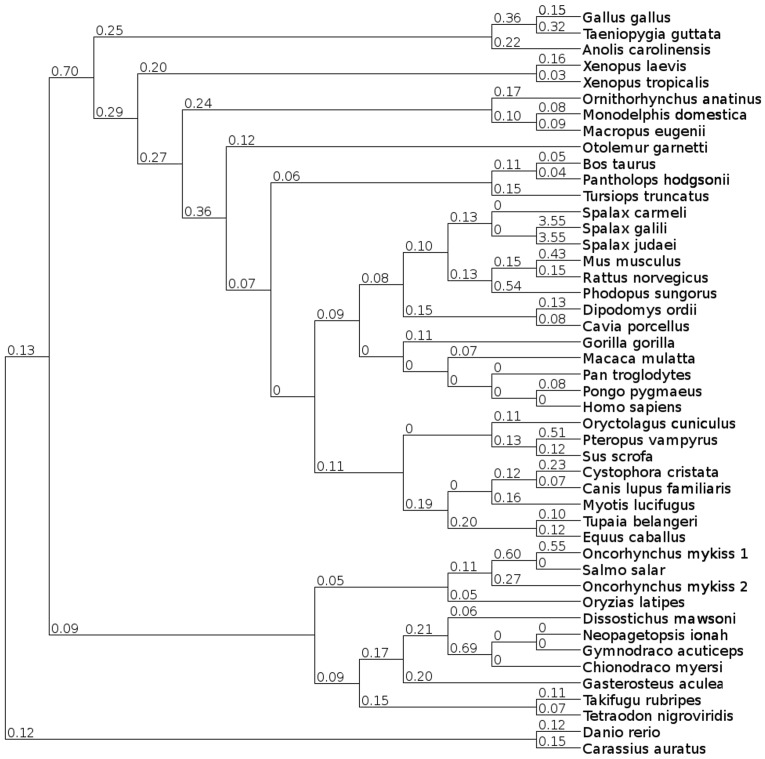
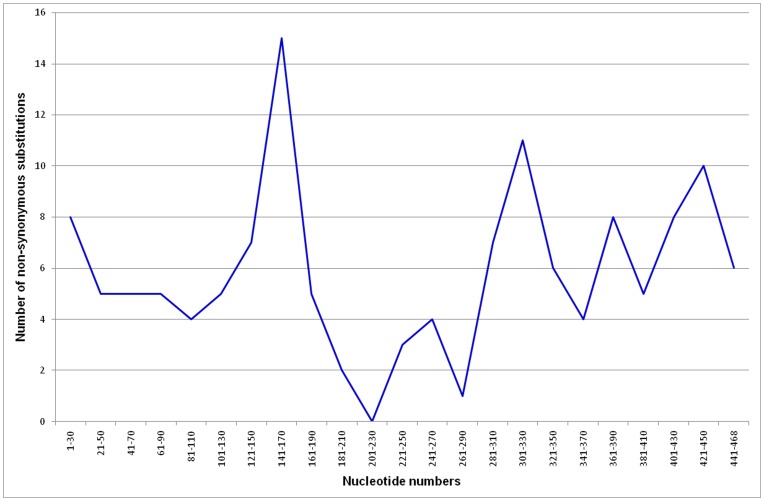
Neuroglobin (Ngb) is a hexacoordinated globin expressed mainly in the central and peripheral nervous system of vertebrates. Although several hypotheses have been put forward regarding the role of neuroglobin, its definite function remains uncertain. Ngb appears to have a neuro-protective role enhancing cell viability under hypoxia and other types of oxidative stress. Ngb is phylogenetically ancient and has a substitution rate nearly four times lower than that of other vertebrate globins, e.g. hemoglobin. Despite its high sequence conservation among vertebrates Ngb seems to be elusive in invertebrates.
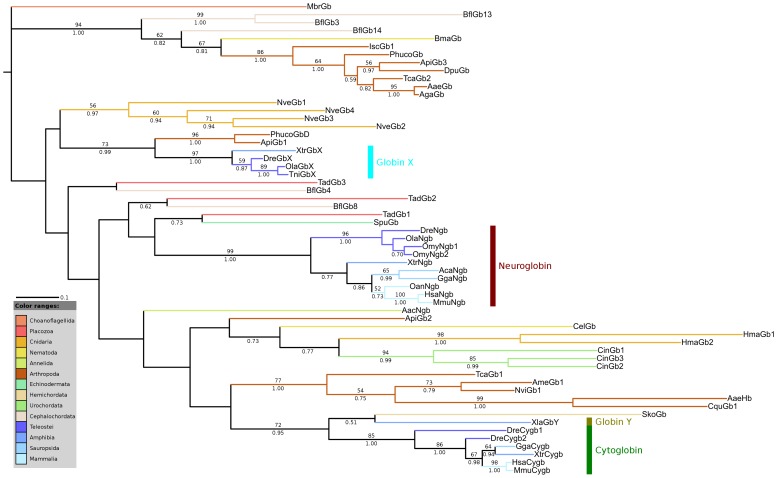
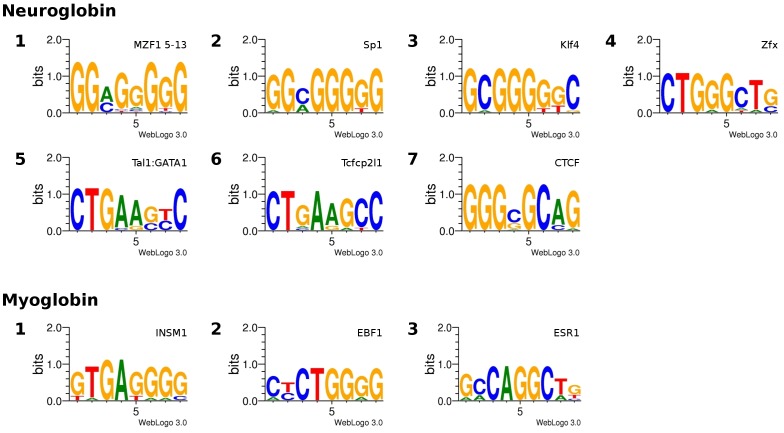
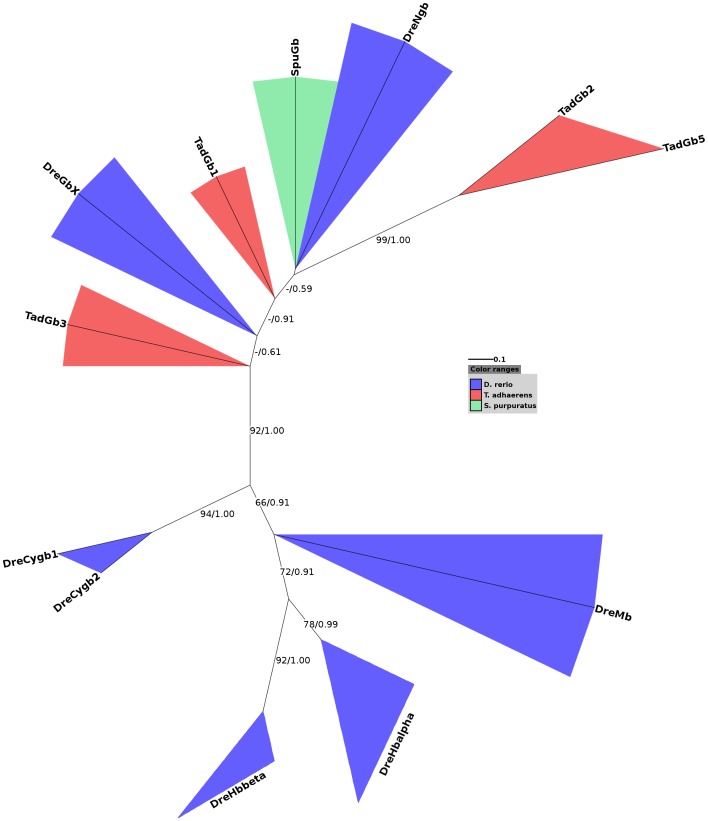
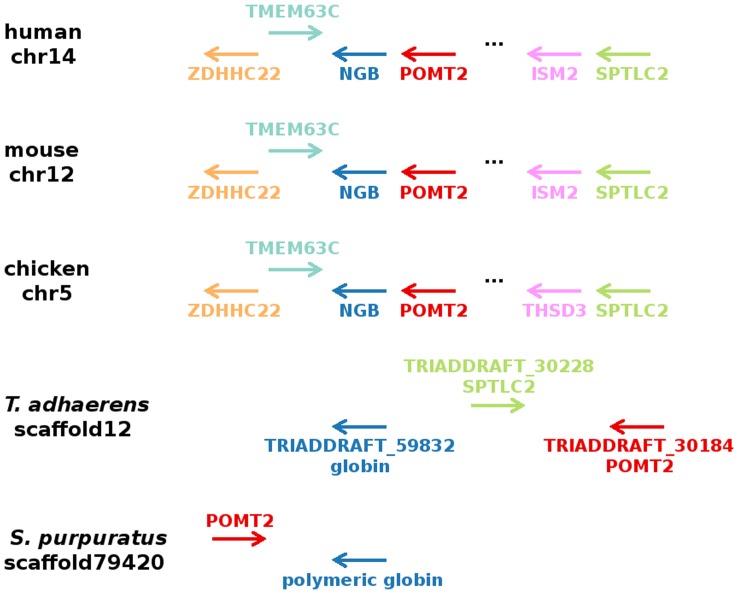
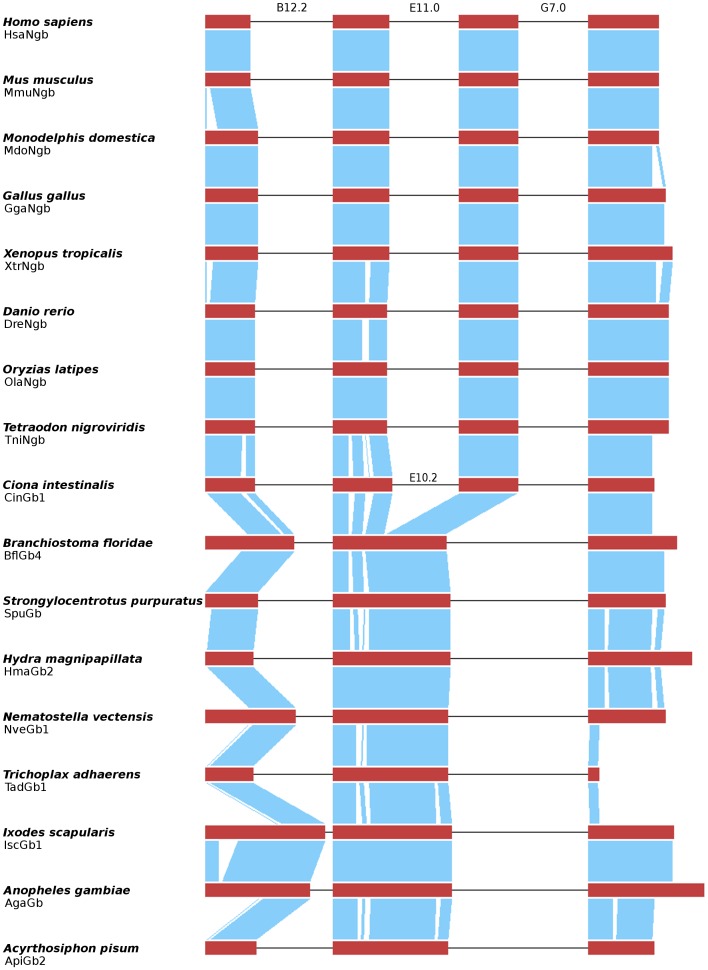
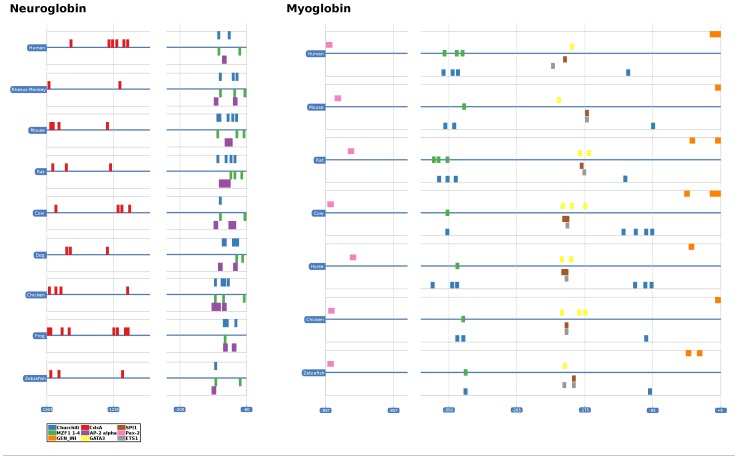
We determined candidate orthologs in invertebrates and identified a globin of the placozoan Trichoplax adhaerens that is most likely orthologous to vertebrate Ngb and confirmed the orthologous relationship of the polymeric globin of the sea urchin Strongylocentrotus purpuratus to Ngb. The putative orthologous globin genes are located next to genes orthologous to vertebrate POMT2 similarly to localization of vertebrate Ngb. The shared syntenic position of the globins from Trichoplax, the sea urchin and of vertebrate Ngb strongly suggests that they are orthologous. A search for conserved transcription factor binding sites (TFBSs) in the promoter regions of the Ngb genes of different vertebrates via phylogenetic footprinting revealed several TFBSs, which may contribute to the specific expression of Ngb, whereas a comparative analysis with myoglobin revealed several common TFBSs, suggestive of regulatory mechanisms common to globin genes.
Identification of the placozoan and echinoderm genes orthologous to vertebrate neuroglobin strongly supports the hypothesis of the early evolutionary origin of this globin, as it shows that neuroglobin was already present in the placozoan-bilaterian last common ancestor. Computational determination of the transcription factor binding sites repertoire provides on the one hand a set of transcriptional factors that are responsible for the specific expression of the Ngb genes and on the other hand a set of factors potentially controlling expression of a couple of different globin genes.
神经球蛋白(Ngb)是一种六配位球蛋白,主要在脊椎动物的中枢和外周神经系统中表达。尽管已经提出了几种关于神经球蛋白作用的假说,但它的确切功能仍不确定。Ngb 似乎具有神经保护作用,可在缺氧和其他类型的氧化应激下提高细胞活力。Ngb 在进化上很古老,其取代率比其他脊椎动物球蛋白(如血红蛋白)低近四倍。尽管在脊椎动物中 Ngb 的序列高度保守,但在无脊椎动物中似乎难以捉摸。
我们在无脊椎动物中确定了候选直系同源物,并鉴定了扁盘动物 Trichoplax adhaerens 的球蛋白,该球蛋白最有可能与脊椎动物 Ngb 直系同源,并证实了海胆 Strongylocentrotus purpuratus 的聚合球蛋白与 Ngb 的直系同源关系。假定的直系同源球蛋白基因位于与脊椎动物 POMT2 同源的基因旁边,与脊椎动物 Ngb 的定位相似。来自 Trichoplax、海胆和脊椎动物 Ngb 的球蛋白的共享基因座位置强烈表明它们是直系同源的。通过系统发育足迹法在不同脊椎动物的 Ngb 基因启动子区域中搜索保守的转录因子结合位点(TFBS),揭示了几个 TFBS,它们可能有助于 Ngb 的特异性表达,而与肌红蛋白的比较分析揭示了几个共同的 TFBS,表明球蛋白基因存在共同的调节机制。
鉴定与脊椎动物神经球蛋白同源的扁盘动物和棘皮动物基因强烈支持这种球蛋白早期进化起源的假说,因为它表明神经球蛋白已经存在于扁盘动物-两侧对称动物的最后共同祖先中。转录因子结合位点库的计算确定一方面提供了一组负责 Ngb 基因特异性表达的转录因子,另一方面提供了一组潜在控制几个不同球蛋白基因表达的因子。