Department of Biological Sciences, Towson University, Towson, Maryland, United States of America.
PLoS One. 2012;7(10):e48018. doi: 10.1371/journal.pone.0048018. Epub 2012 Oct 25.
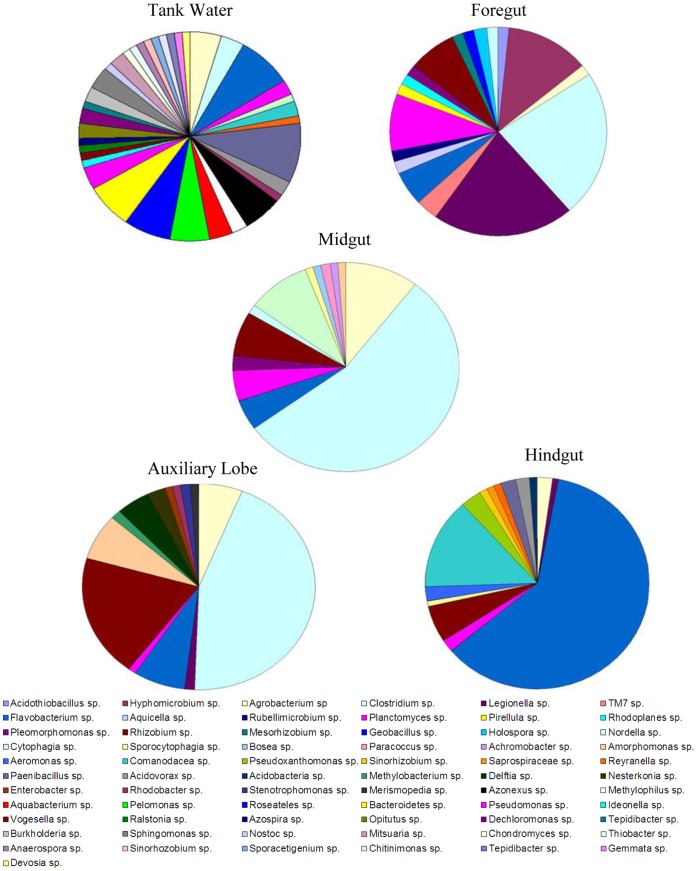
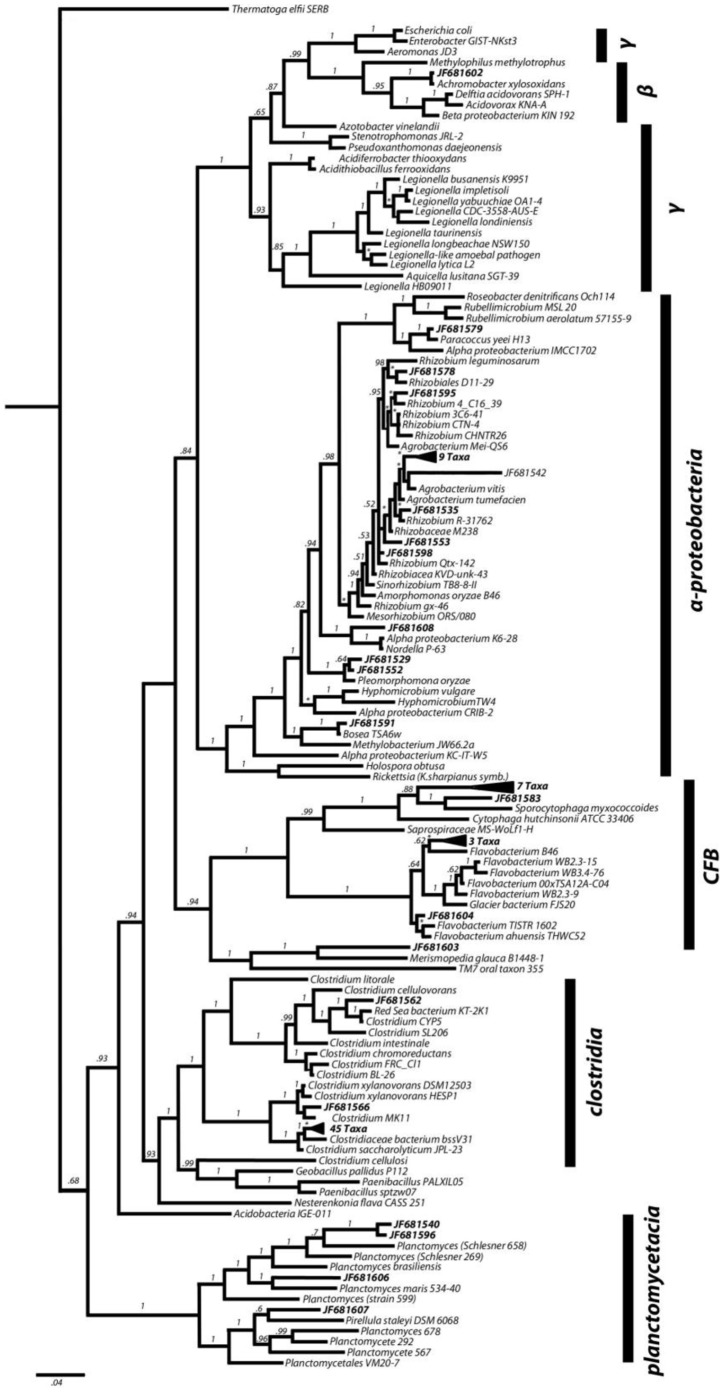
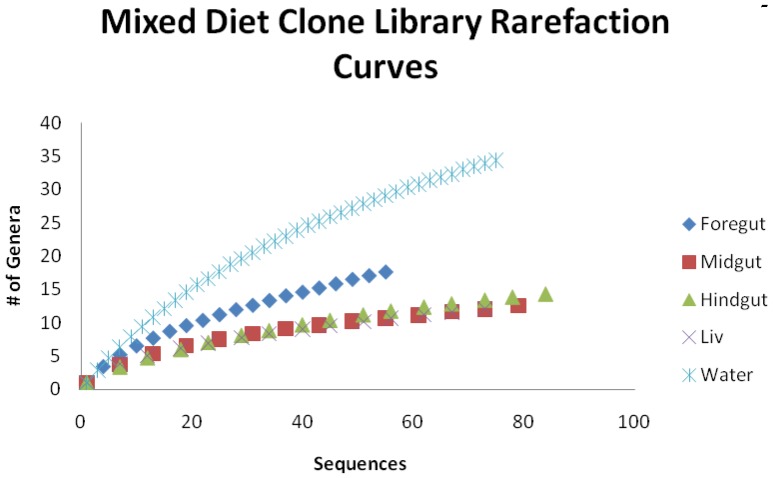
The Neotropical detritivorous catfish Panaque nigrolineatus imbibes large quantities of wood as part of its diet. Due to the interest in cellulose, hemi-cellulose and lignin degradation pathways, this organism provides an interesting model system for the detection of novel microbial catabolism. In this study, we characterize the microbial community present in different regions of the alimentary tract of P. nigrolineatus fed a mixed diet of date palm and palm wood in laboratory aquaria. Analysis was performed on 16S rRNA gene clone libraries derived from anterior and posterior regions of the alimentary tract and the auxiliary lobe (AL), an uncharacterized organ that is vascularly attached to the midgut. Sequence analysis and phylogenetic reconstruction revealed distinct microbial communities in each tissue region. The foregut community shared many phylotypes in common with aquarium tank water and included Legionella and Hyphomicrobium spp. As the analysis moved further into the gastrointestinal tract, phylotypes with high levels of 16S rRNA sequence similarity to nitrogen-fixing Rhizobium and Agrobacterium spp. and Clostridium xylanovorans and Clostridium saccharolyticum, dominated midgut and AL communities. However, the hindgut was dominated almost exclusively by phylotypes with the highest 16S rRNA sequence similarity to the Cytophaga-Flavobacterium-Bacteroides phylum. Species richness was highest in the foregut (Chao(1) = 26.72), decreased distally through the midgut (Chao(1) = 25.38) and hindgut (Chao(1) = 20.60), with the lowest diversity detected in the AL (Chao(1) = 18.04), indicating the presence of a specialized microbial community. Using 16S rRNA gene phylogeny, we report that the P. nigrolineatus gastrointestinal tract possesses a microbial community closely related to microorganisms capable of cellulose degradation and nitrogen fixation. Further studies are underway to determine the role of this resident microbial community in Panaque nigrolineatus.
新热带碎屑性鲶鱼 Panaque nigrolineatus 在其饮食中大量摄入木材。由于对纤维素、半纤维素和木质素降解途径的兴趣,该生物为检测新的微生物代谢提供了一个有趣的模型系统。在这项研究中,我们对在实验室水族箱中用混合的椰枣和棕榈木喂养的 P. nigrolineatus 的消化道不同区域的微生物群落进行了表征。对来源于消化道前、后区域和辅助叶(AL)的 16S rRNA 基因克隆文库进行了分析,AL 是一个未被描述的器官,通过血管与中肠相连。序列分析和系统发育重建显示,每个组织区域都存在独特的微生物群落。前肠群落与水族箱水共享许多相同的类群,包括军团菌属和食氢菌属。随着分析进一步深入胃肠道,与固氮根瘤菌属和农杆菌属和木聚糖降解梭菌属和产丁酸梭菌属具有高 16S rRNA 序列相似性的类群主导着中肠和 AL 群落。然而,后肠几乎完全由与噬纤维菌-黄杆菌-拟杆菌门具有最高 16S rRNA 序列相似性的类群主导。前肠的物种丰富度最高(Chao(1) = 26.72),通过中肠(Chao(1) = 25.38)和后肠(Chao(1) = 20.60)逐渐减少,在 AL 中检测到的多样性最低(Chao(1) = 18.04),表明存在一个专业化的微生物群落。利用 16S rRNA 基因系统发育,我们报告 P. nigrolineatus 胃肠道拥有与能够降解纤维素和固氮的微生物密切相关的微生物群落。正在进行进一步的研究以确定该常驻微生物群落在 Panaque nigrolineatus 中的作用。