Genomic Epidemiology Group, German Cancer Research Center (DKFZ), Heidelberg, Germany.
PLoS One. 2012;7(11):e45232. doi: 10.1371/journal.pone.0045232. Epub 2012 Nov 2.
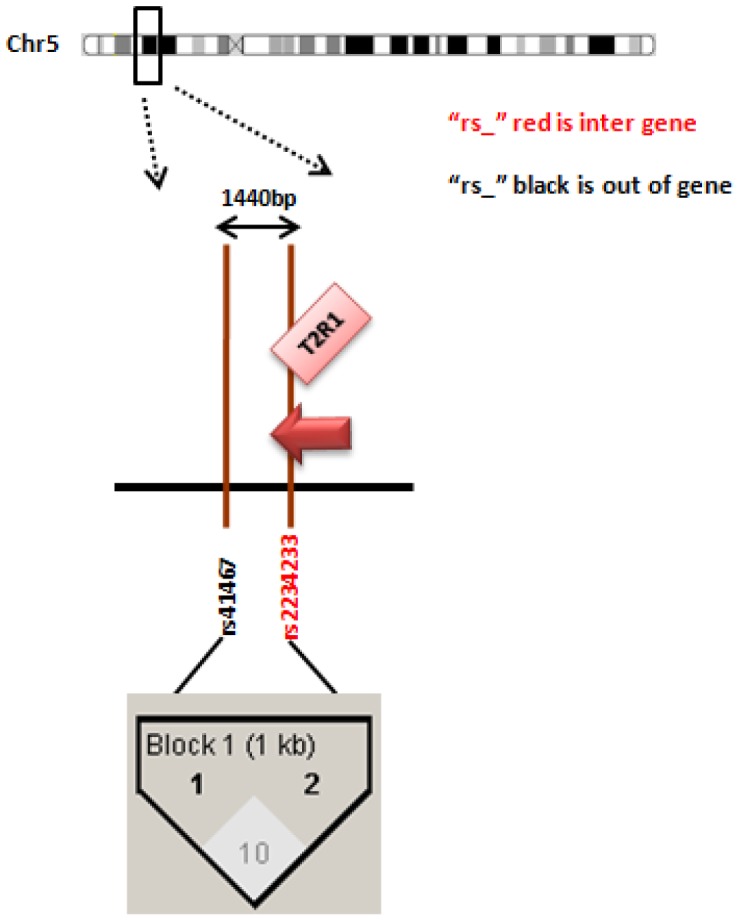
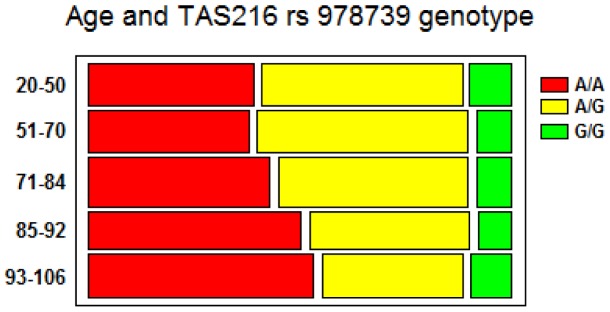
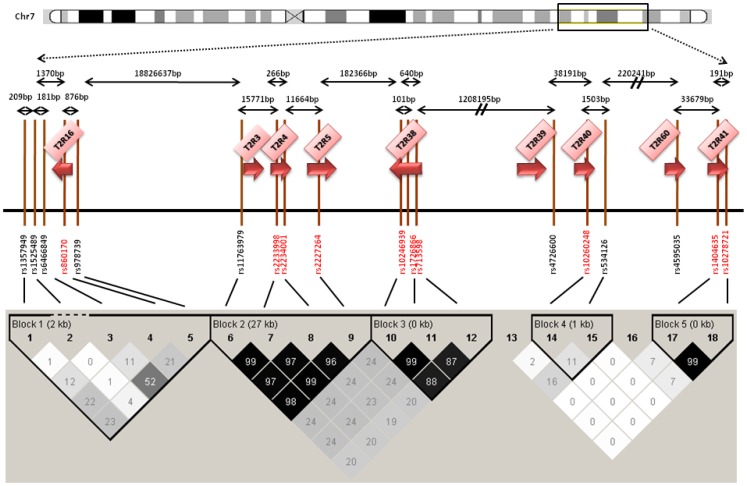
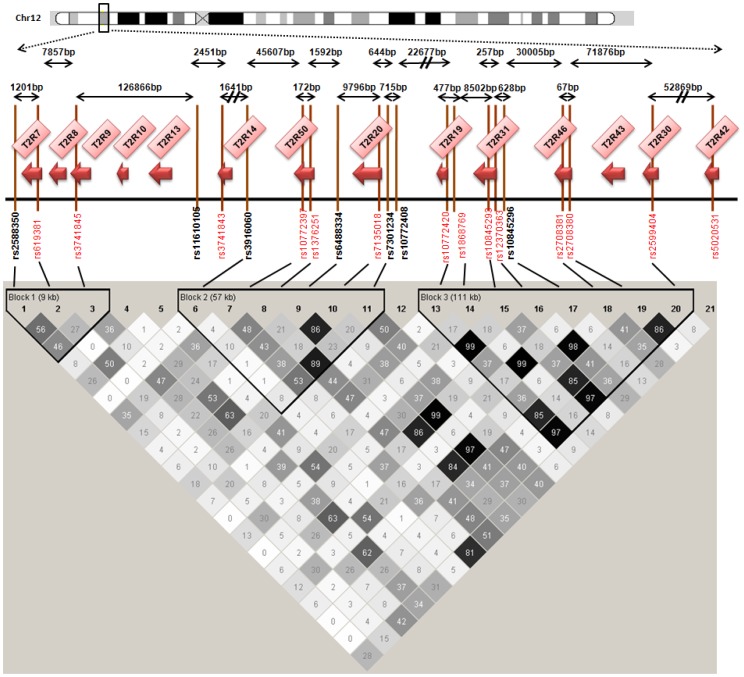
Several studies have shown that genetic factors account for 25% of the variation in human life span. On the basis of published molecular, genetic and epidemiological data, we hypothesized that genetic polymorphisms of taste receptors, which modulate food preferences but are also expressed in a number of organs and regulate food absorption processing and metabolism, could modulate the aging process. Using a tagging approach, we investigated the possible associations between longevity and the common genetic variation at the three bitter taste receptor gene clusters on chromosomes 5, 7 and 12 in a population of 941 individuals ranging in age from 20 to 106 years from the South of Italy. We found that one polymorphism, rs978739, situated 212 bp upstream of the TAS2R16 gene, shows a statistically significant association (p = 0.001) with longevity. In particular, the frequency of A/A homozygotes increases gradually from 35% in subjects aged 20 to 70 up to 55% in centenarians. These data provide suggestive evidence on the possible correlation between human longevity and taste genetics.
多项研究表明,遗传因素占人类寿命变异的 25%。基于已发表的分子、遗传和流行病学数据,我们假设味觉受体的遗传多态性可以调节衰老过程,这些多态性可以调节食物偏好,但也在许多器官中表达,并调节食物吸收、加工和代谢。我们使用标记方法,在意大利南部的 941 名年龄在 20 至 106 岁的人群中,研究了三个苦味受体基因簇(染色体 5、7 和 12)上常见的遗传变异与长寿之间的可能关联。我们发现,位于 TAS2R16 基因上游 212bp 的一个多态性 rs978739 与长寿具有统计学显著关联(p=0.001)。具体而言,A/A 纯合子的频率从 20 岁至 70 岁的受试者中的 35%逐渐增加到百岁老人中的 55%。这些数据提供了人类长寿与味觉遗传学之间可能存在相关性的提示性证据。