Department of Genetic Medicine, Weill Cornell Medical College, New York, New York, USA.
PLoS One. 2012;7(11):e47614. doi: 10.1371/journal.pone.0047614. Epub 2012 Nov 6.
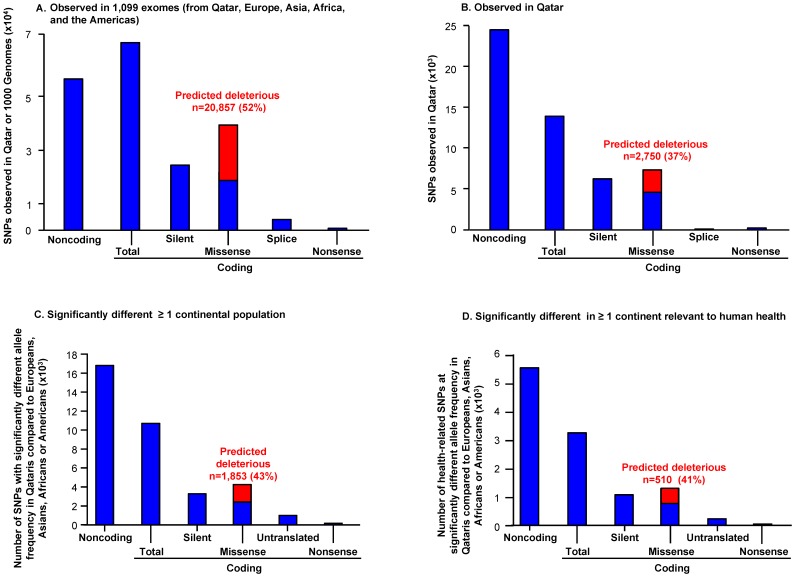
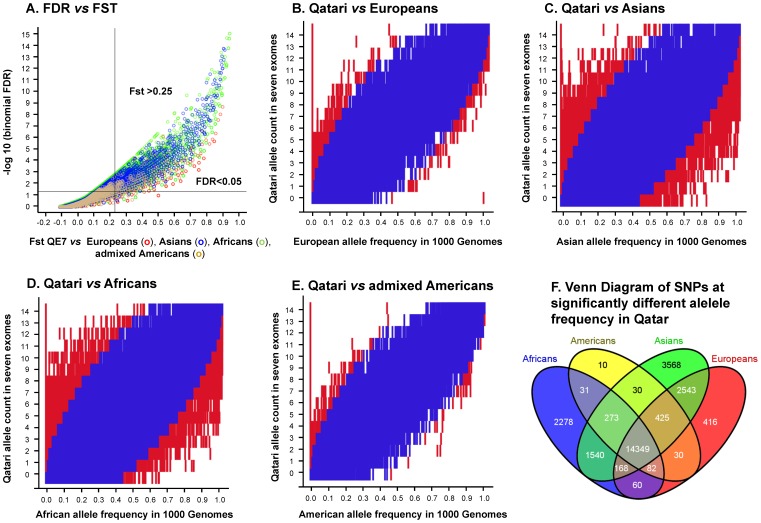
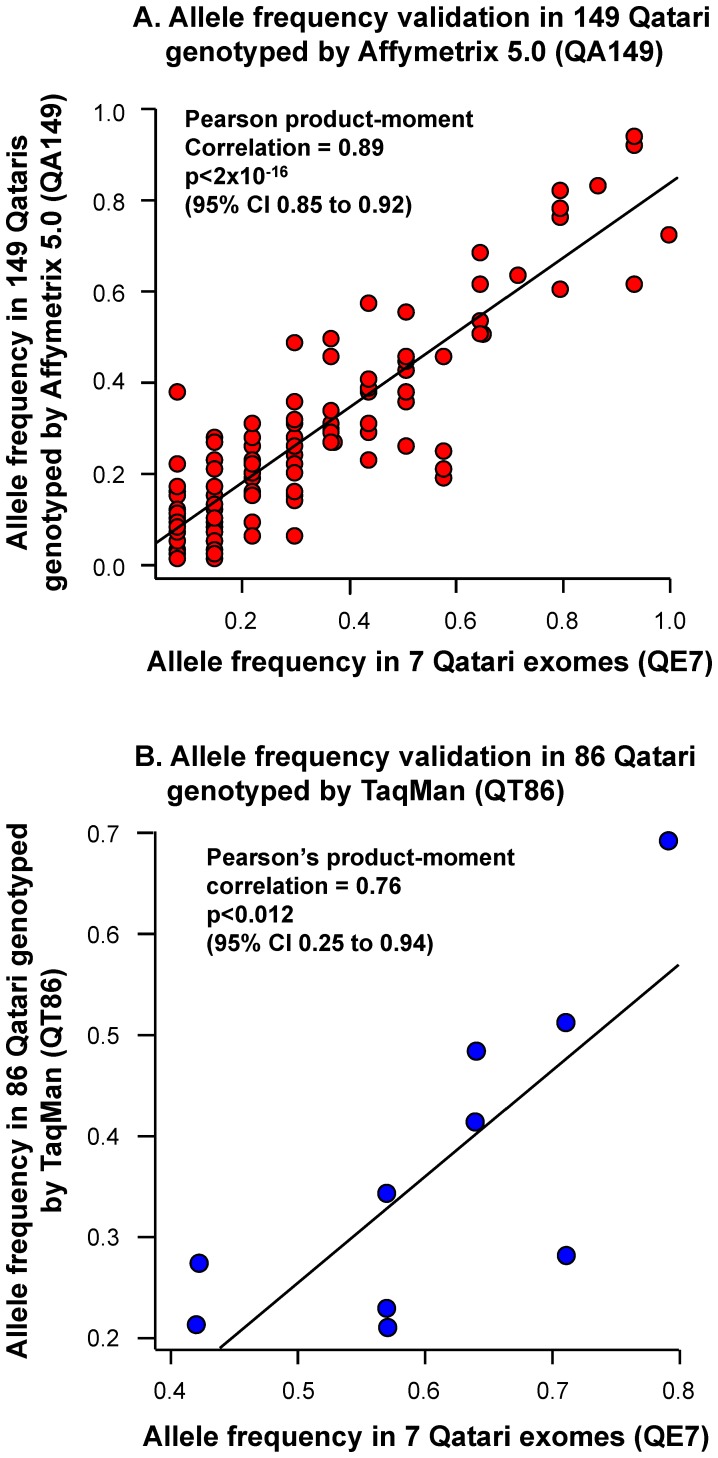
The Qatari population, located at the Arabian migration crossroads of African and Eurasia, is comprised of Bedouin, Persian and African genetic subgroups. By deep exome sequencing of only 7 Qataris, including individuals in each subgroup, we identified 2,750 nonsynonymous SNPs predicted to be deleterious, many of which are linked to human health, or are in genes linked to human health. Many of these SNPs were at significantly elevated deleterious allele frequency in Qataris compared to other populations worldwide. Despite the small sample size, SNP allele frequency was highly correlated with a larger Qatari sample. Together, the data demonstrate that exome sequencing of only a small number of individuals can reveal genetic variations with potential health consequences in understudied populations.
卡塔尔人口位于非洲和欧亚大陆的阿拉伯移民十字路口,由贝都因人、波斯人和非洲遗传亚群组成。通过对仅 7 名卡塔尔人的深度外显子组测序,包括每个亚群中的个体,我们鉴定出 2750 个预测为有害的非同义 SNPs,其中许多与人类健康相关,或位于与人类健康相关的基因中。与全球其他人群相比,这些 SNPs 中的许多在卡塔尔人中的有害等位基因频率明显升高。尽管样本量较小,但 SNP 等位基因频率与更大的卡塔尔人样本高度相关。总之,这些数据表明,仅对少数个体进行外显子组测序就可以揭示具有潜在健康影响的遗传变异,而这些个体来自研究较少的人群。