VU University Amsterdam, Amsterdam, Netherlands.
Trials. 2012 Nov 9;13:206. doi: 10.1186/1745-6215-13-206.
Having a 'theory of mind', or having the ability to attribute mental states to oneself or others, is considered one of the most central domains of impairment among children with an autism spectrum disorder (ASD). Many interventions focus on improving theory of mind skills in children with ASD. Nonetheless, the empirical evidence for the effect of these interventions is limited. The main goal of this study is to examine the effectiveness of a short theory of mind intervention for children with ASD. A second objective is to determine which subgroups within the autism spectrum profit most from the intervention.
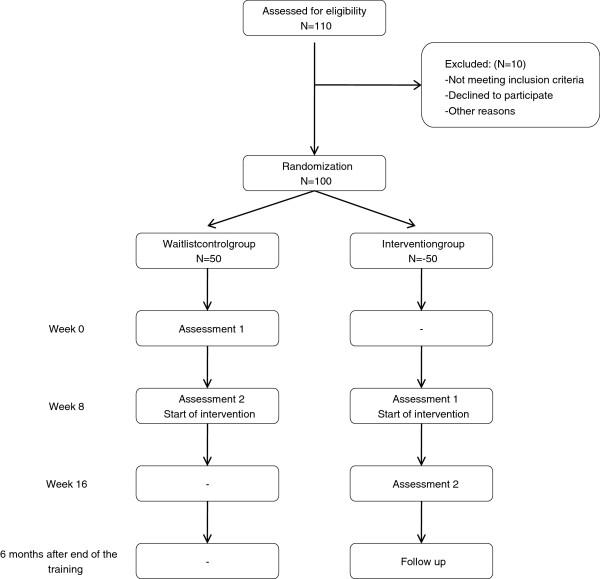
This study is a randomized controlled trial. One hundred children with ASD, aged 7 to 12 years will be randomly assigned to an intervention or a waiting list control group. Outcome measures include the completion of theory of mind and emotion understanding tasks, and parent and teacher questionnaires on children's social skills. Follow-up data for the intervention group will be collected 6 months after the interventions.
This study evaluates the efficacy of a theory of mind intervention for children with ASD. Hypotheses, strengths, and limitations of the study are discussed.
Netherlands Trial Register NTR2327.
拥有“心理理论”,即能够将心理状态归因于自己或他人的能力,被认为是自闭症谱系障碍(ASD)儿童最核心的障碍领域之一。许多干预措施都侧重于提高 ASD 儿童的心理理论技能。尽管如此,这些干预措施的效果的实证证据仍然有限。本研究的主要目的是检验一种针对 ASD 儿童的短期心理理论干预的有效性。第二个目标是确定自闭症谱系内的哪些亚组最能从干预中受益。
本研究是一项随机对照试验。将 100 名 7 至 12 岁的 ASD 儿童随机分配到干预组或等待名单对照组。结果测量包括心理理论和情绪理解任务的完成情况,以及父母和教师对儿童社交技能的问卷。干预组的随访数据将在干预后 6 个月收集。
本研究评估了针对 ASD 儿童的心理理论干预的效果。讨论了该研究的假设、优势和局限性。
荷兰试验注册 NTR2327。