Menet Jerome S, Rodriguez Joseph, Abruzzi Katharine C, Rosbash Michael
Howard Hughes Medical Institute, National Center for Behavioral Genomics, and Department of Biology Brandeis University , Waltham , United States.
Elife. 2012 Nov 13;1:e00011. doi: 10.7554/eLife.00011.
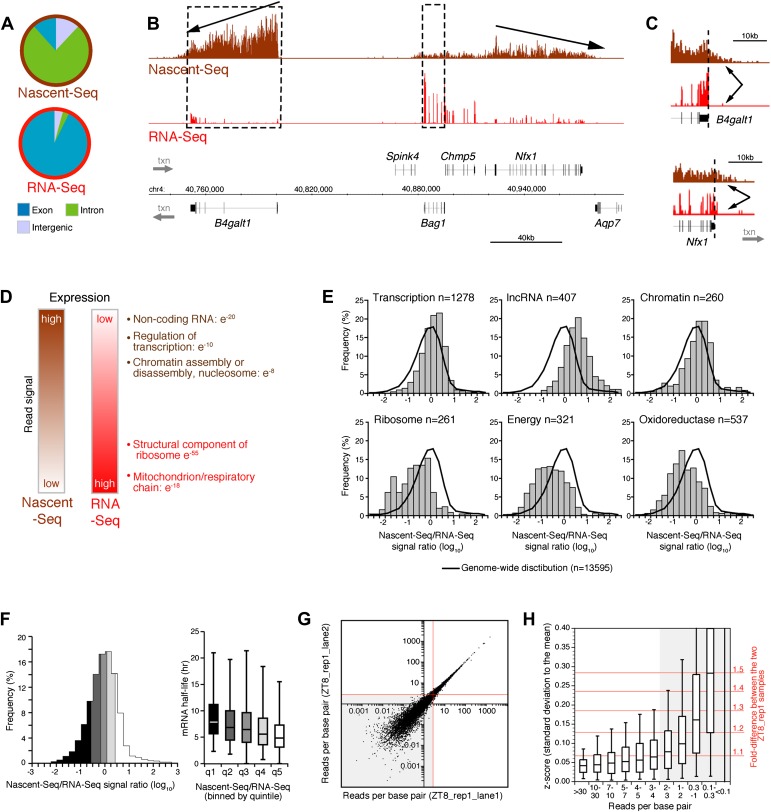
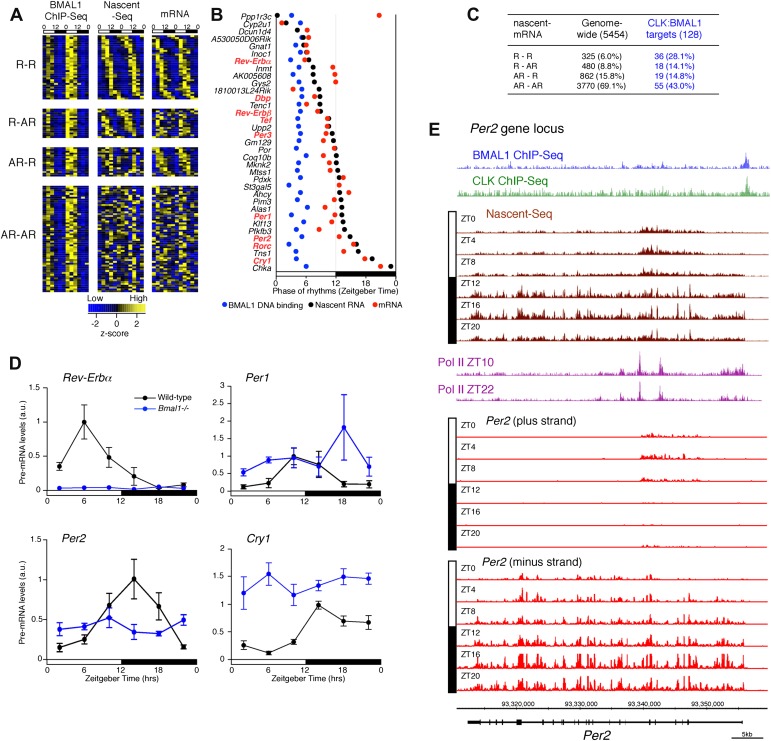
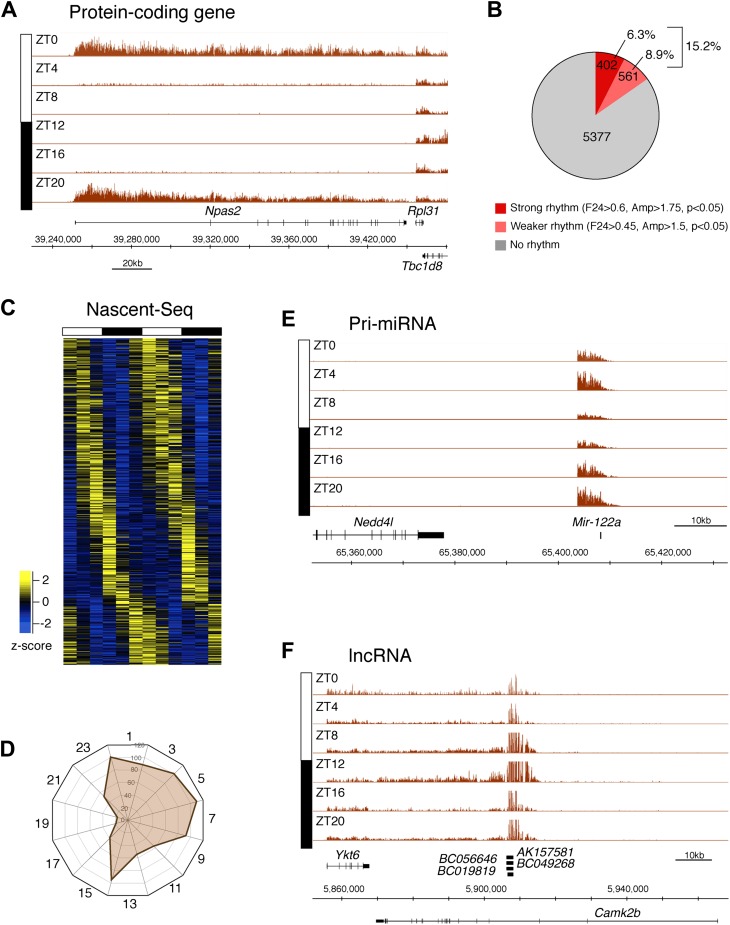
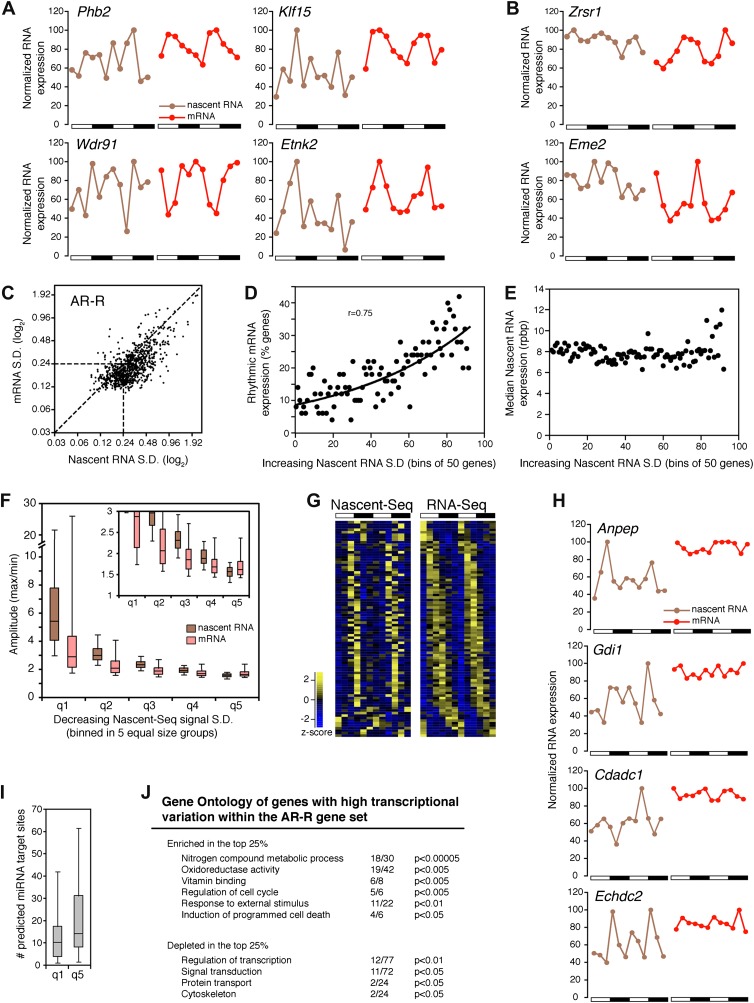
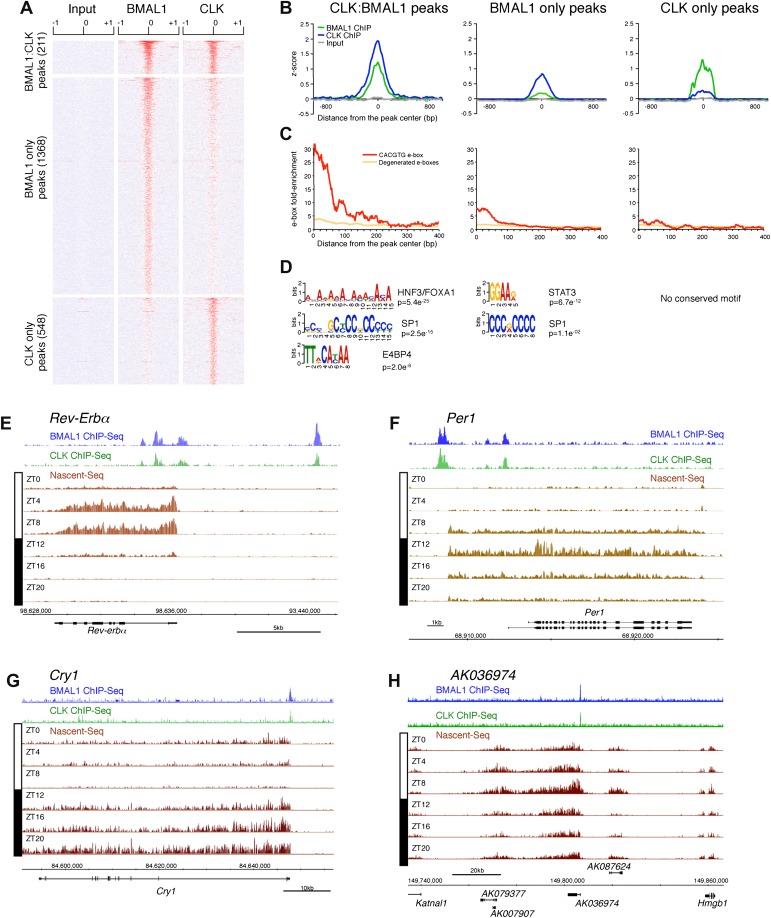
A substantial fraction of the metazoan transcriptome undergoes circadian oscillations in many cells and tissues. Based on the transcription feedback loops important for circadian timekeeping, it is commonly assumed that this mRNA cycling reflects widespread transcriptional regulation. To address this issue, we directly measured the circadian dynamics of mouse liver transcription using Nascent-Seq (genome-wide sequencing of nascent RNA). Although many genes are rhythmically transcribed, many rhythmic mRNAs manifest poor transcriptional rhythms, indicating a prominent contribution of post-transcriptional regulation to circadian mRNA expression. This analysis of rhythmic transcription also showed that the rhythmic DNA binding profile of the transcription factors CLOCK and BMAL1 does not determine the transcriptional phase of most target genes. This likely reflects gene-specific collaborations of CLK:BMAL1 with other transcription factors. These insights from Nascent-Seq indicate that it should have broad applicability to many other gene expression regulatory issues.DOI:http://dx.doi.org/10.7554/eLife.00011.001.
后生动物转录组的很大一部分在许多细胞和组织中经历昼夜节律振荡。基于对昼夜节律计时很重要的转录反馈回路,人们通常认为这种mRNA循环反映了广泛的转录调控。为了解决这个问题,我们使用新生RNA测序(Nascent-Seq,即新生RNA的全基因组测序)直接测量了小鼠肝脏转录的昼夜动态变化。尽管许多基因有节律地转录,但许多有节律的mRNA表现出较差的转录节律,这表明转录后调控对昼夜节律mRNA表达有突出贡献。对节律性转录的分析还表明,转录因子CLOCK和BMAL1的节律性DNA结合图谱并不能决定大多数靶基因的转录相位。这可能反映了CLK:BMAL1与其他转录因子的基因特异性协作。来自Nascent-Seq的这些见解表明,它应该广泛适用于许多其他基因表达调控问题。DOI:http://dx.doi.org/10.7554/eLife.00011.001