Shimomura Kazuhiro, Kumar Vivek, Koike Nobuya, Kim Tae-Kyung, Chong Jason, Buhr Ethan D, Whiteley Andrew R, Low Sharon S, Omura Chiaki, Fenner Deborah, Owens Joseph R, Richards Marc, Yoo Seung-Hee, Hong Hee-Kyung, Vitaterna Martha H, Bass Joseph, Pletcher Mathew T, Wiltshire Tim, Hogenesch John, Lowrey Phillip L, Takahashi Joseph S
Center for Functional Genomics, Department of Neurobiology, Center for Sleep and Circadian Biology , Northwestern University , Evanston , United States.
Elife. 2013 Apr 9;2:e00426. doi: 10.7554/eLife.00426.
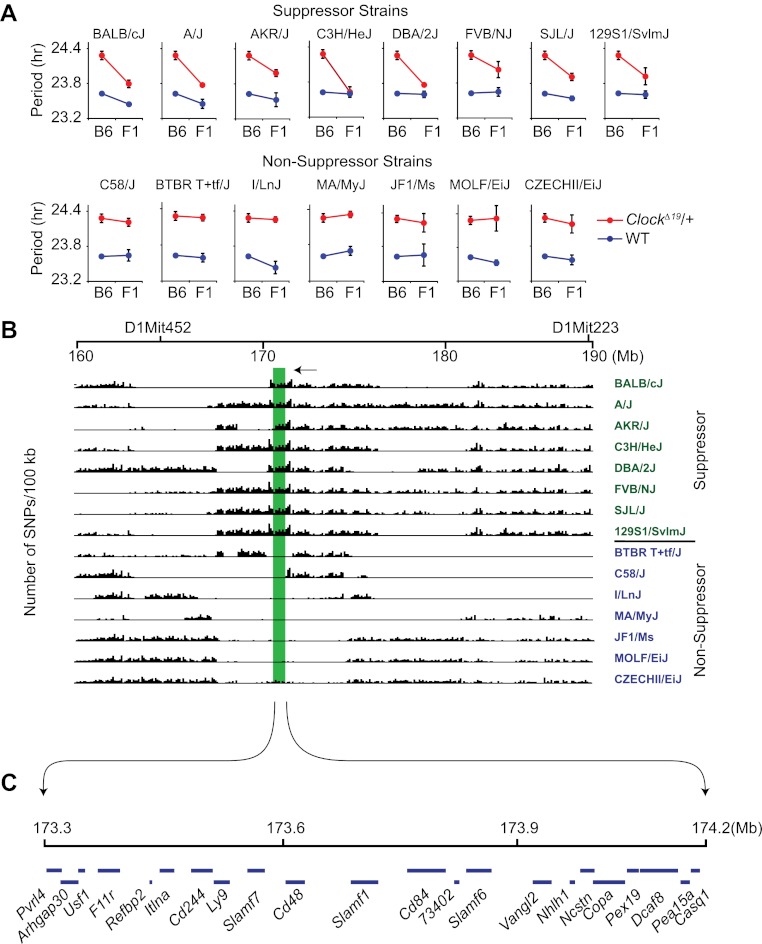
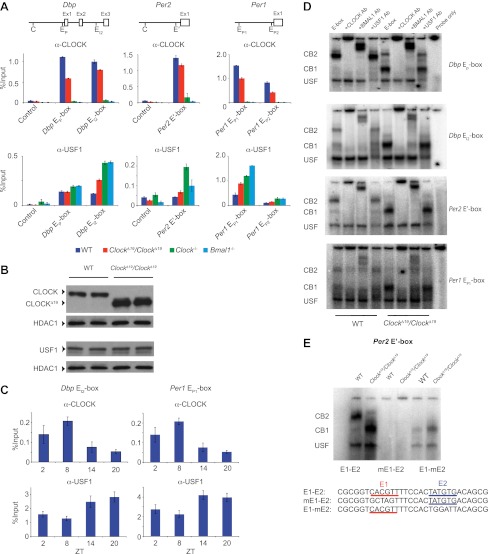
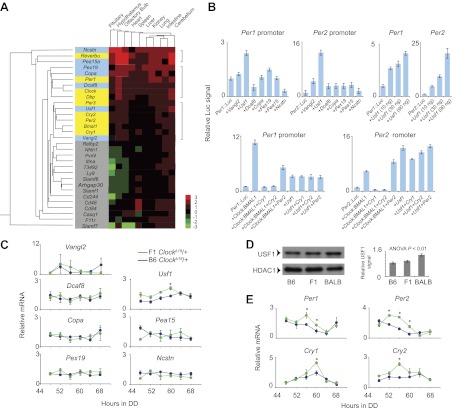
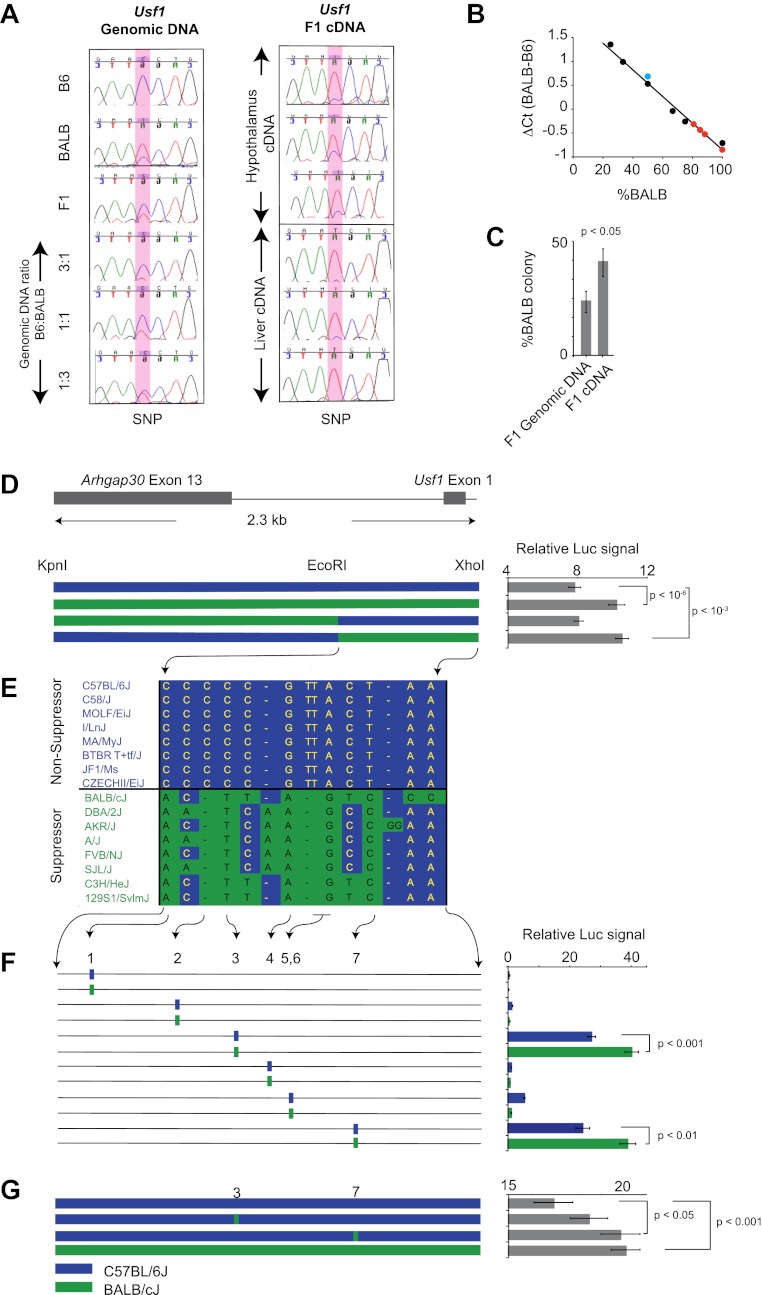
Genetic and molecular approaches have been critical for elucidating the mechanism of the mammalian circadian clock. Here, we demonstrate that the ClockΔ19 mutant behavioral phenotype is significantly modified by mouse strain genetic background. We map a suppressor of the ClockΔ19 mutation to a ∼900 kb interval on mouse chromosome 1 and identify the transcription factor, Usf1, as the responsible gene. A SNP in the promoter of Usf1 causes elevation of its transcript and protein in strains that suppress the Clock mutant phenotype. USF1 competes with the CLOCK:BMAL1 complex for binding to E-box sites in target genes. Saturation binding experiments demonstrate reduced affinity of the CLOCKΔ19:BMAL1 complex for E-box sites, thereby permitting increased USF1 occupancy on a genome-wide basis. We propose that USF1 is an important modulator of molecular and behavioral circadian rhythms in mammals. DOI:http://dx.doi.org/10.7554/eLife.00426.001.
遗传和分子方法对于阐明哺乳动物生物钟机制至关重要。在此,我们证明ClockΔ19突变体的行为表型受到小鼠品系遗传背景的显著影响。我们将ClockΔ19突变的一个抑制因子定位到小鼠1号染色体上约900 kb的区间,并确定转录因子Usf1为相关基因。Usf1启动子中的一个单核苷酸多态性(SNP)导致在抑制Clock突变体表型的品系中其转录本和蛋白质水平升高。USF1与CLOCK:BMAL1复合物竞争结合靶基因中的E-box位点。饱和结合实验表明CLOCKΔ19:BMAL1复合物对E-box位点的亲和力降低,从而使得全基因组范围内USF1的占有率增加。我们认为USF1是哺乳动物分子和行为昼夜节律的重要调节因子。DOI:http://dx.doi.org/10.7554/eLife.00426.001 。