Kere Michel, Siriboon Chawalit, Lo Neng-Wen, Nguyen Ngoc Tan, Ju Jyh-Cherng
Department of Animal Science, National Chung Hsing University, Taichung 402, Taiwan, ROC.
J Reprod Dev. 2013;59(1):78-84. doi: 10.1262/jrd.2012-114. Epub 2012 Nov 15.
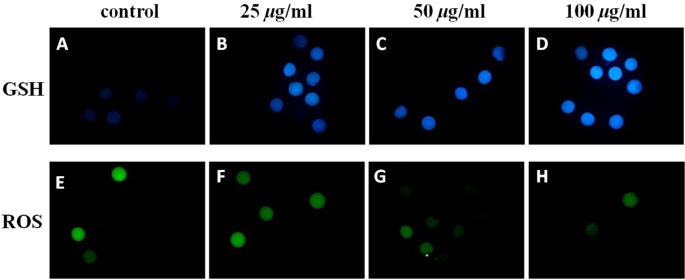
In this study, a dose-response assessment was performed to understand the relation between supplementation of media with L-ascorbic acid or vitamin C and porcine oocyte maturation and the in vitro development of parthenotes (PA) and handmade cloned (HMC) embryos. Various concentrations (0, 25, 50 and 100 μg/ml) of vitamin C supplemented in in vitro maturation (IVM) and culture (IVC) media were tested. None of these vitamin C additions affected nuclear maturation of oocytes, yet supplementation at 50 μg/ml led to significantly increased intracellular glutathione (GSH) levels and reduced reactive oxygen species (ROS). When cultured in IVM- and/or IVC-supplemented media, the group supplemented with 50 μg/ml of vitamin C showed improved cleavage rates, blastocyst rates and total cell numbers per blastocyst (P<0.05) compared with other groups (control, 25 μg/ml and 100 μg/ml). In contrast, supplementation with 50 μg/ml vitamin C decreased (P<0.05) the apoptosis index as compared with the groups supplemented with 100 μg/ml. In addition, even with a lower blastocyst rate to start with (37.6 vs. 50.3%, P<0.05), supplementation of HMC embryos with vitamin C ameliorated their blastocyst quality to the extent of PA embryos as indicated by their total cell numbers (61.2 vs. 59.1). Taken together, an optimized concentration of vitamin C supplementation in the medium not only improves blastocyst rates and total cell numbers but also reduces apoptotic indices, whereas overdosages compromise various aspects of the development of parthenotes and cloned porcine embryos.
在本研究中,进行了剂量反应评估,以了解在培养基中添加L-抗坏血酸或维生素C与猪卵母细胞成熟以及孤雌胚胎(PA)和手工克隆(HMC)胚胎的体外发育之间的关系。测试了在体外成熟(IVM)和培养(IVC)培养基中添加不同浓度(0、25、50和100μg/ml)的维生素C的情况。这些维生素C添加物均未影响卵母细胞的核成熟,但添加50μg/ml可导致细胞内谷胱甘肽(GSH)水平显著升高,活性氧(ROS)减少。当在添加了IVM和/或IVC的培养基中培养时,与其他组(对照组、25μg/ml和100μg/ml)相比,添加50μg/ml维生素C的组显示出更高的卵裂率、囊胚率和每个囊胚的总细胞数(P<0.05)。相比之下,与添加100μg/ml的组相比,添加50μg/ml维生素C可降低(P<0.05)凋亡指数。此外,尽管HMC胚胎的起始囊胚率较低(37.6%对50.3%,P<0.05),但用维生素C补充HMC胚胎可将其囊胚质量改善至PA胚胎的程度,这由它们的总细胞数(61.2对59.1)表明。综上所述,培养基中维生素C补充的优化浓度不仅提高了囊胚率和总细胞数,还降低了凋亡指数,而过量则会损害孤雌胚胎和克隆猪胚胎发育的各个方面。