Dell'osso Bernardo, Camuri Giulia, Dobrea Cristina, Buoli Massimiliano, Serati Marta, Altamura A Carlo
Department of Psychiatry, University of Milan; Fondazione IRCCS Ca' Granda, Ospedale Maggiore Policlinico, Via Francesco Sforza, 20122 Milano, Italy.
Clin Pract Epidemiol Ment Health. 2012;8:120-5. doi: 10.2174/1745017901208010120. Epub 2012 Nov 2.
Duloxetine, a selective serotonin and norepinephrine reuptake inhibitor (SNRI), is currently approved in many countries for the treatment of Major Depressive Disorder (MDD) and Generalized Anxiety Disorder (GAD). The present naturalistic study was aimed to investigate tolerability of Duloxetine in a sample of patients with affective disorders and psychiatric/medical comorbidity, comparing tolerability in monotherapy versus polytherapy and across different age groups.
The sample included 165 patients, affected by anxiety and/or mood disorders with or without comorbidity, who had been taken Duloxetine for at least 1 month. Sample variables were collected through a retrospective chart review.
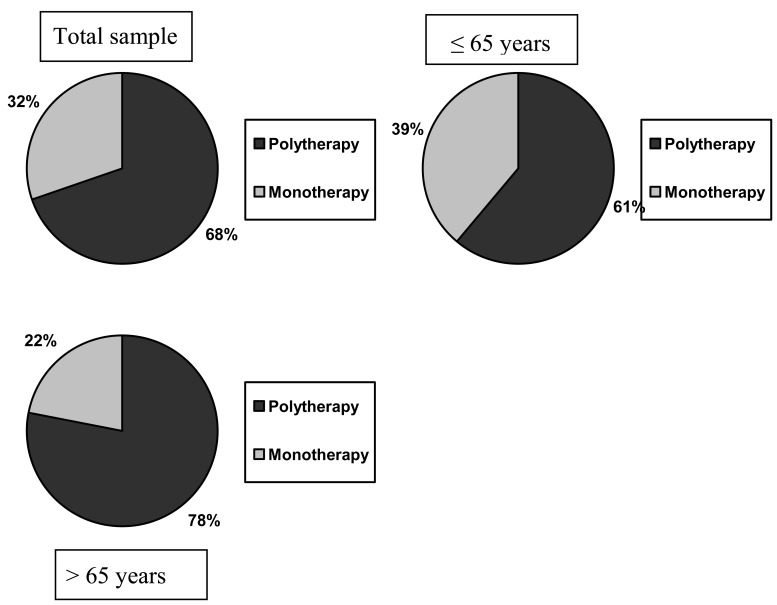
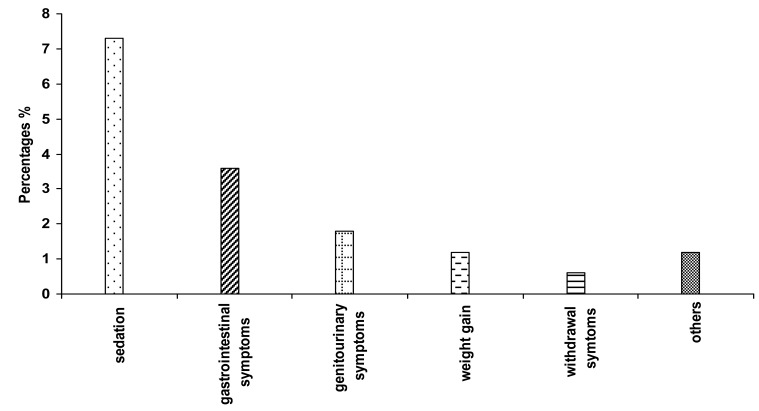
Most common primary diagnoses were MDD (49.1 %), Bipolar Disorder (BD) (15.7 %) and GAD (5.5%). The 40 % of the sample had psychiatric comorbidity: in particular, anxiety disorders (15.8 %) (GAD 7.9%, Panic Disorder -PD- 7.3%) and personality disorders (9.1%) as the most frequent ones. With respect to medical comorbidities (68% of the sample), hypertension (12.1%) and diabetes (7.3%) were the most common ones. Mean duration of treatment and dosage of Duloxetine were, respectively, 11 months (± 9.1) and 70 mg/day (± 28.6). The 68 % of the sample received Duloxetine in association with other drugs. Minor side-effects, in particular drowsiness and gastrointestinal problems, were reported by 15 % of the sample. No difference in terms of tolerability across distinct groups, divided on the basis of mono- vs polytherapy as well as of different age, was found.
Duloxetine, mostly administered in patients with affective disorders with psychiatric/ medical comorbidity and in association with other drugs, appeared to be well tolerated, showing limited rates of side effects of mild intensity. Further naturalistic studies are warranted to confirm present results.
度洛西汀是一种选择性5-羟色胺与去甲肾上腺素再摄取抑制剂(SNRI),目前在许多国家被批准用于治疗重度抑郁症(MDD)和广泛性焦虑症(GAD)。本项自然主义研究旨在调查度洛西汀在情感障碍及伴有精神科/内科合并症患者样本中的耐受性,比较其在单药治疗与联合治疗中的耐受性以及不同年龄组的耐受性。
样本包括165例患有焦虑和/或情绪障碍(伴有或不伴有合并症)且服用度洛西汀至少1个月的患者。样本变量通过回顾性病历审查收集。
最常见的主要诊断为MDD(49.1%)、双相情感障碍(BD)(15.7%)和GAD(5.5%)。40%的样本患有精神科合并症:尤其是焦虑症(15.8%)(GAD 7.9%,惊恐障碍 -PD- 7.3%)和人格障碍(9.1%)最为常见。关于内科合并症(样本的68%),高血压(12.1%)和糖尿病(7.3%)最为常见。度洛西汀的平均治疗时长和剂量分别为11个月(±9.1)和70毫克/天(±28.6)。68%的样本接受度洛西汀联合其他药物治疗。15%的样本报告有轻微副作用,尤其是嗜睡和胃肠道问题。在基于单药治疗与联合治疗以及不同年龄划分的不同组间,未发现耐受性方面的差异。
度洛西汀大多用于患有精神科/内科合并症的情感障碍患者且与其他药物联合使用,似乎耐受性良好,轻度副作用发生率有限。有必要开展进一步的自然主义研究以证实目前的结果。