Haabeth Ole Audun Werner, Bogen Bjarne, Corthay Alexandre
Centre for Immune Regulation, Department of Immunology; Oslo University Hospital Rikshospitalet and University of Oslo; Oslo, Norway.
Oncoimmunology. 2012 Oct 1;1(7):1146-1155. doi: 10.4161/onci.21542.
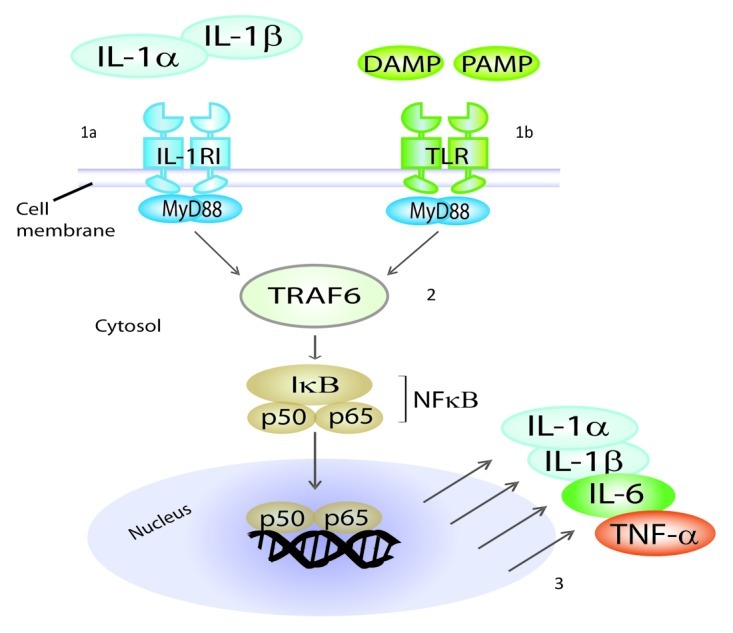
In oncology, inflammation is generally regarded as a cancer-promoting process only. Here, we argue that this view may represent a misleading oversimplification. We present evidence from our own work and from the literature documenting cancer-suppressive aspects of inflammation. We propose that specific types of inflammation, in particular inflammation driven by tumor-specific Th1 cells, may repress rather than promote cancer. Th1 cells collaborate with tumor-infiltrating M1 macrophages to efficiently recognize and eliminate malignant cells. In a Th1 environment, pro-inflammatory cytokines such as interleukin (IL)-1α, IL-1β, IL-6 and tumor-necrosis factor α (TNFα) enhance anti-cancer immunity. Inducing Th1-type inflammation may significantly improve immunotherapeutic strategies against cancer.
在肿瘤学中,炎症通常仅被视为一种促进癌症的过程。在此,我们认为这种观点可能是一种误导性的过度简化。我们展示了来自我们自己的研究以及文献中的证据,这些证据记录了炎症的癌症抑制方面。我们提出,特定类型的炎症,特别是由肿瘤特异性Th1细胞驱动的炎症,可能会抑制而非促进癌症。Th1细胞与肿瘤浸润性M1巨噬细胞协作,以有效识别和消除恶性细胞。在Th1环境中,促炎细胞因子如白细胞介素(IL)-1α、IL-1β、IL-6和肿瘤坏死因子α(TNFα)可增强抗癌免疫力。诱导Th1型炎症可能会显著改善针对癌症的免疫治疗策略。