Biotechnology Center, National Chung Hsing University, Taichung, Taiwan.
J Virol Methods. 2013 Feb;187(2):413-20. doi: 10.1016/j.jviromet.2012.11.009. Epub 2012 Nov 19.
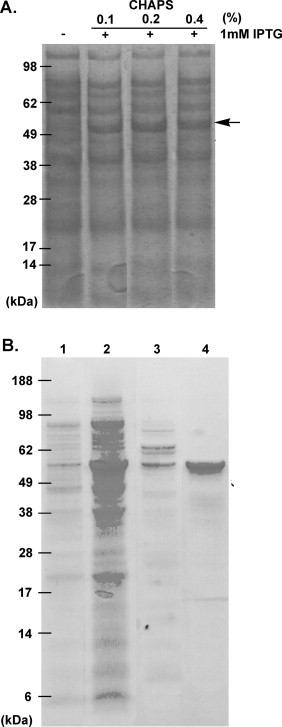
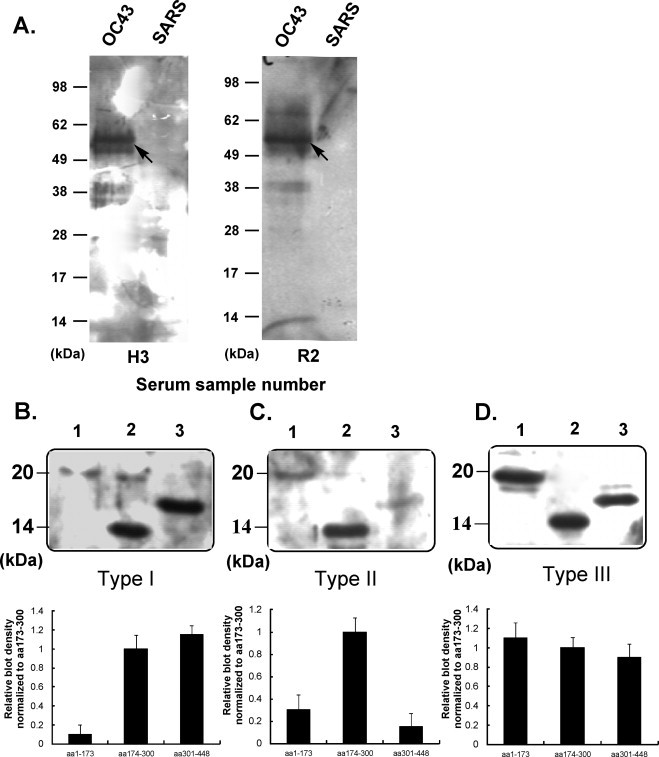
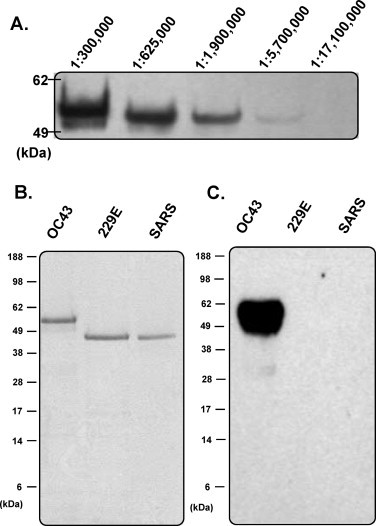
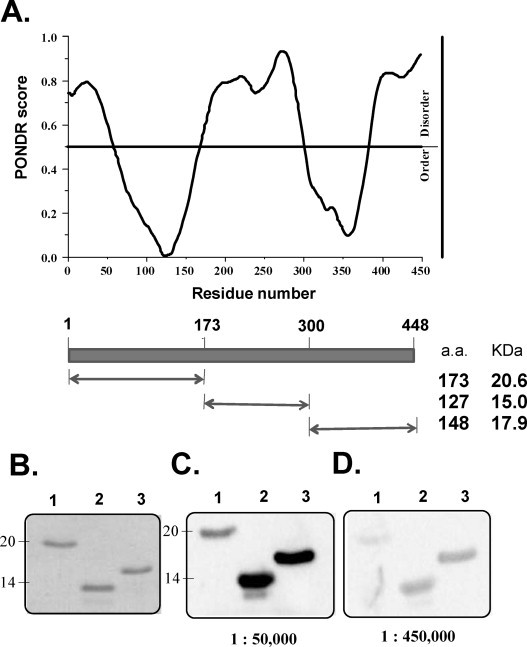
Previous studies have reported that a prokaryotic-expressed recombinant nucleocapsid protein (NP) is a suitable reagent for the epidemiological screening of coronavirus infection. In this study, soluble recombinant human coronavirus OC43 (HCoV-OC43) NP was produced to examine the antigenicity of the HCoV-OC43 NP of betacoronavirus. Using the purified recombinant NP as an antigen, a polyclonal antibody from rabbit serum with specificity for HCoV-OC43 NP was generated; this antibody reacts specifically with HCoV-OC43 NP and does not cross-react with other human CoV NPs (including those of SARS-CoV and HCoV-229E) by Western blot. Sera from 26 young adults, 17 middle-aged and elderly patients with respiratory infection, and 15 cord blood samples were also tested. Strong reactivity to the NPs of HCoV-OC43 was observed in 96%, 82%, and 93% of the serum samples from the young adults, respiratory patients, and cord blood samples, respectively. To identify the immunoreactivities of the three structural regions of the NP that are recognised by the rabbit polyclonal antibody and human serum, the antigenicities of three protein fragments, including the N-terminal domain (aa 1-173), the central-linker region (aa 174-300), and the C-terminal domain (aa 301-448), were evaluated by Western blot. The rabbit polyclonal antibody demonstrated greater immunoreactivity to the central-linker region and the C-terminal domain than to the N-terminal domain. Three different patterns for the immunoreactivities of the three structural regions of HCoV-OC43 NP were observed in human serum, suggesting variability in the immune responses that occur during HCoV-OC43 infection in humans. The central-linker region of the NP appeared to be the most highly immunoreactive region for all three patterns observed. The goal of this study was to offer insight into the design of diagnostic tools for HCoV infection.
先前的研究报告表明,原核表达的重组核衣壳蛋白(NP)是冠状病毒感染的流行病学筛查的合适试剂。在这项研究中,生产了可溶性重组人冠状病毒 OC43(HCoV-OC43)NP,以检查β冠状病毒的 HCoV-OC43 NP 的抗原性。使用纯化的重组 NP 作为抗原,从兔血清中产生了针对 HCoV-OC43 NP 的多克隆抗体;该抗体特异性地与 HCoV-OC43 NP 反应,并且通过 Western blot 不与其他人类 CoV NPs(包括 SARS-CoV 和 HCoV-229E 的 NP)发生交叉反应。还测试了来自 26 名年轻成年人,17 名中年和老年呼吸道感染患者以及 15 份脐带血样本的血清。来自年轻成年人,呼吸道感染患者和脐带血样本的血清中分别有 96%,82%和 93%的血清对 HCoV-OC43 的 NP 表现出强烈的反应性。为了鉴定兔多克隆抗体和人血清识别的 NP 的三个结构区域的免疫反应性,通过 Western blot 评估了三个蛋白片段的抗原性,包括 N 端结构域(aa1-173),中央接头区(aa174-300)和 C 端结构域(aa301-448)。兔多克隆抗体对中央接头区和 C 端结构域的免疫反应性大于对 N 端结构域的免疫反应性。在人血清中观察到 HCoV-OC43 NP 的三个结构区域的三种不同的免疫反应性模式,表明在人类 HCoV-OC43 感染期间发生的免疫反应的可变性。NP 的中央接头区似乎是所有三种观察到的模式中最具免疫反应性的区域。本研究的目的是为 HCoV 感染的诊断工具的设计提供参考。