Department of Psychiatry and Behavioral Sciences, and Biochemistry and Molecular Biology, Miller School of Medicine, University of Miami, Miami, Florida 33136, USA.
Biol Psychiatry. 2013 Apr 1;73(7):622-30. doi: 10.1016/j.biopsych.2012.09.021. Epub 2012 Nov 20.
Recognition of substantial immune-neural interactions is revising dogmas about their insular actions and revealing that immune-neural interactions can substantially impact central nervous system functions. The inflammatory cytokine interleukin-6 promotes susceptibility to depression and drives production of inflammatory T helper 17 (Th17) T cells, raising the hypothesis that in mouse models, Th17 cells promote susceptibility to depression-like behaviors.
Behavioral characteristics were measured in male mice administered Th17 cells, CD4(+) cells, or vehicle and in retinoid-related orphan receptor-γT (RORγT)(+/GFP) mice or male mice treated with RORγT inhibitor or anti-interleukin-17A antibodies.
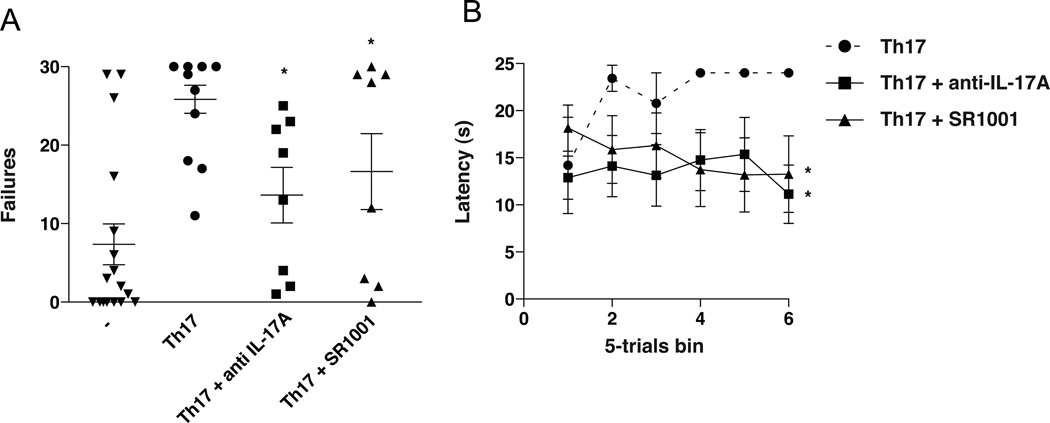
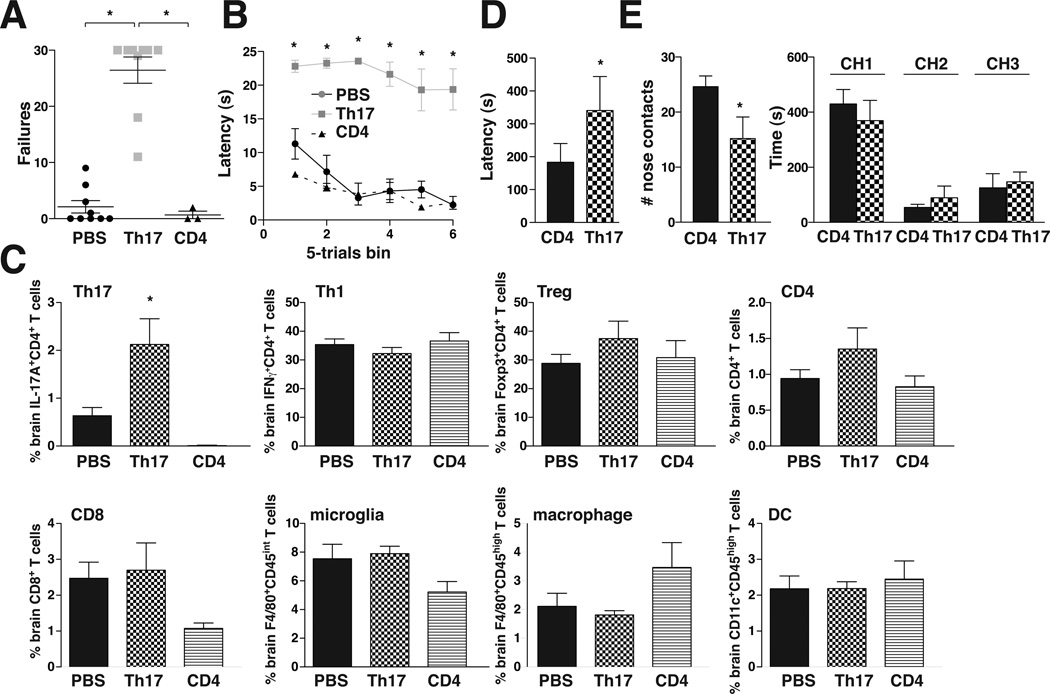
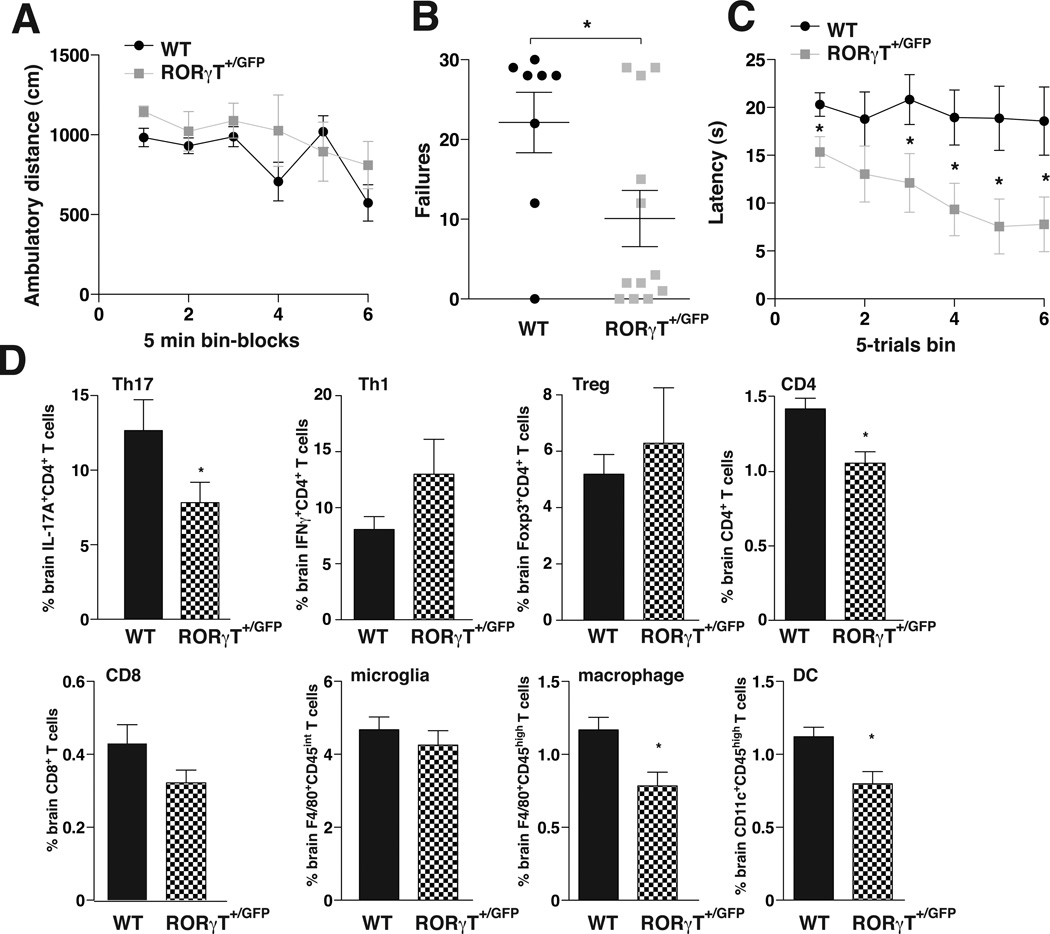
Mouse brain Th17 cells were elevated by learned helplessness and chronic restraint stress, two common depression-like models. Th17 cell administration promoted learned helplessness in 89% of mice in a paradigm where no vehicle-treated mice developed learned helplessness, and impaired novelty suppressed feeding and social interaction behaviors. Mice deficient in the RORγT transcription factor necessary for Th17 cell production exhibited resistance to learned helplessness, identifying modulation of RORγT as a potential intervention. Treatment with the RORγT inhibitor SR1001, or anti-interleukin-17A antibodies to abrogate Th17 cell function, reduced Th17-dependent learned helplessness.
These findings indicate that Th17 cells are increased in the brain during depression-like states, promote depression-like behaviors in mice, and specifically inhibiting the production or function of Th17 cells reduces vulnerability to depression-like behavior, suggesting antidepressant effects may be attained by targeting Th17 cells.
对实质性免疫神经相互作用的认识正在修正关于其岛叶作用的教条,并揭示免疫神经相互作用可以极大地影响中枢神经系统功能。炎症细胞因子白细胞介素-6 促进抑郁易感性,并驱动炎症辅助性 T 细胞 17(Th17)T 细胞的产生,这就提出了这样一个假设,即在小鼠模型中,Th17 细胞促进了抑郁样行为的易感性。
在给予 Th17 细胞、CD4(+)细胞或载体的雄性小鼠以及视黄酸相关孤儿受体-γT(RORγT)(+/GFP)小鼠或用 RORγT 抑制剂或抗白细胞介素-17A 抗体治疗的雄性小鼠中测量行为特征。
习得性无助和慢性束缚应激这两种常见的抑郁样模型可导致小鼠大脑 Th17 细胞升高。Th17 细胞给药促进了 89%的习得性无助模型小鼠的习得性无助,并且损害了新奇抑制喂养和社会互动行为。缺乏 Th17 细胞产生所需的转录因子 RORγT 的小鼠对习得性无助具有抗性,这表明调节 RORγT 可能是一种潜在的干预措施。用 RORγT 抑制剂 SR1001 或抗白细胞介素-17A 抗体治疗以消除 Th17 细胞功能,可减少 Th17 依赖性习得性无助。
这些发现表明,在抑郁样状态下,Th17 细胞在大脑中增加,促进了小鼠的抑郁样行为,并且特别抑制 Th17 细胞的产生或功能可降低对抑郁样行为的易感性,这表明通过靶向 Th17 细胞可能会获得抗抑郁作用。