Oil Crop Research Institute, Chinese Academy of Agricultural Sciences, Key Laboratory of Biology and Genetic Improvement of Oil Crops, Ministry of Agriculture, Wuhan, China.
PLoS One. 2012;7(11):e47284. doi: 10.1371/journal.pone.0047284. Epub 2012 Nov 21.
Information on polymorphic DNA in organelle genomes is essential for evolutionary and ecological studies. However, it is challenging to perform high-throughput investigations of chloroplast and mitochondrial DNA polymorphisms. In recent years, EcoTILLING stands out as one of the most universal, low-cost, and high-throughput reverse genetic methods, and the identification of natural genetic variants can provide much information about gene function, association mapping and linkage disequilibrium analysis and species evolution. Until now, no report exists on whether this method is applicable to organelle genomes and to what extent it can be used.
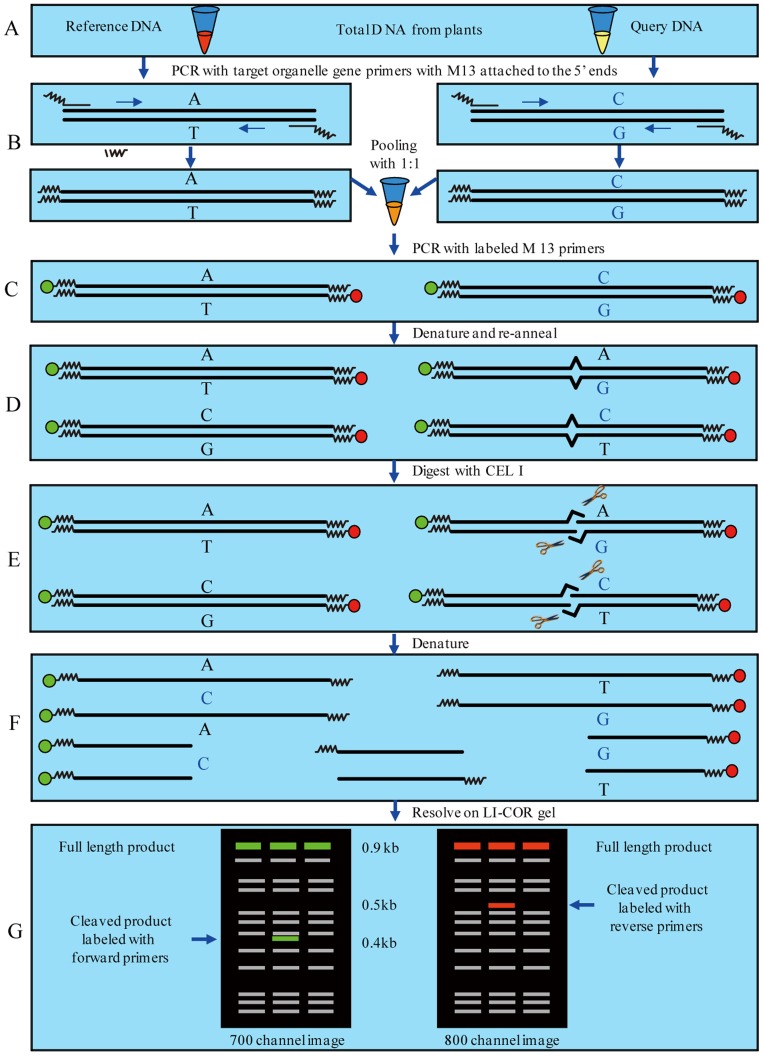
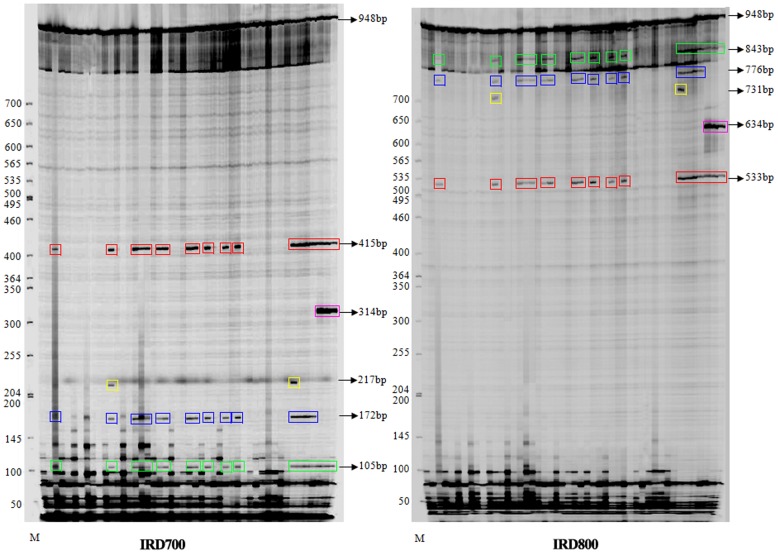
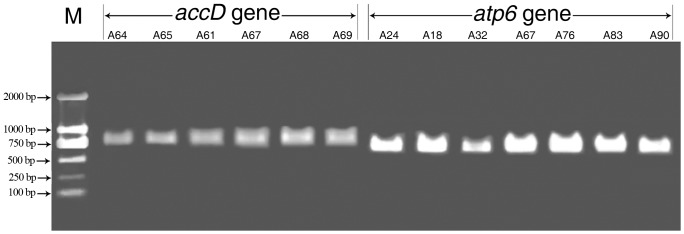
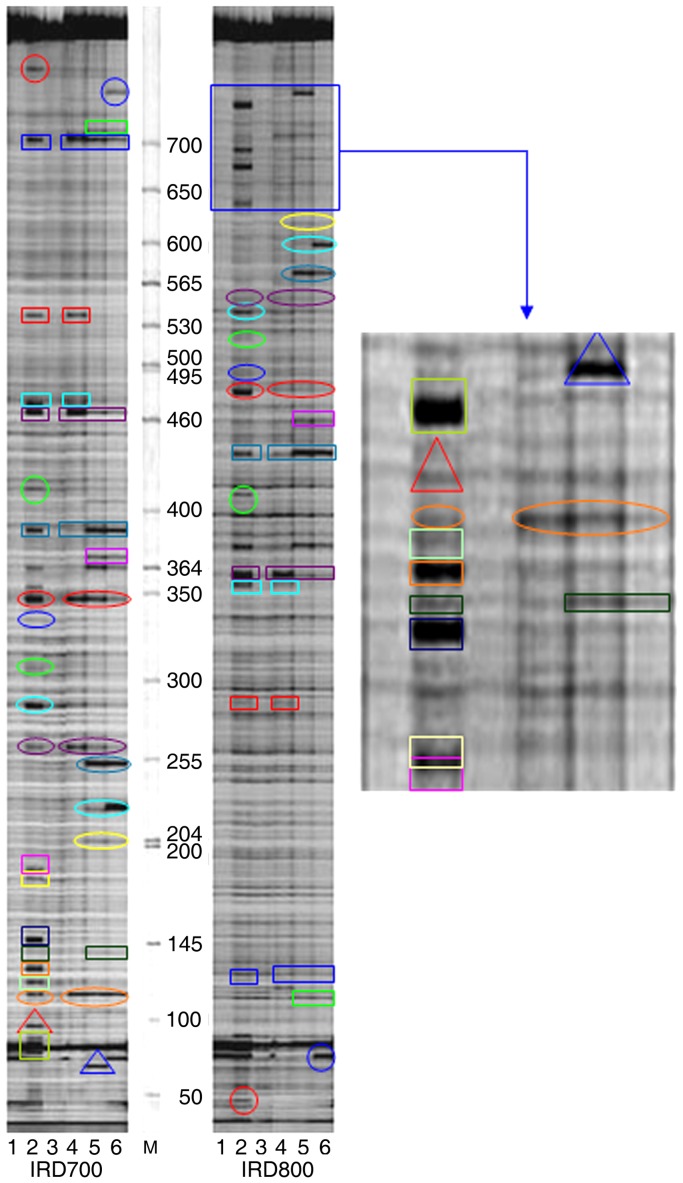
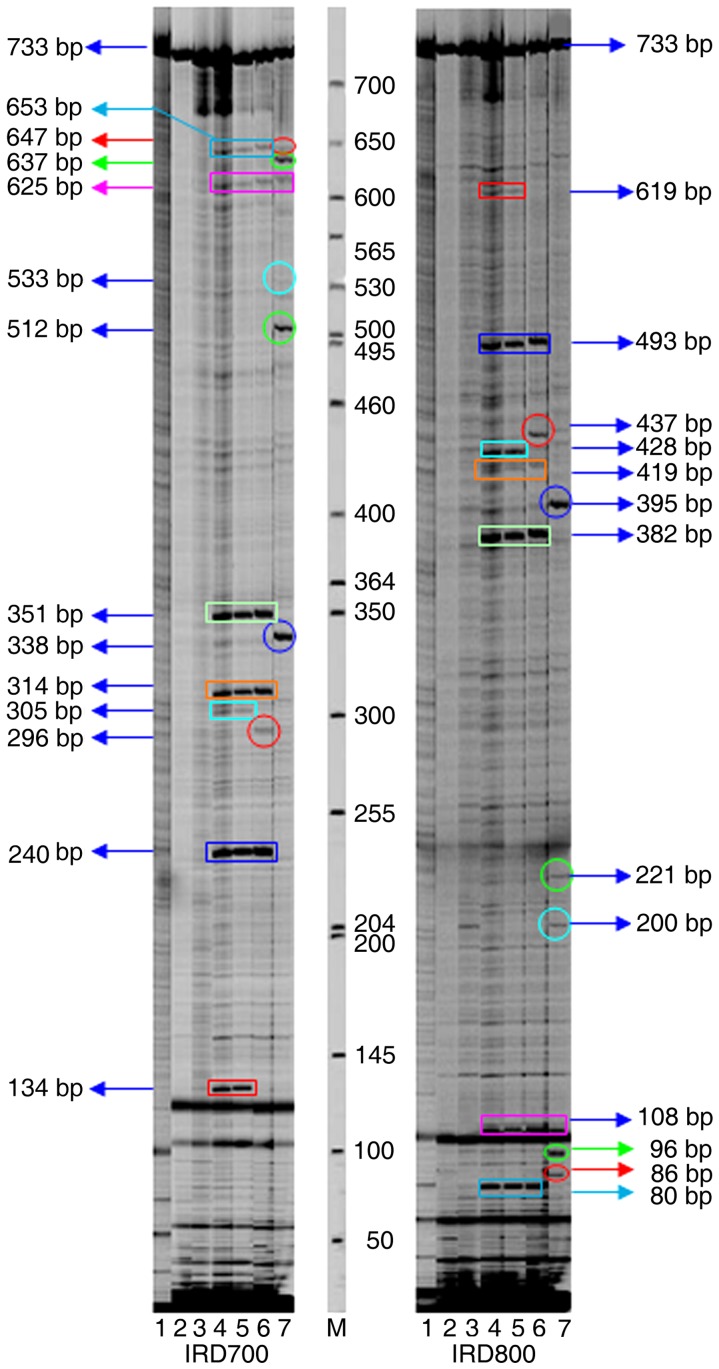
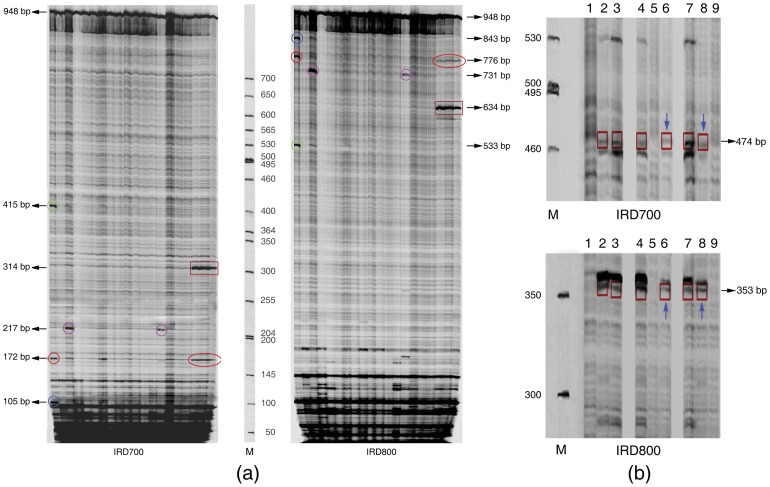
METHODOLOGY/PRINCIPAL FINDINGS: To address this problem, we adapted the CEL I-based heteroduplex cleavage strategy used in Targeting Induced Local Lesions in Genomes (TILLING) for the discovery of nucleotide polymorphisms in organelle genomes. To assess the applicability and accuracy of this technology, designated ORG-EcoTILLING, at different taxonomic levels, we sampled two sets of taxa representing accessions from the Brassicaceae with three chloroplast genes (accD, matK and rbcL) and one mitochondrial gene (atp6). The method successfully detected nine, six and one mutation sites in the accD, matK and rbcL genes, respectively, in 96 Brassica accessions. These mutations were confirmed by DNA sequencing, with 100% accuracy at both inter- and intraspecific levels. We also detected 44 putative mutations in accD in 91 accessions from 45 species and 29 genera of seven tribes. Compared with DNA sequencing results, the false negative rate was 36%. However, 17 SNPs detected in atp6 were completely identical to the sequencing results.
CONCLUSIONS/SIGNIFICANCE: These results suggest that ORG-EcoTILLING is a powerful and cost-effective alternative method for high-throughput genome-wide assessment of inter- and intraspecific chloroplast and mitochondrial DNA polymorphisms. It will play an important role in evolutionary and ecological biology studies, in identification of related genes associated with agronomic importance such as high yield and improved cytoplasmic quality, and for identifying mitochondrial point mutations responsible for diseases in humans and other animals.
细胞器基因组中多态性 DNA 的信息对于进化和生态研究至关重要。然而,进行叶绿体和线粒体 DNA 多态性的高通量研究具有挑战性。近年来,EcoTILLING 作为最通用、低成本和高通量的反向遗传学方法之一脱颖而出,对自然遗传变异的鉴定可以提供有关基因功能、关联图谱和连锁不平衡分析以及物种进化的大量信息。到目前为止,尚无关于该方法是否适用于细胞器基因组以及在多大程度上适用的报告。
方法/主要发现:为了解决这个问题,我们采用了靶向基因组中诱导的局部突变(TILLING)中使用的基于 CEL I 的异源双链体切割策略,用于发现细胞器基因组中的核苷酸多态性。为了评估这项技术在不同分类学水平上的适用性和准确性,我们设计了 ORG-EcoTILLING,我们从代表 3 个叶绿体基因(accD、matK 和 rbcL)和 1 个线粒体基因(atp6)的 Brassica 属的 96 个 Brassica 样本中抽取了两个样本。该方法成功检测到 96 个 Brassica 样本中 accD、matK 和 rbcL 基因的 9、6 和 1 个突变位点。这些突变通过 DNA 测序得到证实,在种间和种内水平上的准确率均为 100%。我们还在 45 个属的 7 个族的 91 个 Brassica 样本中 accD 中检测到 44 个潜在突变。与 DNA 测序结果相比,假阴性率为 36%。然而,在 atp6 中检测到的 17 个 SNP 与测序结果完全一致。
结论/意义:这些结果表明,ORG-EcoTILLING 是一种强大且具有成本效益的替代方法,可用于高通量评估叶绿体和线粒体 DNA 种间和种内多态性。它将在进化和生态生物学研究、鉴定与农业重要性相关的相关基因(如高产和改善细胞质质量)以及鉴定导致人类和其他动物疾病的线粒体点突变方面发挥重要作用。