Mohd Saad Nur Shuhadah, Severn-Ellis Anita A, Pradhan Aneeta, Edwards David, Batley Jacqueline
School of Biological Sciences Western Australia and UWA Institute of Agriculture, University of Western Australia, Perth, WA, Australia.
Front Genet. 2021 Feb 18;12:600789. doi: 10.3389/fgene.2021.600789. eCollection 2021.
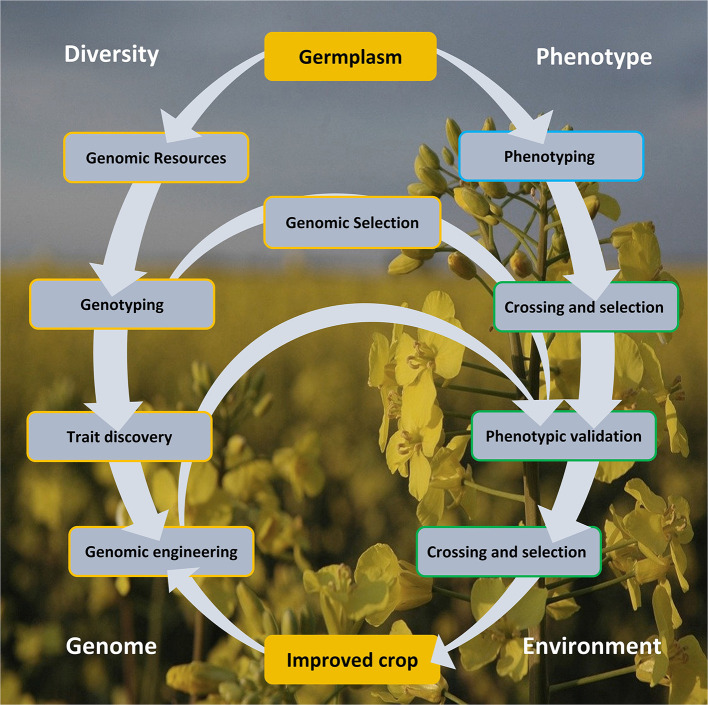
Meeting the needs of a growing world population in the face of imminent climate change is a challenge; breeding of vegetable and oilseed crops is part of the race in meeting these demands. Available genetic diversity constituting the foundation of breeding is essential in plant improvement. Elite varieties, land races, and crop wild species are important resources of useful variation and are available from existing genepools or genebanks. Conservation of diversity in genepools, genebanks, and even the wild is crucial in preventing the loss of variation for future breeding efforts. In addition, the identification of suitable parental lines and alleles is critical in ensuring the development of resilient crops. During the past two decades, an increasing number of high-quality nuclear and organellar genomes have been assembled. Whole-genome re-sequencing and the development of pan-genomes are overcoming the limitations of the single reference genome and provide the basis for further exploration. Genomic and complementary omic tools such as microarrays, transcriptomics, epigenetics, and reverse genetics facilitate the study of crop evolution, breeding histories, and the discovery of loci associated with highly sought-after agronomic traits. Furthermore, in genomic selection, predicted breeding values based on phenotype and genome-wide marker scores allow the preselection of promising genotypes, enhancing genetic gains and substantially quickening the breeding cycle. It is clear that genomics, armed with diversity, is set to lead the way in improvement; however, a multidisciplinary plant breeding approach that includes phenotype = genotype × environment × management interaction will ultimately ensure the selection of resilient varieties ready for climate change.
面对迫在眉睫的气候变化,满足不断增长的世界人口需求是一项挑战;蔬菜和油料作物育种是应对这些需求的竞争的一部分。构成育种基础的现有遗传多样性对作物改良至关重要。优良品种、地方品种和作物野生种是有用变异的重要资源,可从现有的基因库或种质库中获得。在基因库、种质库甚至野外保护多样性对于防止未来育种工作中变异的丧失至关重要。此外,鉴定合适的亲本系和等位基因对于确保培育出适应能力强的作物至关重要。在过去二十年中,越来越多的高质量核基因组和细胞器基因组已被组装。全基因组重测序和泛基因组的发展正在克服单一参考基因组的局限性,并为进一步探索提供基础。基因组学和互补的组学工具,如微阵列、转录组学、表观遗传学和反向遗传学,有助于研究作物进化、育种历史以及发现与备受追捧的农艺性状相关的基因座。此外,在基因组选择中,基于表型和全基因组标记分数的预测育种值允许对有前景的基因型进行预选,提高遗传增益并大幅加快育种周期。很明显,拥有多样性的基因组学将引领作物改良的道路;然而,包括表型=基因型×环境×管理相互作用在内的多学科植物育种方法最终将确保选择出适应气候变化的有韧性的品种。