Shoklo Malaria Research Unit, Mae Sot, Thailand.
PLoS One. 2012;7(11):e50100. doi: 10.1371/journal.pone.0050100. Epub 2012 Nov 20.
Pneumonia is a major cause of childhood mortality and morbidity approximately 1.6 million deaths and 150 million episodes occur annually in children <5 years. Respiratory syncytial virus (RSV) may be responsible for up to 25% of cases and 12% of deaths making it an important potential vaccine target, although data from South East Asia is scarce.
We followed a birth cohort of Burmese refugee children, born over a one year period, for two years. Pneumonia episodes were diagnosed using WHO criteria. A chest radiograph, nasopharyngeal aspirate and non-specific markers of infection were taken during each episode.
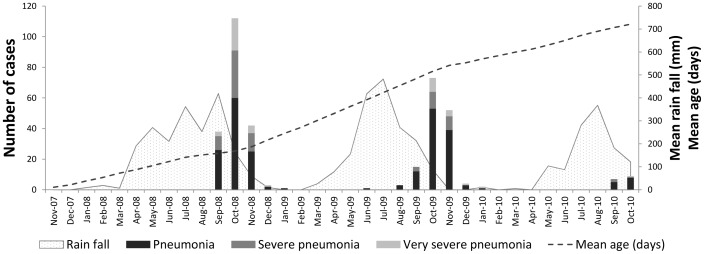
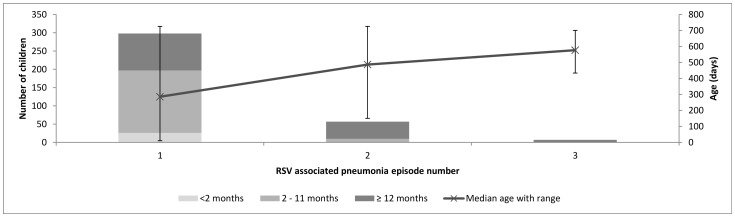
The incidence of RSV-associated pneumonia was 0.24 (95% CI 0.22-0.26) episodes per child year. All children with pneumonia received antibiotic treatment, following WHO guidelines. The highest incidence was in the 2-12 month age group. The commonest diagnosis in a child with RSV-associated pneumonia was non-severe pneumonia (239/362:66.0%), however the incidence of RSV-associated severe or very severe pneumonia was 0.08 (95% CI 0.01-0.10) episodes per child year. Birth in the wet season increased the risk of severe disease in children who had their first episode of RSV-associated pneumonia aged 2-11 months (OR 28.7, 95% CI 6.6-125.0, p<0.001). RSV episodes were highly seasonal being responsible for 80.0% of all the pneumonia episodes occurring each October and November over the study period.
There was a high incidence of RSV associated pneumonia in this refugee population. Interventions to prevent RSV infection have the potential to reduce the incidence of clinically diagnosed pneumonia and hence unnecessary antibiotic usage in this population.
肺炎是导致儿童死亡和发病的主要原因,每年约有 160 万儿童死亡,5 岁以下儿童发生 1.5 亿例肺炎。呼吸道合胞病毒(RSV)可能导致 25%的病例和 12%的死亡,使其成为一个重要的潜在疫苗接种目标,尽管来自东南亚的数据很少。
我们对在一年期间出生的缅甸难民儿童进行了一项出生队列研究,随访了两年。使用世界卫生组织(WHO)标准诊断肺炎发作。在每次发作期间,都进行了胸部 X 光检查、鼻咽抽吸物和非特异性感染标志物检测。
RSV 相关肺炎的发生率为每儿童年 0.24 例(95%CI 0.22-0.26)。所有患有肺炎的儿童都按照世界卫生组织(WHO)的指南接受了抗生素治疗。发病率最高的是 2-12 月龄组。RSV 相关肺炎患儿最常见的诊断是非重症肺炎(239/362:66.0%),但 RSV 相关重症或极重症肺炎的发生率为每儿童年 0.08 例(95%CI 0.01-0.10)。在 2-11 月龄时发生的首次 RSV 相关肺炎发作中,湿季出生会增加严重疾病的风险(OR 28.7,95%CI 6.6-125.0,p<0.001)。RSV 发作具有很强的季节性,在研究期间的每年 10 月和 11 月,占所有肺炎发作的 80.0%。
在这个难民群体中,RSV 相关肺炎的发病率很高。预防 RSV 感染的干预措施有可能降低该人群中临床诊断为肺炎的发生率,并因此减少不必要的抗生素使用。