Fernández Maribel, Gil María, Gomez-Ulla Francisco, Charlón Pablo
Department of Ophthalmology, University Hospital of Santiago de Compostela, Ramon Baltar S/N, 15706 Santiago de Compostela, Spain ; Instituto Oftalmológico Gómez-Ulla, Avenida de las Burgas 2, 15705 Santiago de Compostela, Spain.
Case Rep Med. 2012;2012:897097. doi: 10.1155/2012/897097. Epub 2012 Oct 30.
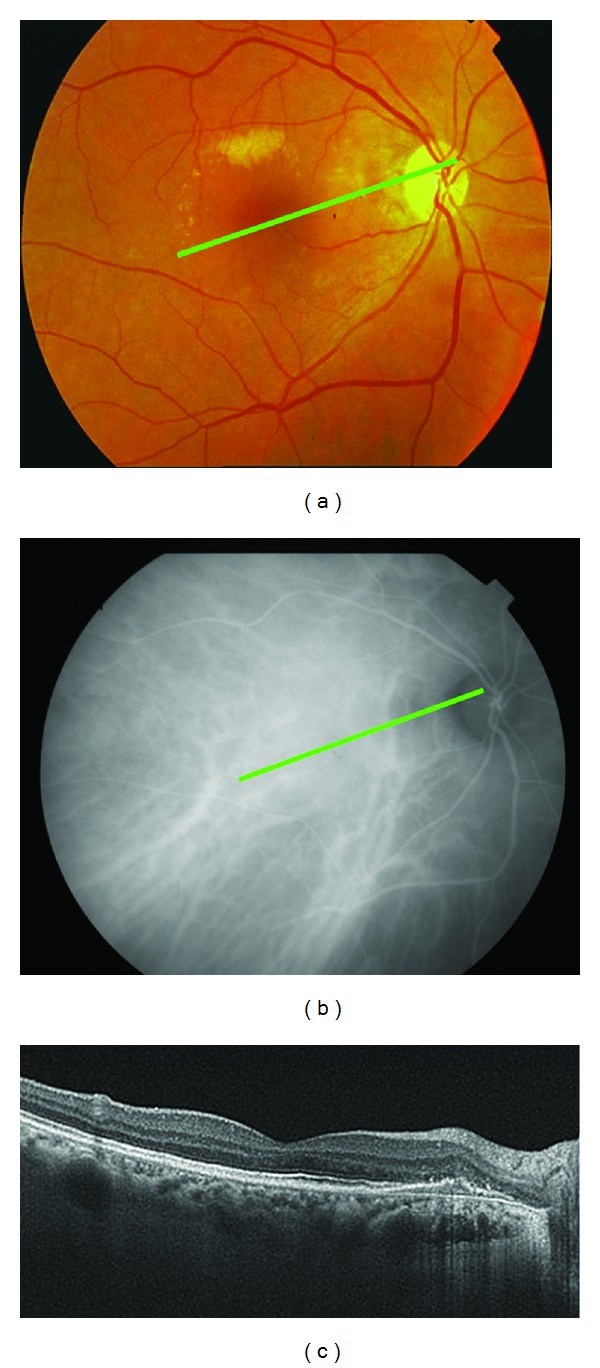
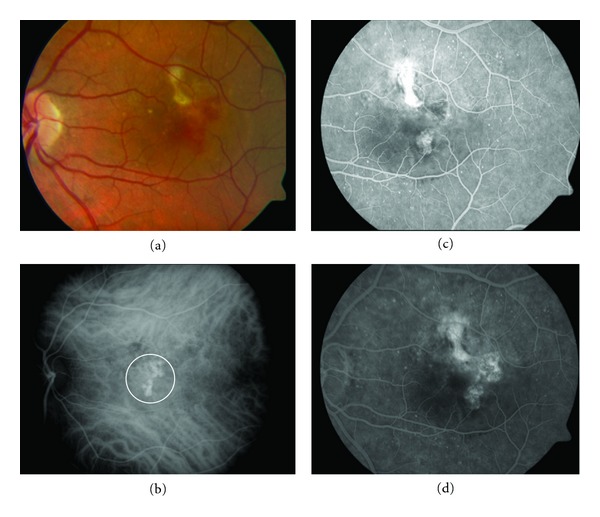
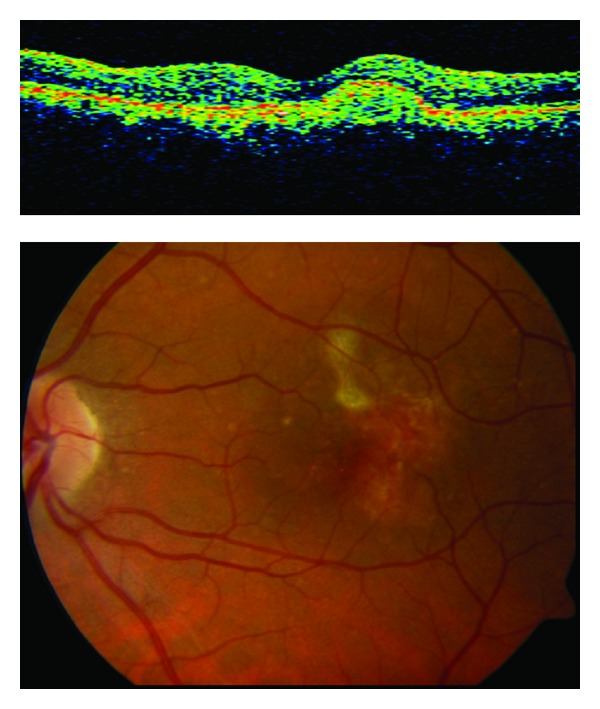
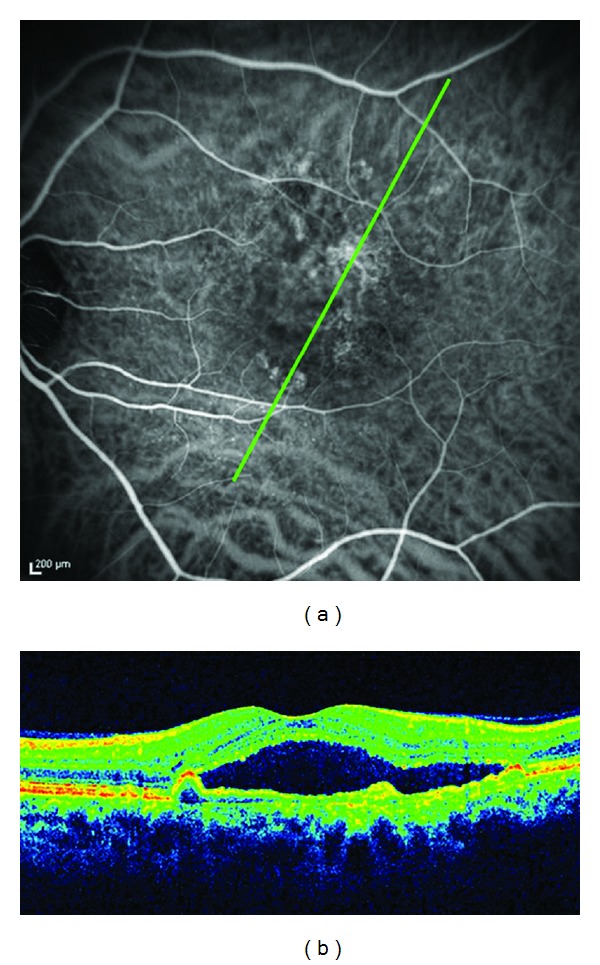
Purpose. To show the long-term results of intravitreal ranibizumab combined with photodynamic therapy (PDT) for the treatment of polypoidal choroidal vasculopathy (PCV). Methods. We analyzed the progress of two patients for 36 and 58 months, respectively. We only used PDT for the treatment in the area of the active PCV or "hot spot" evident on the indocyanine green angiography (ICGA). The spot size was chosen so as to cover only the active neovascular lesion. We combined intravitreal ranibizumab with PDT when PCV remained active without visible polyps in ICGA or without a response to PDT. Conclusion. Administration, as required, of verteporfin photodynamic therapy combined with intravitreal ranibizumab is an effective treatment for symptomatic polypoidal choroidal vasculopathy. These data need to be confirmed in large, prospective, and controlled clinical trials which are randomized and carried out over a long period.
目的。展示玻璃体内注射雷珠单抗联合光动力疗法(PDT)治疗息肉状脉络膜血管病变(PCV)的长期效果。方法。我们分别分析了两名患者36个月和58个月的病情进展。我们仅对吲哚菁绿血管造影(ICGA)上明显的活动性PCV区域或“热点”采用PDT进行治疗。选择光斑大小以便仅覆盖活动性新生血管病变。当PCV在ICGA中仍为活动性且无可见息肉或对PDT无反应时,我们将玻璃体内注射雷珠单抗与PDT联合使用。结论。按需给予维替泊芬光动力疗法联合玻璃体内注射雷珠单抗是治疗有症状的息肉状脉络膜血管病变的有效方法。这些数据需要在大型、前瞻性、对照的随机长期临床试验中得到证实。