Department of Pharmacology and Cancer Biology, Duke University Medical Center, Durham, NC 27710, USA.
Curr Biol. 2013 Jan 7;23(1):32-41. doi: 10.1016/j.cub.2012.11.014. Epub 2012 Nov 29.
Many cells are remarkably proficient at tracking very shallow chemical gradients, despite considerable noise from stochastic receptor-ligand interactions. Motile cells appear to undergo a biased random walk: spatial noise in receptor activity may determine the instantaneous direction, but because noise is spatially unbiased, it is filtered out by time averaging, resulting in net movement upgradient. How nonmotile cells might filter out noise is unknown.
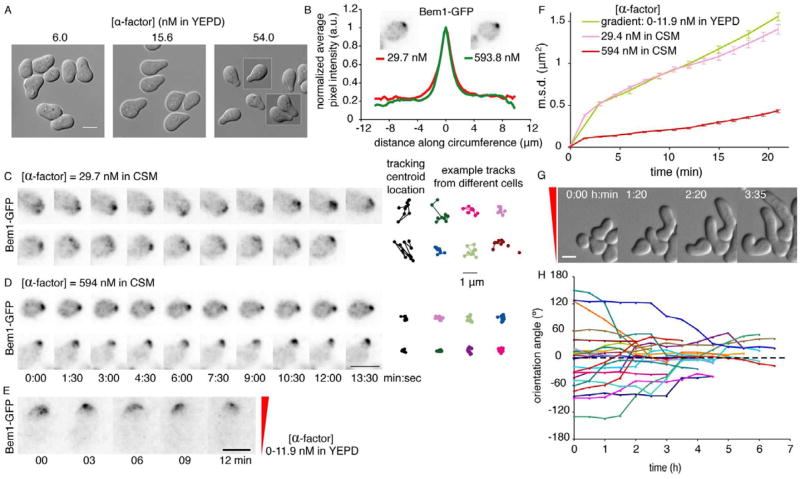
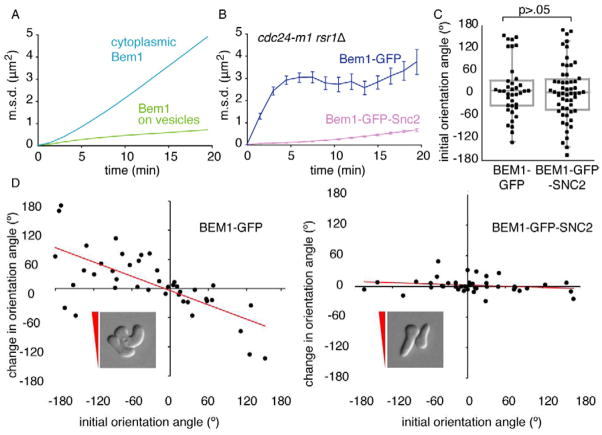
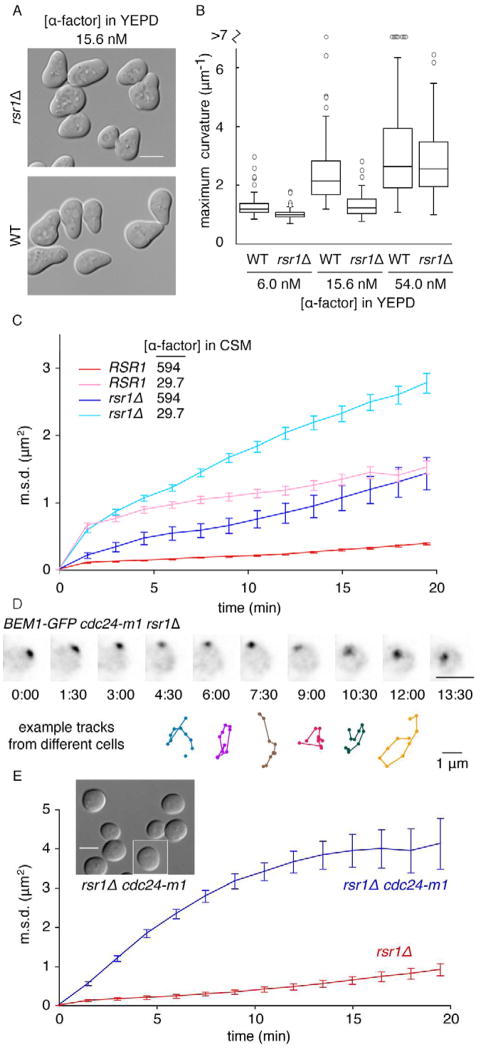
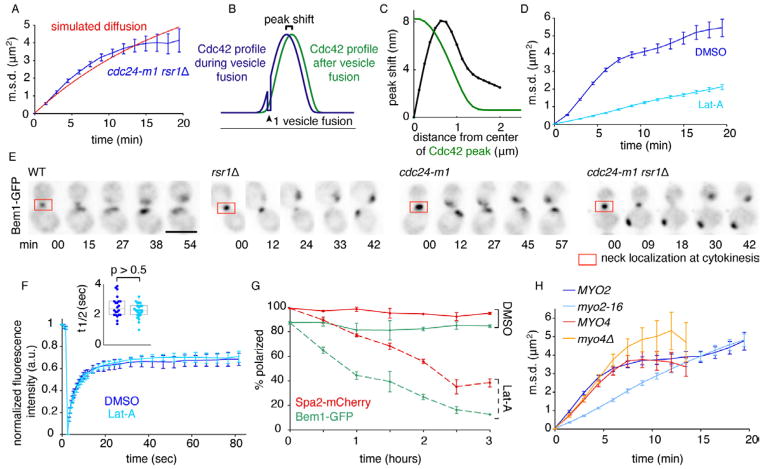
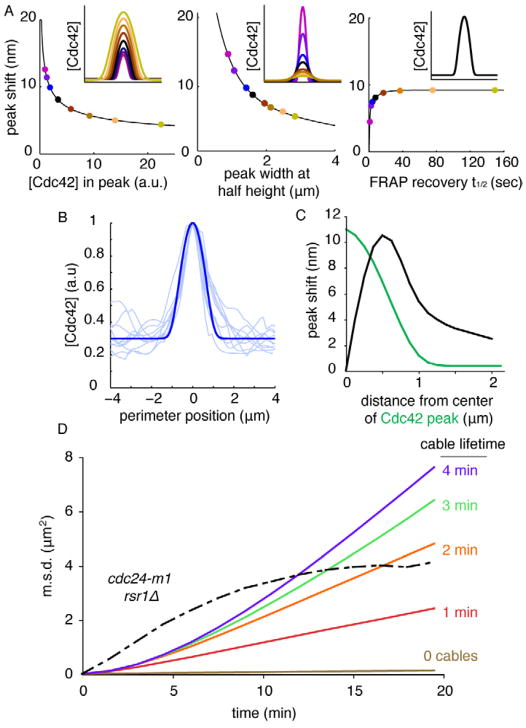
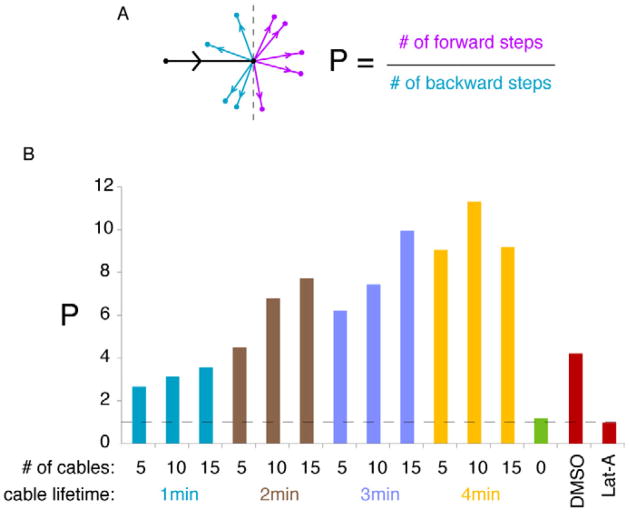
Using yeast chemotropic mating as a model, we demonstrate that a polarized patch of polarity regulators "wanders" along the cortex during gradient tracking. Computational and experimental findings suggest that actin-directed membrane traffic contributes to wandering by diluting local polarity factors. The pheromone gradient appears to bias wandering via interactions between receptor-activated Gβγ and polarity regulators. Artificially blocking patch wandering impairs gradient tracking.
We suggest that the polarity patch undergoes an intracellular biased random walk that enables noise filtering by time averaging, allowing nonmotile cells to track shallow gradients.
尽管随机受体-配体相互作用会产生相当大的噪声,但许多细胞在跟踪非常浅的化学梯度方面非常出色。游动细胞似乎经历了一种偏向的随机漫步:受体活性的空间噪声可能决定瞬时方向,但由于噪声在空间上是无偏的,因此会通过时间平均而被过滤掉,从而导致向上的净运动。非运动细胞如何过滤掉噪声尚不清楚。
我们使用酵母化学趋向性交配作为模型,证明了在梯度跟踪过程中,极性调节剂的极化斑块沿着皮层“游荡”。计算和实验结果表明,肌动蛋白定向膜运输通过稀释局部极性因子有助于游动。信息素梯度似乎通过受体激活的 Gβγ 和极性调节剂之间的相互作用来偏向游动。人为地阻断斑块游动会损害梯度跟踪。
我们认为,极性斑块经历了一种细胞内偏向的随机漫步,通过时间平均进行噪声过滤,使非运动细胞能够跟踪浅的梯度。